Tokyo Anime & Pop Culture · Guide №165
Tokyo Anime and Manga Guide: Districts, Shops and Pilgrimage Spots
The hub for anime and manga in Tokyo: Akihabara, Ikebukuro, Nakano, Shibuya and Harajuku compared, the Ghibli and free animation museums, 2026 events, real locations, cafes and what has closed.
目次 — Contents
- The five anime districts at a glance
- Akihabara: the obvious place to start
- Ikebukuro: Otome Road and Animate
- Nakano Broadway: the collectors’ building
- Shibuya and Harajuku: the big character stores
- Anime museums in Tokyo
- Gundam in Tokyo: what changed in 2026
- Anime events and conventions
- Which anime district suits you?
- Real anime locations in Tokyo
- Maid cafes, themed cafes and collab cafes
- Arcades, karaoke and anime nightlife
- Buying anime goods: practical tips
- A two-day anime itinerary
- Anime Tokyo on a budget
- Anime Tokyo with children
- Planning an anime trip through the year
- What is not worth it
- Frequently Asked Questions
- Photo Credits
This article contains advertising. Our booking links are routed through a partner that adds commission tracking automatically, so if you book through one we earn a commission from the provider, at no extra cost to you. It never affects what we recommend. Affiliate disclosure
This Tokyo anime guide starts with one idea: the city has five anime districts, not one. Akihabara is the famous one, but Ikebukuro is the heart of female fandom, Nakano Broadway is the collectors’ warren, and Shibuya and Harajuku hold the big character stores. Add the Ghibli Museum, a few free studio museums and the real places behind scenes you know, and you have a week.
This is the hub for everything anime and manga on this site: how the districts differ and which suits you, the museums and how to get tickets, the big character stores, events and conventions, the real-world locations fans visit, themed cafes, arcades, and a sample itinerary. Where we have a deeper guide, we link to it. We also say plainly where the hype runs ahead of the experience, and which famous sights have closed.
The five anime districts at a glance
| District | Best for | Main draws | Vibe |
|---|---|---|---|
| Akihabara | First-timers, figures, retro games, arcades, maid cafes | Multi-floor figure and manga shops, capsule toys, game centres | Loud, neon, overwhelming, touristy but real |
| Ikebukuro | Female-oriented fandom, voice actors, collab cafes, Pokémon | Animate’s flagship, Otome Road, Sunshine City | Busy, younger, event-driven |
| Nakano | Collectors, vintage and second-hand, rare items | Nakano Broadway and its Mandarake shops | Maze-like, obsessive, less touristy |
| Shibuya | Nintendo and Pokémon, pop culture shopping | Shibuya Parco’s game floor, Tokyo Anime Center | Fashionable, mainstream, easy |
| Harajuku | Kawaii culture and character goods | Takeshita-dori, character shops, fashion | Crowded, colourful, teen-focused |
If you only have one day, do Akihabara in the morning and Ikebukuro in the afternoon. If you have two, add Nakano Broadway. Shibuya and Harajuku fit around the rest of your sightseeing.
Akihabara: the obvious place to start
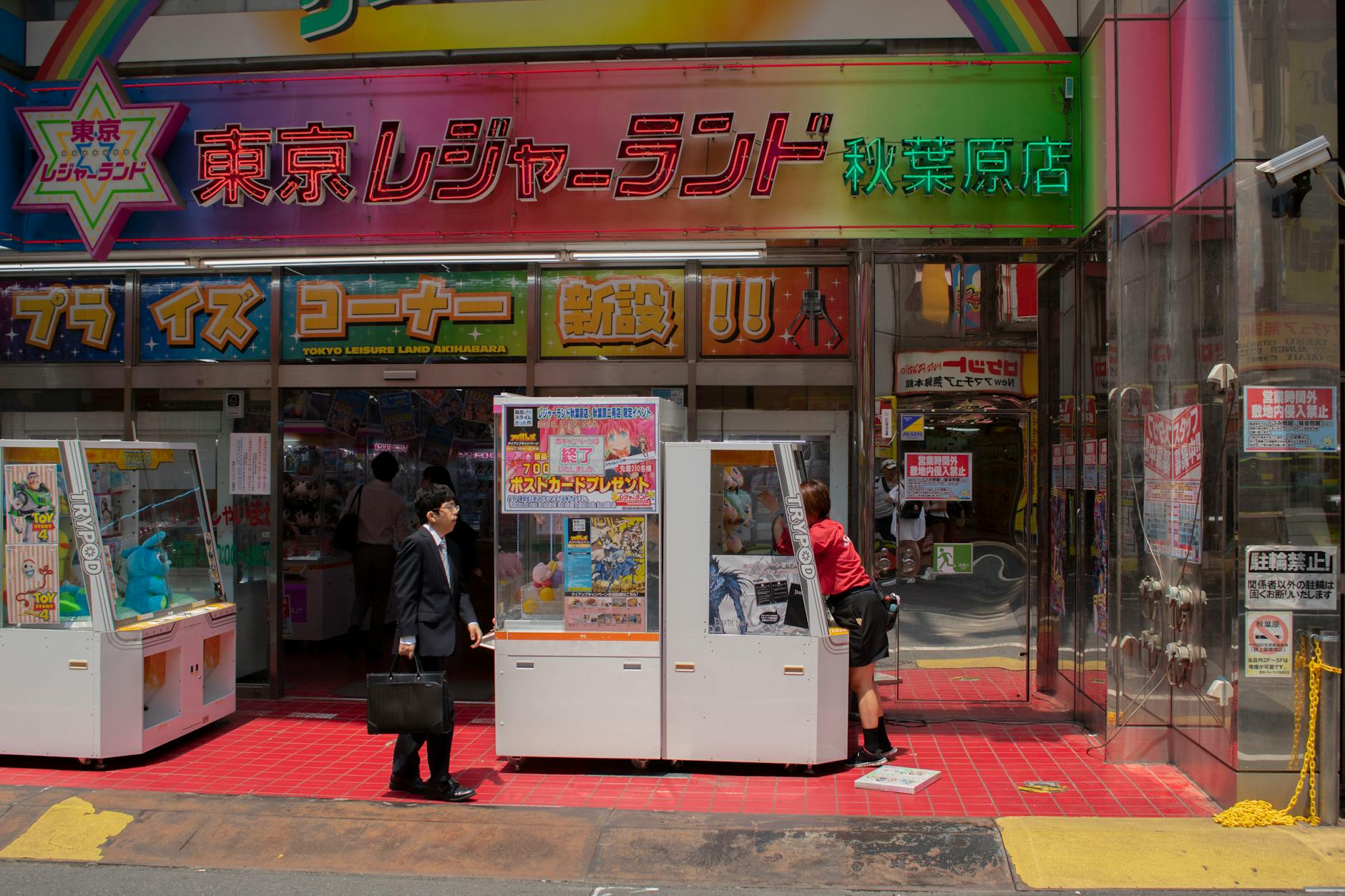
Akihabara, “Akiba” to fans, began as an electronics market after the war and turned into Tokyo’s otaku centre in the 1990s and 2000s. Today the main street, Chuo-dori, and the backstreets on either side are packed with multi-storey shops selling figures, manga, anime Blu-rays, trading cards, model kits, retro video games and capsule toys, plus game centres and maid cafes.
What to do in Akihabara
- Figure and collectibles towers. Several buildings stack eight or more floors of new and second-hand figures, with glass cases of rare pieces on the upper floors. Browsing is free and genuinely fun even if you buy nothing.
- Retro games. Specialist shops sell Famicom, Super Famicom, Game Boy and PlayStation games in their original boxes. Check region compatibility before you buy.
- Capsule toys. Walls of gashapon machines, each a few hundred yen a turn.
- Arcades. Multi-floor game centres with claw machines on the ground floor, rhythm and fighting games higher up. Our Tokyo arcades guide explains how they work.
- Maid cafes. The most famous Akihabara experience, and the most divisive. More on those below.
The honest view: Akihabara is more commercial and more tourist-focused than it was, and parts of it now sell the idea of otaku culture back to visitors. It is still the widest selection in one place and the right first stop. For the full district, including food and a walking route, read our Akihabara guide, and for a shop-by-shop breakdown, our Akihabara shopping guide.
Ikebukuro: Otome Road and Animate
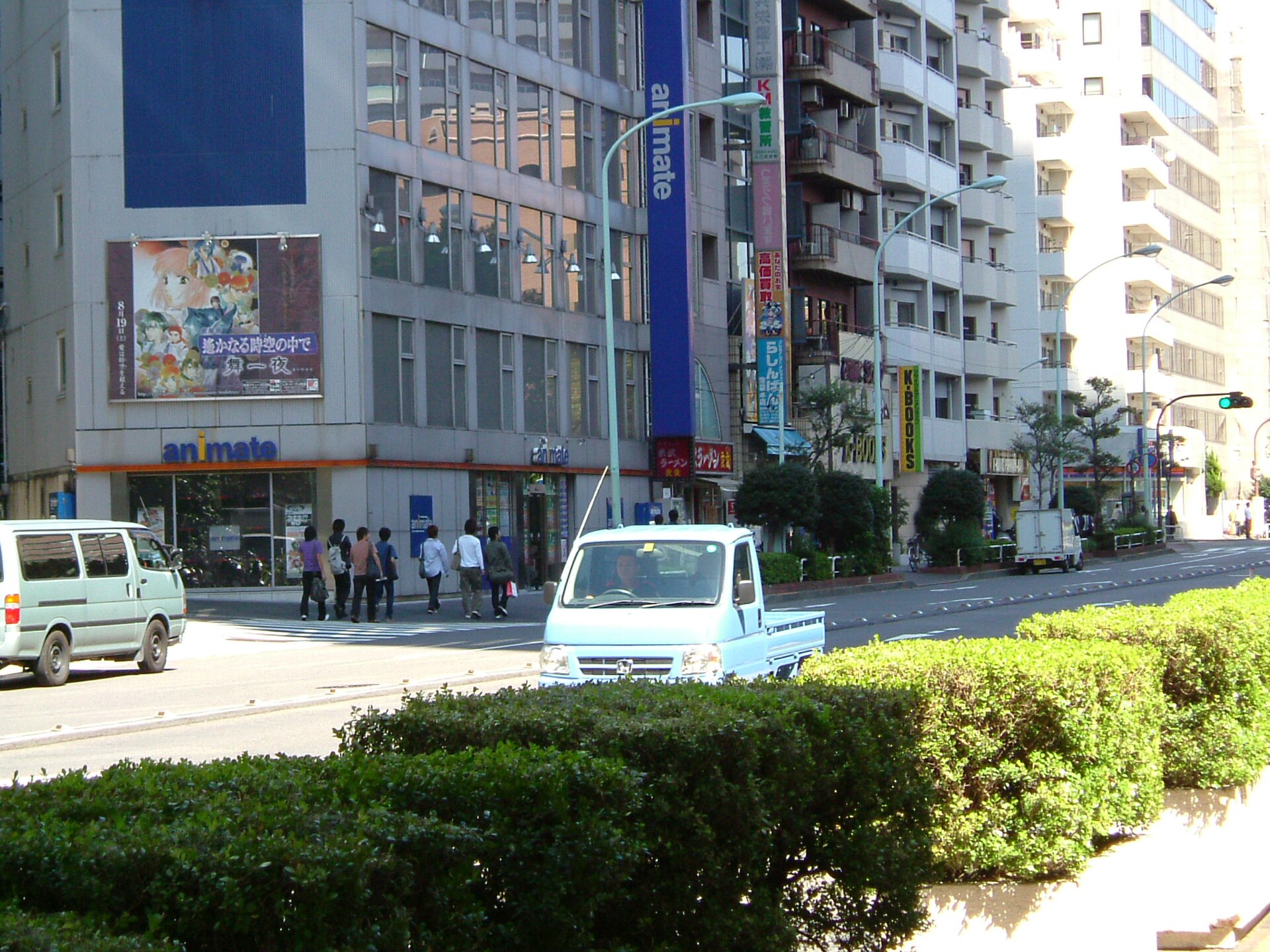
If Akihabara leans towards figures, games and male-oriented fandom, Ikebukuro is its counterpart. Otome Road, “maiden road”, runs roughly from Animate to the K-Books shops near Sunshine City and is the centre of Japan’s female fan culture: boys’ love manga, otome games, voice actor merchandise, idol anime goods and doujinshi, the fan-made comics that fill entire shops.
Animate Ikebukuro

Animate’s main store is the flagship of Japan’s biggest anime retail chain. After a full renewal in 2023, it occupies an entire building of around ten floors: manga and light novels, character goods, voice actor merchandise, doujinshi, event and exhibition space, and a cafe that rotates themed menus with current series. If there is a new anime you love, this is the most likely place in Tokyo to find its merchandise.
Sunshine City and Pokémon Center Mega Tokyo
Ten minutes’ walk east, the Sunshine City complex has the Pokémon Center Mega Tokyo, one of Japan’s largest Pokémon stores, along with character shops, an aquarium, frequent anime exhibitions and collaboration events. Ikebukuro also hosts the city’s biggest street cosplay event every Halloween weekend, covered in our Halloween in Tokyo guide.
Ikebukuro’s collab cafes, which run limited-time menus themed on a single series, are worth checking before you travel: book ahead for popular titles. Our Ikebukuro guide covers the rest of the district.
Nakano Broadway: the collectors’ building
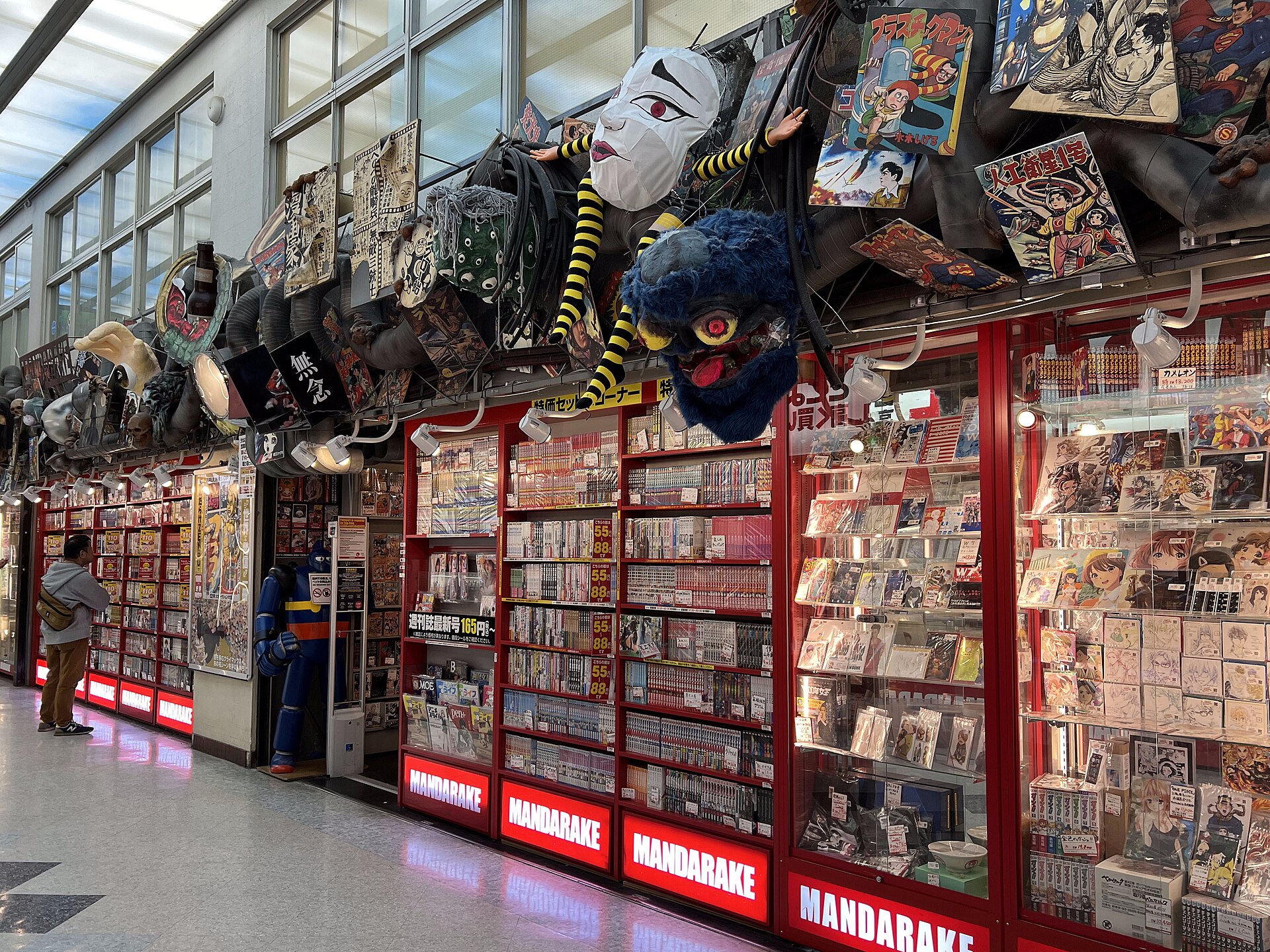
Nakano Broadway is a 1960s shopping and apartment complex five minutes from Shinjuku on the JR Chuo-Sobu line, reached through the covered Sun Mall arcade from Nakano station’s north exit. Its second, third and fourth floors have become a maze of small shops selling second-hand and vintage anime goods, manga, figures, cels, idol photos, retro toys, watches and oddities, anchored by more than thirty Mandarake specialist shops.
This is where serious collectors come for rare and out-of-print items, often at better prices than in Akihabara. It is also less polished and less overwhelming, with fewer tour groups. Many shops open around noon, so do not arrive at 10:00. It pairs well with an evening in Shinjuku.
Shibuya and Harajuku: the big character stores

- Shibuya Parco. One floor combines Nintendo Tokyo, the company’s official store, with a Pokémon Center and other game and anime shops. Expect queues for entry at weekends and on release days.
- Tokyo Anime Center. In the DNP Plaza space in Shibuya Modi, it hosts rotating exhibitions and pop-up shops for current series. Check what is on before you go.
- Harajuku. Less anime, more kawaii. Takeshita-dori is lined with character goods, crepes and colourful fashion, and it is one of the most fun streets in Tokyo for teenage visitors. See our Harajuku guide.
- Tokyo Station. Tokyo Character Street, in the First Avenue basement mall on the Yaesu side, has around two dozen official shops for Pokémon, Crayon Shin-chan, Sumikko Gurashi, Chiikawa and more, open 10:00 to 20:30. It is a handy last-minute stop before a Shinkansen.
For a city-wide view of where to buy character goods, including discount shops and second-hand chains, read our Tokyo anime shopping guide.
Anime museums in Tokyo
Ghibli Museum, Mitaka

Hayao Miyazaki’s museum in Mitaka is the most sought-after anime ticket in Tokyo. It is not a theme park but a small, whimsical building of rooms about how animation is made, a rooftop garden with a robot soldier, a cafe, a shop, and a short film shown only here. Photography is not allowed inside.
Tickets cost ¥1,000 for adults, ¥700 for ages 13 to 18, ¥400 for ages 7 to 12 and ¥100 for ages 4 to 6, with under-fours free. They are sold only in advance through Lawson Ticket, and tickets for the following month go on sale at 10:00 Japan time on the 10th of each month. Popular dates, especially weekends and school holidays, go fast. Nothing is sold at the door. Our Ghibli Museum guide walks through booking step by step.
Worth knowing: Ghibli Park, the larger Ghibli attraction, is not in Tokyo but in Aichi prefecture near Nagoya, a separate day trip by Shinkansen and local transport.
Free animation museums
| Museum | Where | Price | What it is | Worth the trip? |
|---|---|---|---|---|
| Suginami Animation Museum | Ogikubo, Suginami | Free | Small museum on the history and making of Japanese animation, with hands-on stations and a library | Yes if you are nearby or love how anime is made |
| Toei Animation Museum | Higashi-Oizumi, Nerima; about 15 min walk from Oizumi-gakuen (Seibu Ikebukuro Line) | Free | Displays from Japan’s first big animation studio, home of Dragon Ball, Sailor Moon, One Piece and Pretty Cure | Yes for Toei fans; short opening hours, roughly 11:00–16:00 |
| Tokyo Anime Center | Shibuya | Varies by exhibition | Rotating exhibitions and pop-up shops | Check what is on |
Both free museums are in quiet residential areas and small, so they reward fans more than casual visitors. Check opening days before travelling, as they close for exhibition changes. In Nerima, the neighbourhood around the Toei museum also leads naturally to the Warner Bros. Studio Tour Tokyo, a few stops down the Seibu line, if you are making a film-and-animation day of it.
Manga museums and more
- Tokiwaso Manga Museum, Toshima. A reconstruction of the modest apartment building where Osamu Tezuka and a generation of young manga artists lived and worked in the 1950s. Small, quiet and moving for manga history fans.
- Fujiko F. Fujio Museum, Kawasaki. Dedicated to the creator of Doraemon, just outside Tokyo near Noborito station. Like Ghibli, it runs on advance timed tickets; check the official site.
- Sanrio Puroland, Tama. Hello Kitty’s indoor theme park, better suited to younger children. See our Sanrio Puroland guide.
Gundam in Tokyo: what changed in 2026
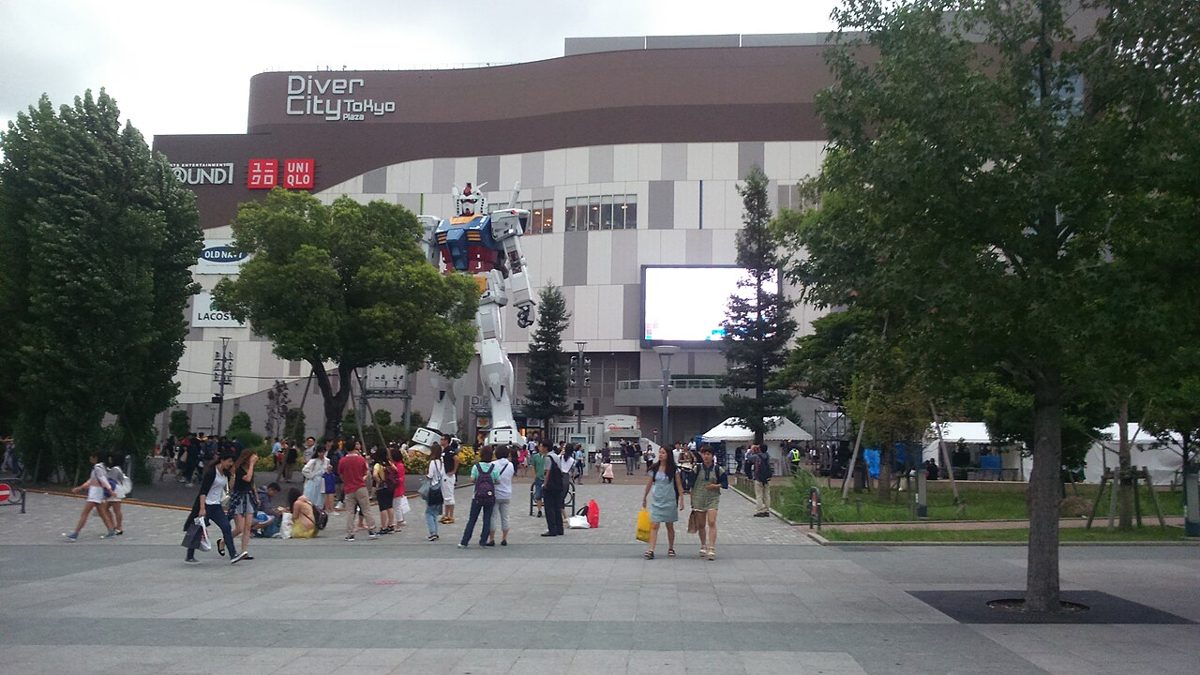
For almost a decade, the 19.7-metre Unicorn Gundam outside DiverCity Tokyo Plaza in Odaiba was one of the city’s most photographed anime sights, transforming several times a day with a night-time projection show. Its public display ended on 31 August 2026. Many older guides still send readers to see it, so do not plan a trip to Odaiba around it.
The Gundam Base Tokyo, a huge Gunpla model-kit store and exhibition inside DiverCity, has been the other Gundam draw in Odaiba. Check its current status before visiting, as plans for the site after the statue’s removal may change what is there. Our Odaiba guide covers the rest of the island.
Anime events and conventions
| Event | When | Where | What to know |
|---|---|---|---|
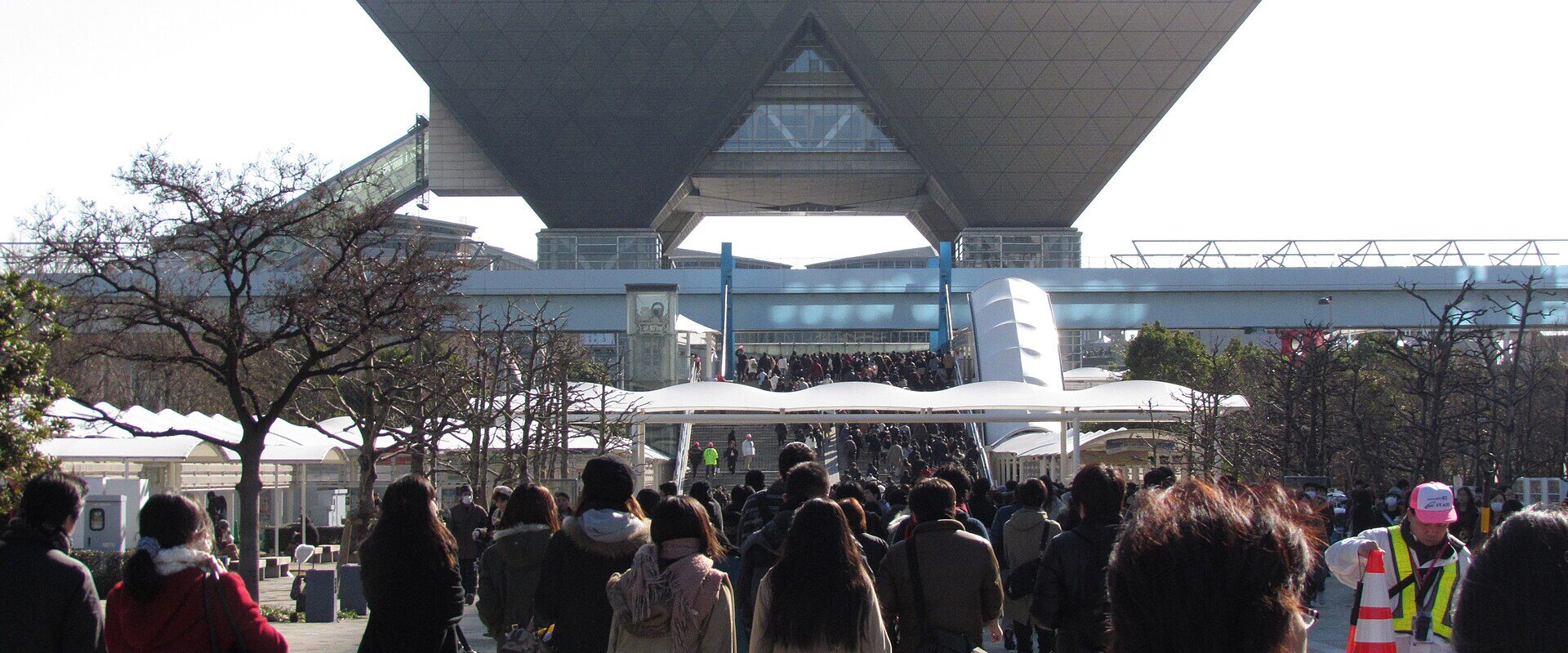
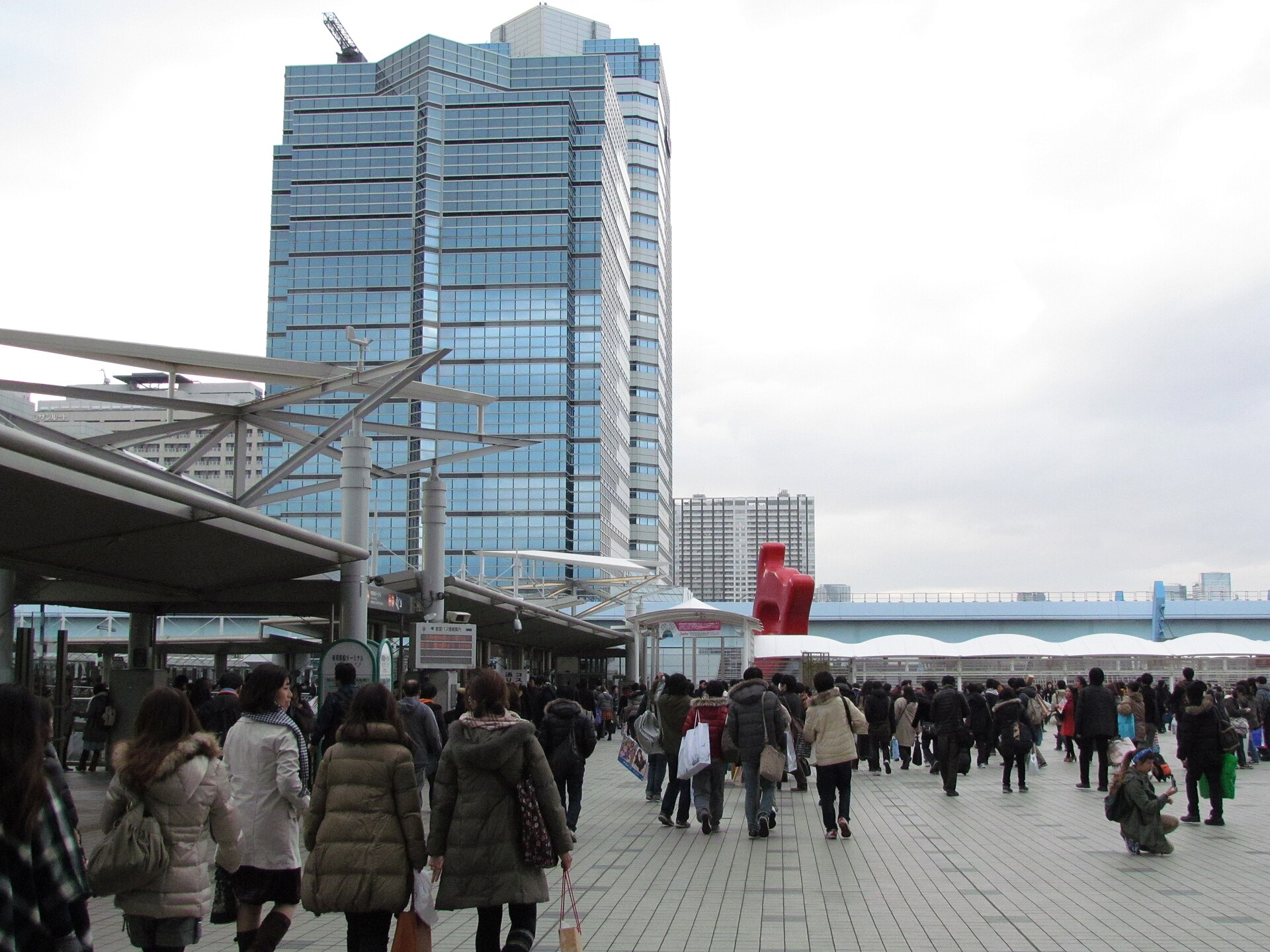
| Comic Market (Comiket) | Summer and winter; winter 2026 is 29–31 December | Tokyo Big Sight, Odaiba | The world’s largest fan-made comics market. Huge crowds; wristband entry system. Partial renovation of Big Sight affects space. |
| Jump Festa | 19–20 December 2026 | Makuhari Messe, Chiba | Weekly Shonen Jump’s event with stage shows and exclusive goods. Outside Tokyo, about 30–40 minutes by train. |
| Tokyo Game Show | Late September | Makuhari Messe, Chiba | Video games rather than anime, but heavy overlap. |
| AnimeJapan | Late March | Moving to INTEX Osaka for 2027 and 2028 | Traditionally Tokyo’s biggest anime industry show. Not in Tokyo in 2027; plan an Osaka trip if you want to attend. |
| Ikebukuro Halloween Cosplay Festival | Halloween weekend | Ikebukuro | Registered cosplay across the district, with a parade on the Saturday. |
Our Tokyo events and festivals guide has the wider calendar.
Tips for Comiket
- It is a market, not an exhibition. Tens of thousands of fan creators sell self-published work. Know what you are looking for, or you will just be carried by the crowd.
- Bring cash in small notes and coins. Most sellers do not take cards.
- Check the official entry rules. Recent events have used paid wristbands, and early-entry options sell out.
- Dress for the season. Winter queues outdoors are cold; summer Comiket is notoriously hot.
- Cosplay has its own rules, including changing-room registration. Do not arrive in costume.
Which anime district suits you?
The districts overlap, but each has a clear personality. If you are short on time, match your interests to the right one rather than trying to see them all.
- You collect figures or model kits: Akihabara for new releases and range, Nakano Broadway for rare and older pieces.
- You follow voice actors, idol anime or otome games: Ikebukuro, without question.
- You grew up on Nintendo and Pokémon: Shibuya Parco for Nintendo Tokyo, plus a Pokémon Center in Ikebukuro or Shibuya.
- You love classic manga and animation history: the Suginami and Toei museums, the Tokiwaso Manga Museum, and the vintage floors of Nakano Broadway.
- You love Studio Ghibli: the Ghibli Museum in Mitaka, with the Donguri Republic Ghibli character shops found in several shopping centres for goods.
- You want the spectacle more than the shopping: Akihabara on a Sunday afternoon, when Chuo-dori becomes a pedestrian street, followed by an arcade and karaoke.
Real anime locations in Tokyo
Visiting the real places that appear in anime, called seichi junrei or “sacred site pilgrimage”, is one of the most rewarding ways to see ordinary Tokyo neighbourhoods. A few of the best known:
- Suga Shrine stairs, Yotsuya. The red-railed staircase from the final scene of Makoto Shinkai’s Your Name. It is a residential street, so be quiet and do not block the steps.
- Koenji Hikawa Shrine. Home to the Kisho Jinja, a rare shrine dedicated to the weather, built in 1944 by the army’s weather department, and central to Shinkai’s Weathering With You.
- Shinjuku. From the station’s crowds to the lights of Kabukicho, Shinjuku appears in countless series, including Your Name and Weathering With You.
- Akihabara. The setting of Steins;Gate, among others. The Radio Kaikan building is a regular backdrop.
Treat these places as what they are: neighbourhoods, shrines and schools where people live and work. Do not photograph residents or children, do not trespass on school grounds, and be especially quiet at shrines. Our Japanese etiquette guide covers shrine manners.
Maid cafes, themed cafes and collab cafes
Tokyo’s character cafes range from the delightful to the uncomfortable, and it is worth knowing the difference before you go.
- Maid cafes, mostly in Akihabara, are performance cafes where staff in maid costumes greet you as “master”, draw on your omurice and perform little songs. The big, tourist-friendly chains are harmless fun if you enjoy camp. Expect a table charge, a time limit and paid photos. Avoid people handing out flyers on the street for smaller, unknown places, and never follow anyone to a “cafe” upstairs.
- Collab cafes run for a few weeks with menus and goods themed on one series, especially in Ikebukuro, Shibuya and Harajuku. Book ahead for popular titles; bonus coasters are random, which is how they keep you ordering.
- Pokémon Cafe and Kirby Cafe are permanent and extremely hard to book, with reservations released on fixed days and gone in minutes.
Our themed cafes in Tokyo guide covers booking, prices and which ones are worth it.
Arcades, karaoke and anime nightlife
- Game centres in Akihabara, Ikebukuro and Shinjuku have rhythm games, fighting games and claw machines full of anime prizes. Set a budget before you start on the claw machines. See our arcades guide.
- Karaoke chains carry thousands of anime songs, often with the original anime footage playing behind the lyrics. Our best karaoke in Tokyo guide explains booking and prices.
- Anison bars, bars playing anime songs where customers sing along, cluster in Akihabara and Shinjuku. Many are small and welcoming but have a seating charge.
Buying anime goods: practical tips
- Tax-free shopping. Many large stores offer tax-free purchases for tourists over a minimum spend; bring your passport. Our tax-free shopping guide explains the current rules.
- Second-hand is normal and good. Used figures, manga and goods in Japan are usually in excellent condition. Chains like Mandarake, Surugaya and Book-Off are worth checking before buying new.
- Watch for fakes online, not in stores. Established Tokyo shops sell genuine goods. Bootleg figures are a bigger risk on marketplace websites.
- Check region locks and formats. Japanese Blu-rays and some retro games may not play on your devices at home.
- Pack space. Figure boxes are bulky. Consider shipping home, or a collapsible bag.
- Release days mean queues. Big new releases and lottery-based items draw lines before opening, especially in Akihabara and Ikebukuro.
A two-day anime itinerary
Day one: Akihabara and Ikebukuro
- 10:30 Arrive in Akihabara as the big shops open. Work through one figure tower from the top floor down, then the capsule toy halls.
- 12:30 Lunch in Akihabara, perhaps at a themed cafe if you have booked, or a quick bowl of ramen.
- 14:00 Retro game shops and a game centre.
- 16:00 Train to Ikebukuro, about 20 minutes. Animate’s flagship, then along Otome Road.
- 18:00 Sunshine City and the Pokémon Center Mega Tokyo; dinner in Ikebukuro, then anime songs at karaoke.
Day two: Ghibli, Nakano and Shibuya
- 10:00 Ghibli Museum, Mitaka, with a pre-booked timed ticket. Walk back through Inokashira Park to Kichijoji.
- 13:00 Lunch in Kichijoji, then the JR Chuo line to Nakano, about 10 minutes.
- 14:00 Nakano Broadway, when the shops are all open.
- 17:00 Shibuya Parco for Nintendo Tokyo and the Pokémon Center.
- 19:00 Evening in Shibuya, with a view over the lights from one of the options in our observation decks guide.
With more time, add a morning at the Suginami or Toei animation museums, a visit to real locations such as the Suga Shrine stairs, or a teamLab evening for the digital art crowd; see our teamLab Tokyo guide.
Anime Tokyo on a budget
You can have a brilliant anime trip in Tokyo while spending very little, as long as you separate the free experiences from the ones designed to empty your wallet.
| Experience | Cost | Notes |
|---|---|---|
| Browsing Akihabara, Nakano Broadway and Otome Road | Free | Window-shopping the figure towers is half the fun |
| Suginami and Toei animation museums | Free | Check opening days and hours before travelling |
| Real anime locations such as the Suga Shrine stairs | Free, plus a train fare | Go early in the day, when streets are quiet |
| Ghibli Museum | ¥1,000 adult | Excellent value if you can get a ticket |
| Capsule toys | A few hundred yen a turn | Easy to spend ¥3,000 without noticing |
| Collab cafes and maid cafes | Often ¥2,000–4,000 or more per person with charges | Fun once; budget for drinks, charges and goods |
| Comic Market | Entry wristband plus whatever you buy | Cash only at most tables; set a limit |
Second-hand shops are the biggest saver. Mandarake, Surugaya and Book-Off regularly sell lightly used manga volumes for a fraction of the new price and figures in near-new condition. Before buying anything new in Akihabara, check the second-hand floors of the same building. Our Tokyo budget travel guide has more ways to keep the rest of the trip cheap.
Anime Tokyo with children
Families with anime-loving children are well served, but the best choices depend on age.
- Under eight: the Pokémon Centers, Tokyo Character Street at Tokyo Station, Sanrio Puroland, and the gentler rooms of the Ghibli Museum. Keep Akihabara short; the crowds and upper floors of some shops are not designed for children.
- Eight to twelve: the Ghibli Museum, Toei Animation Museum, Nintendo Tokyo, arcades with a fixed budget, and a character cafe booked in advance.
- Teenagers: Akihabara, Ikebukuro, Nakano Broadway, karaoke with anime songs, and Harajuku. Many will happily spend a whole day in Akihabara, so plan the rest of the family’s time accordingly.
A word of caution for parents: some upper floors of Akihabara buildings and parts of Nakano Broadway sell adult-oriented material, usually clearly signed. Stick to the lower floors with younger children. Our Tokyo with kids guide covers family logistics across the city.
Planning an anime trip through the year
- Spring (March–May): cherry blossom crowds everywhere. AnimeJapan has traditionally been the big March event but moves to Osaka for 2027 and 2028. Golden Week at the start of May is extremely busy in Akihabara and Ikebukuro.
- Summer (June–August): summer Comic Market in August, lots of collab cafes timed to the summer anime season, and very hot, humid days. Plan indoor shopping for the afternoons.
- Autumn (September–November): Tokyo Game Show at Makuhari in late September, the Ikebukuro Halloween Cosplay Festival at the end of October, and comfortable walking weather for location hunting.
- Winter (December–February): Jump Festa in mid-December, winter Comic Market from 29 to 31 December 2026, and New Year sales and lucky bags in early January. Some shops close for a day or two around 1 January.
New anime seasons start in January, April, July and October, and the merchandise, exhibitions and cafe collaborations follow the same rhythm. If a particular series is airing when you visit, you will find far more of it in the shops.
What is not worth it
- Street-flyer maid cafes and “anime bars”. The established names are fine. People on the street steering you upstairs are not.
- Queueing hours for a single limited item unless you truly want it. Second-hand shops will have it within weeks, often at a similar price.
- Crossing the city to see the Odaiba Gundam in old guides. It is gone.
- Spending a whole day in Akihabara if you are not a heavy shopper. Half a day covers the highlights.
- Claw machines without a limit. The prizes look cheap; the ¥100 coins add up fast.
Suga Shrine and Koenji Hikawa Shrine are only the start. Kanda Myojin appears in Love Live!, Shinjuku Gyoen is the setting of The Garden of Words, Shimokitazawa is home to Bocchi the Rock!, and Kameari is dotted with Kochikame statues. Our anime pilgrimage Tokyo guide maps real locations from more than twenty series, with a one-day Makoto Shinkai route.
If your interest runs older than the current season, the city’s second-hand market is where the real depth sits, and it is concentrated in one scruffy 1966 building west of Shinjuku. Our floor-by-floor guide to Nakano Broadway works through all four levels, the thirty-odd Mandarake units and the categories where it genuinely beats Akihabara on price.
One franchise is big enough to have built its own retail network across the city. Tokyo has four Pokemon Centers plus a reservation-only cafe, and they are not equivalent — our guide to the Pokemon Centers in Tokyo compares the range at each, explains how the cafe booking actually works, and names the branch not worth a special trip.
The one piece of fan culture almost every visitor asks about is the maid cafe, and it rewards a bit of preparation: the venues are upstairs, the rules on photography are strict, and the bill arrives faster than you expect. Our maid cafe guide covers the chains, the costs and the honest verdict.
The manga kissa is the least glamorous and most useful piece of fan infrastructure in the city: a private booth, tens of thousands of volumes and free drinks for a few hundred yen an hour, open all night. Our manga cafe and net cafe guide covers the chains, the prices and sleeping there.
Akihabara has a mirror image on the other side of the city. Otome Road in Ikebukuro serves the female half of the fandom — Boys’ Love, otome games, joseimuke doujinshi, male-character goods — and it is quieter, cheaper and far less touristed. Our Otome Road guide explains what is there and how to find a street with no street sign.
Three events anchor the fan calendar, and they are not variations on one another: Comiket is a doujinshi marketplace, AnimeJapan is an industry trade show, and Design Festa is an open art fair. Our guide to Tokyo’s fan events has the dates, how international visitors buy Comiket tickets, and why AnimeJapan is not in Tokyo in 2027.
Frequently Asked Questions
Where is the best place for anime in Tokyo?
Akihabara has the widest selection of anime shops, figures, retro games and arcades, and is the best first stop. Ikebukuro, with Animate’s flagship store and Otome Road, is the centre of female-oriented fandom and voice actor goods. Nakano Broadway is the best place for rare and second-hand collectibles.
How do I get Ghibli Museum tickets?
Ghibli Museum tickets are sold only in advance through Lawson Ticket. Tickets for the following month go on sale at 10:00 Japan time on the 10th of each month. Adult tickets cost ¥1,000, and no tickets are sold at the museum, so book as soon as sales open for your dates.
Is the Gundam statue still in Odaiba?
No. The life-sized Unicorn Gundam statue outside DiverCity Tokyo Plaza in Odaiba ended its public display on 31 August 2026, after nearly nine years. Check the current status of the Gundam Base Tokyo store inside DiverCity before planning a visit for Gundam.
Is AnimeJapan held in Tokyo?
AnimeJapan has traditionally been held at Tokyo Big Sight in late March, but the event is moving to INTEX Osaka for 2027 and 2028. In Tokyo, Comic Market still takes place at Tokyo Big Sight in summer and winter, with winter 2026 on 29 to 31 December.
Are there free anime museums in Tokyo?
Yes. The Suginami Animation Museum in Ogikubo and the Toei Animation Museum in Nerima both have free admission. The Suginami museum covers the history and making of Japanese animation, while the Toei museum focuses on the studio behind Dragon Ball, Sailor Moon and One Piece.
Photo Credits
- Crowds arriving at Tokyo Big Sight for Comic Market – Comiket 83 – Tokyo Big Sight by Taichi, CC BY-SA 3.0, via Wikimedia Commons.
- Comic Market visitors outside Tokyo Big Sight – Comiket 83 – Tokyo Big Sight 1 by Taichi, CC BY-SA 3.0, via Wikimedia Commons.
- Otome Road and Animate in Ikebukuro – Otome road in Ikebukuro, Tokyo, Japan by Boyfriendback, Public domain, via Wikimedia Commons.
- Mandarake main store in Nakano Broadway – Mandarake Nakano main store 2024-04-11 by Asanagi, CC0, via Wikimedia Commons.