Tokyo Events & Festivals · Guide №114
Tokyo in Winter: Christmas Lights, New Year & Seasonal Activities
A complete guide to Tokyo in winter: the best Christmas illuminations, ice skating, seasonal food, New Year traditions and exactly what closes over the holidays.

目次 — Contents
- Tokyo Winter Weather: What to Expect and Pack
- Christmas in Tokyo: How Japan Does December 25
- The Best Winter Illuminations in Tokyo
- Tokyo Winter Illuminations at a Glance
- Ice Skating and Other Winter Fun
- New Year in Tokyo — and the Holiday Shutdown
- What to Eat in a Tokyo Winter
- Winter Day Trips From Tokyo
- Visiting in Winter With Kids
- Practical Winter Tips
- More Lights: Riverside and Garden Illuminations
- Late Winter: Setsubun, Plum Blossoms and Early Spring
- Winter Shopping: January Sales and Lucky Bags
- A Perfect Winter Day in Tokyo
- Skiing and Snow Day Trips From Tokyo
- Frequently Asked Questions
- Photo Credits
This article contains advertising. Our booking links are routed through a partner that adds commission tracking automatically, so if you book through one we earn a commission from the provider, at no extra cost to you. It never affects what we recommend. Affiliate disclosure
Tokyo winter activities and Christmas lights make December one of the prettiest times to visit the city — cold, dry and sparkling. Christmas here is romantic and commercial (think dates, KFC and illuminations, not church), while the real family holiday is New Year. This guide covers the best winter illuminations, ice skating, seasonal food, day trips and exactly what closes over the holidays.
Tokyo Winter Weather: What to Expect and Pack
Tokyo does winter the easy way: cold but dry, with long runs of cloudless blue sky. Daytime highs sit around 9-12°C in December and 4-10°C through January and February, with overnight lows near or just below freezing. Snow in the city is rare — you might catch a light dusting a handful of times a season, and a proper snowfall maybe once. What you get instead is sunshine and the clearest air of the year, which is why winter gives the best Mount Fuji views.
Pack a warm coat, a scarf and a layer you can shed indoors, because shops, trains and restaurants are heated hard. You won’t need snow boots for the city. Buildings rely on it, but you’ll want hand-warmers (kairo, sold for about ¥100 at any convenience store) for long evenings out at the illuminations. For a month-by-month breakdown of temperature and crowds, see our guide to the best time to visit Tokyo.
Christmas in Tokyo: How Japan Does December 25
First, the surprise: Christmas isn’t a holiday here. December 25 is an ordinary working day, banks and offices open, and the city treats it as a romantic, commercial occasion rather than a religious or family one. Couples book dinner weeks ahead, friends meet under the illuminations, and the whole thing winds down on the 25th — by the 26th, decorations come down and New Year displays go up almost overnight.
KFC and Christmas cake
Two food traditions define a Japanese Christmas. The first is fried chicken — specifically KFC, thanks to a 1970s marketing campaign that stuck. Families pre-order a Christmas bucket in November and queue to collect it on the 24th and 25th; KFC does roughly a third of its annual sales in this window. If you want in, you genuinely need to reserve ahead. The second is ‘Christmas cake’, a strawberry-and-cream sponge sold by every bakery and convenience store for the 24th-25th. Neither is fancy, but both are fun to try once.
Christmas markets
German-style Christmas markets have taken off across the city, with mulled wine, sausages and wooden stalls. The biggest are at Roppongi Hills, the Tokyo Christmas Market at Hibiya Park and Yokohama’s Red Brick Warehouse, all running through December. Entry is sometimes free, sometimes a small charge that includes a souvenir mug. They’re busiest and most atmospheric after dark on weekends.
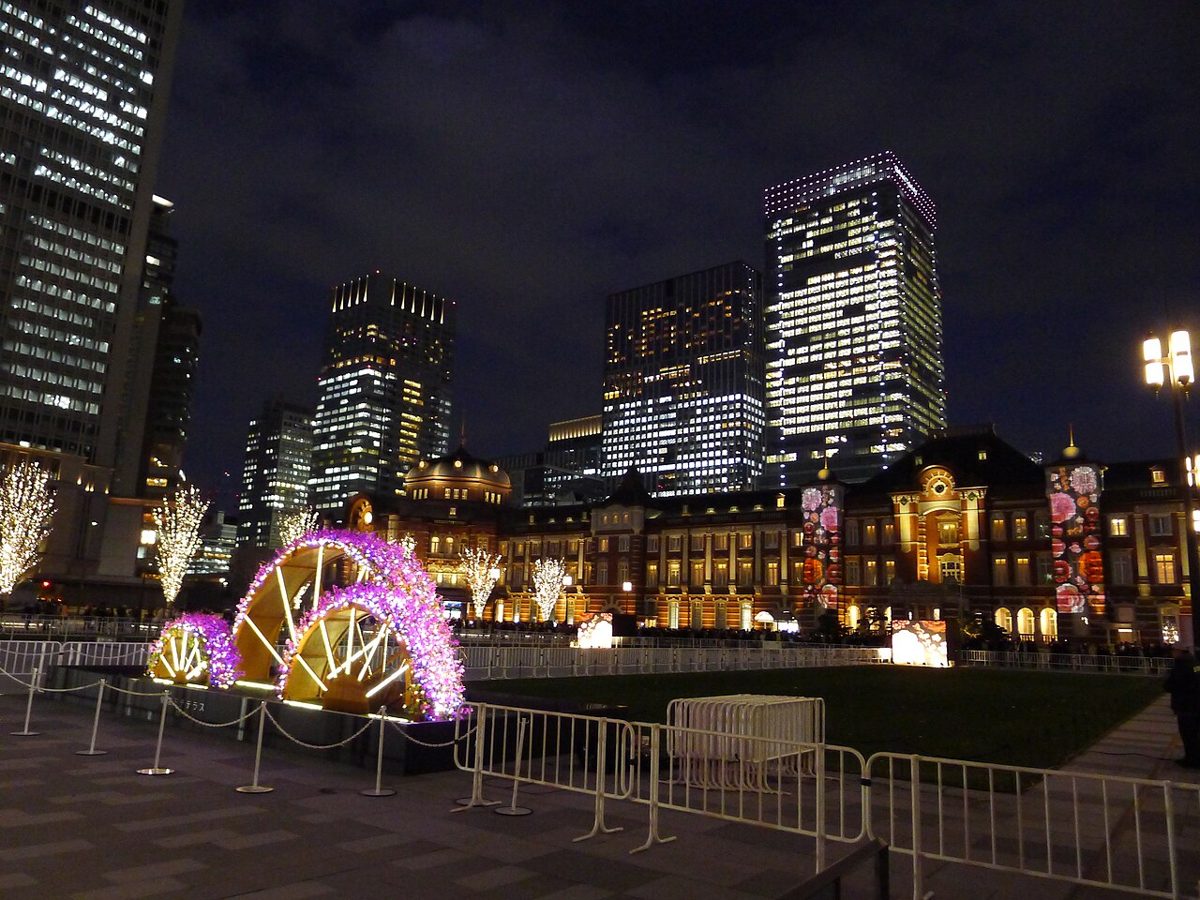
The Best Winter Illuminations in Tokyo
Illuminations are the heart of a Tokyo winter, and most of the best are free. They generally switch on in mid-November and run to late December for the Christmas-themed ones, or all the way to February for the city-light displays. Here are the ones worth crossing town for.
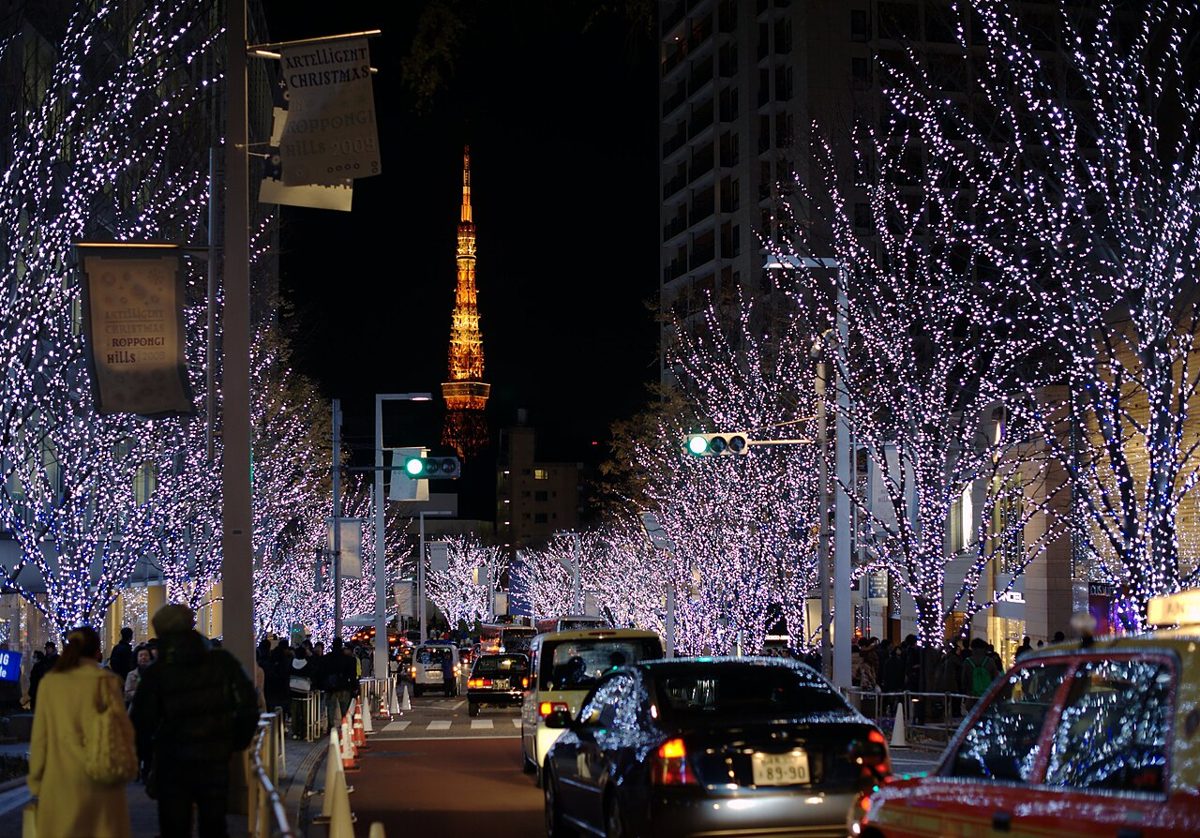
Roppongi Hills Keyakizaka — the icon (free, Roppongi)
The 400-metre Keyakizaka Avenue is strung with around 800,000 blue-white LEDs that frame Tokyo Tower perfectly at the bottom of the slope — it’s the most photographed winter shot in the city. It typically runs early November to 25 December, roughly 17:00-23:00, and a Christmas market sets up alongside it. Free. Come at dusk for the deep-blue sky behind the tower, then walk straight over to Tokyo Midtown five minutes away.
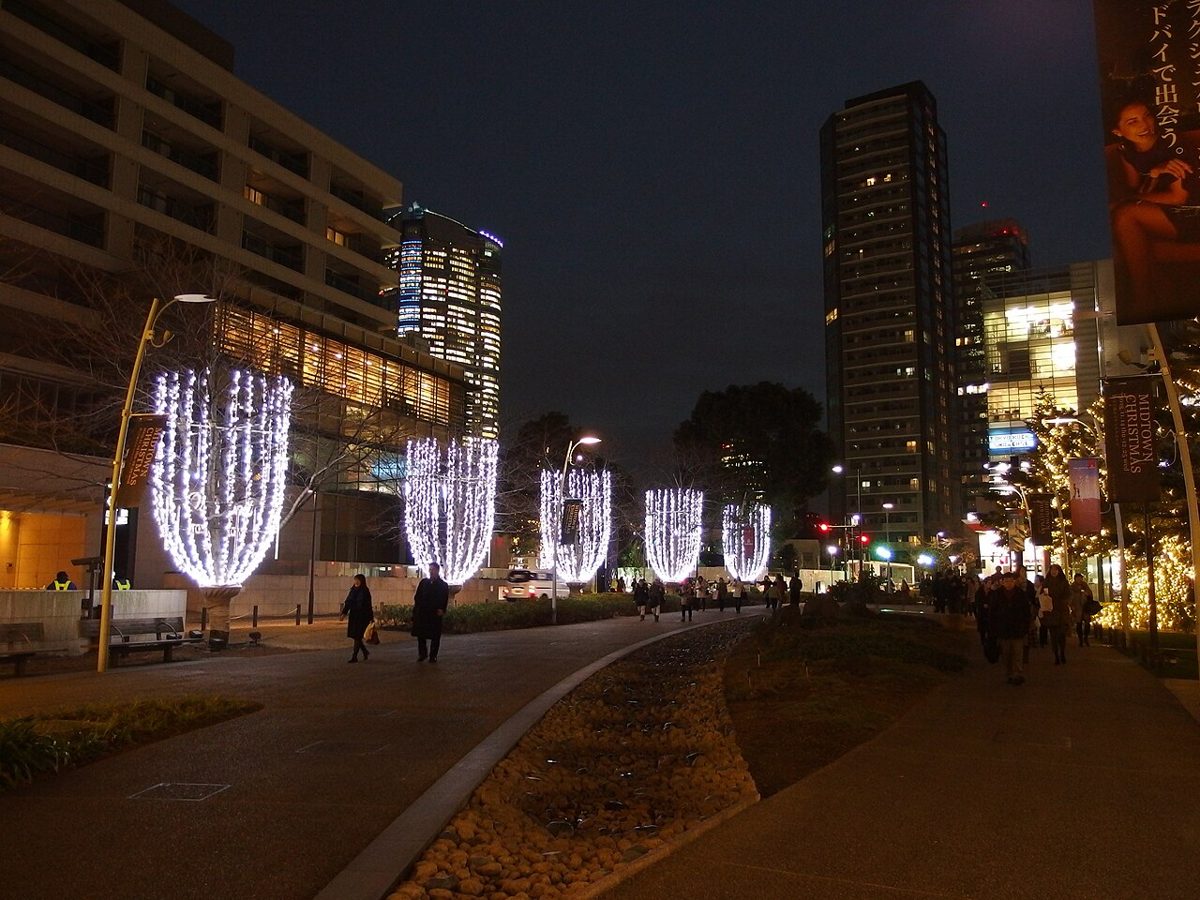
Tokyo Midtown — snow and bubbles (free, Roppongi)
Midtown’s Christmas display leans playful, with a ‘Path of Lights’, projected snow and bubble effects, and a big illuminated tree on the lawn. Free, usually 17:00-23:00. Pairing it with Roppongi Hills makes one easy evening loop on foot.
Marunouchi — champagne gold (free, Tokyo Station)
The 1.2-kilometre Nakadori avenue between Tokyo Station and Hibiya is lined with trees in a uniform champagne-gold glow, and it runs the longest of any — mid-November to mid-February, 16:00-23:00 (later in December). It’s elegant rather than flashy, and the brick facade of Tokyo Station at the end is floodlit too. Free, and dead central.
Caretta Shiodome — light and sound show (free, Shiodome)
Caretta Shiodome runs a choreographed light-and-sound show on a plaza beside the office towers, mid-November to mid-February. It plays on a timed loop every 20 minutes or so after dark, so check the schedule and grab a spot a few minutes before. Free. It’s a short walk from Hama-rikyu Gardens if you’re chaining stops.
Shibuya Blue Cave (Ao no Dokutsu) — the blue tunnel (free, Shibuya)
A tunnel of deep-blue lights runs from Yoyogi Park’s Keyaki Namiki down toward Shibuya’s Koen-dori, reflecting off the pavement into a corridor of blue. It’s usually a December-only event and gets very busy on weekend nights. Free.
Yomiuriland Jewellumination — the big paid show (Keio-Yomiuriland)
If you want the largest, most elaborate display, the amusement park Yomiuriland out west lights millions of LEDs in changing colours across the whole park from late October into spring. Unlike the city displays, this one needs a park or night-pass ticket (around ¥1,200-2,400 depending on what you add), but it’s a destination in its own right and great with kids.
Tokyo Winter Illuminations at a Glance
| Illumination | Usual run | Cost | Nearest station |
|---|---|---|---|
| Roppongi Hills Keyakizaka | Early Nov–25 Dec | Free | Roppongi |
| Tokyo Midtown | Mid Nov–25 Dec | Free | Roppongi |
| Marunouchi Nakadori | Mid Nov–mid Feb | Free | Tokyo / Yurakucho |
| Caretta Shiodome | Mid Nov–mid Feb | Free | Shiodome |
| Shibuya Blue Cave | December | Free | Shibuya / Harajuku |
| Yebisu Garden Place | Nov–early Jan | Free | Ebisu |
| Yomiuriland Jewellumination | Late Oct–spring | Ticket (~¥1,200+) | Keio-Yomiuriland |
| Tokyo Dome City | Mid Nov–mid Feb | Free | Suidobashi / Korakuen |
For the best elevated view of the lit-up skyline, an observation deck beats any street corner. Our comparison of Tokyo Skytree vs Tokyo Tower covers which deck to pick on a clear winter night.
Ice Skating and Other Winter Fun
Outdoor rinks pop up across the city from late November to February. Tokyo Midtown’s rink in Roppongi is the most central; the Akasaka and Tokyo Skytree-area rinks are reliable too, and Yomiuriland and the rink under the Red Brick Warehouse in Yokohama add a festive backdrop. Sessions usually run ¥1,000-2,000 including skate hire. Beyond skating, winter is prime time for the city’s museums and the warm, immersive rooms of teamLab — both ideal on a cold afternoon.
New Year in Tokyo — and the Holiday Shutdown
This is the part of a Tokyo winter that catches visitors out. The New Year holiday, roughly December 31 to January 3, is the biggest holiday of the Japanese year, and the city genuinely changes gear. Locals travel home, and a lot of Tokyo closes: many restaurants, independent shops, museums and some attractions shut for two to four days, and most department stores close on January 1 before reopening on the 2nd.
What stays open: convenience stores, chain restaurants and cafes, Tokyo Disney and teamLab, and — busiest of all — the temples and shrines, which fill with people making their first visit of the year (hatsumode). January 1 is the quietest day for ordinary shopping and the liveliest for shrines. If your trip lands on these dates, plan a shrine-and-illumination day rather than a museum-and-shopping one. We cover the customs, the best shrines and the food in detail in our Tokyo New Year traditions guide.
Countdown and New Year events
On December 31, the Shibuya scramble crossing becomes an unofficial countdown party, Zojoji temple by Tokyo Tower releases balloons at midnight with the tower lit behind it, and temples ring their bells 108 times (joya no kane). On the 2nd, the Imperial Palace opens its inner grounds for a rare public greeting by the Emperor. From January 1, shops launch fukubukuro — sealed ‘lucky bags’ of discounted mystery goods that draw long morning queues at the department stores.
What to Eat in a Tokyo Winter
Cold weather food is half the fun. Look for oden — fish cakes, daikon, eggs and tofu simmered in a light dashi, sold hot at every convenience store counter from a steaming tray. Sit down for nabe (hot pot) or shabu-shabu, where you cook thin meat and vegetables in a bubbling broth at the table. Ramen tastes better than ever in the cold; a rich tonkotsu or miso bowl is the perfect warm-up.
On the street, hunt down yaki-imo (stone-roasted sweet potato) from roving trucks, taiyaki (fish-shaped cakes filled with red bean), and hot amazake (a sweet, low- or non-alcoholic rice drink) handed out at shrines. And don’t skip the vending machines: in winter they switch half their stock to hot drinks — grab a warm can of corn soup, milk tea or coffee for around ¥130 to keep your hands warm between illuminations.
Winter Day Trips From Tokyo
Winter is the best season for two classic escapes. The first is the onsen: a day in Hakone gives you outdoor hot-spring baths with steam rising into cold air and, on a clear day, Mount Fuji across Lake Ashi. The second is snow and Fuji views — head to the Fuji Five Lakes or take the train toward the mountains of Nagano and Gunma for proper snow and the famous bathing snow monkeys at Jigokudani.
Because the winter air is so clear, this is also the season to actually see Mount Fuji from a distance, snow-capped and sharp. We lay out how to reach the mountain from Tokyo, and you can pair any of these with a soak — see our pick of the best ryokan and onsen stays near the city.
Visiting in Winter With Kids
Tokyo is easy with children in winter as long as you build in warm indoor breaks. Tokyo Disney runs a full Christmas programme through December and a winter season into March, with parades and seasonal food; our Tokyo Disney guide has the planning details. Indoor aquariums, the warm digital-art rooms of teamLab, and the city’s hands-on science museums all make good cold-day options. For a broader plan, see our family travel guide.
Practical Winter Tips
Time the illuminations right
Aim to arrive at the blue hour — that 20-minute window just after sunset (around 16:40-17:10 in December) when the sky is still deep blue rather than black. The lights against that blue photograph far better than against pure dark. Weekends are busy; a Tuesday evening at Marunouchi is calm and just as pretty.
Mind the holiday calendar
Double-check opening hours for anything you really want to do between December 29 and January 4, and don’t bank on a specific restaurant being open on January 1. Book New Year accommodation early — it’s one of the few peak-price windows in winter.
Layer for indoor heat
Trains and shops are heated to the point of sweating in a coat. Wear layers you can strip down to, and you’ll be comfortable both on a freezing platform and in a steamy ramen shop ten minutes later.
For everything happening across the calendar, from winter lights to summer festivals, see our year-round events calendar, and slot the highlights into a 72-hour Tokyo plan.
More Lights: Riverside and Garden Illuminations
Beyond the headline spots, a few more displays reward the trip. Yebisu Garden Place in Ebisu hangs a giant Baccarat crystal chandelier over its central plaza and lights the European-style courtyard from November into early January — it’s a calmer, more grown-up scene than Roppongi, and free. Tokyo Dome City strings its amusement-park grounds and the LaQua complex with lights from mid-November to mid-February, easy to fold in after Koishikawa Korakuen next door.
For something gentler, the trees along the Meguro River in Nakameguro — the same banks that draw cherry-blossom crowds in spring — glow in winter too, and the neighbourhood’s small bars and bakeries make it a nice low-key evening. Tokyo Mega Illumi, out at the Oi horse-racing track, runs a large ticketed display that mixes projection mapping with the lights if you want a destination event away from the crowds.
Late Winter: Setsubun, Plum Blossoms and Early Spring
Winter in Tokyo doesn’t just mean December. The back half of the season has its own calendar, and February rewards anyone still in town.
Setsubun (3 February)
On Setsubun, the eve of spring on the old calendar, temples and shrines hold bean-throwing ceremonies (mamemaki) to drive out bad luck, with crowds shouting ‘oni wa soto, fuku wa uchi’ (demons out, fortune in). Sensoji in Asakusa and Zojoji by Tokyo Tower hold big public events where celebrities and sumo wrestlers toss roasted soybeans and small prizes into the crowd. At home and in restaurants, people eat ehomaki, a fat uncut sushi roll faced in the year’s lucky direction. It’s one of the most fun free events of the winter — see our Sensoji temple guide for how to reach the Asakusa ceremony.
Plum blossoms (ume), late February
Weeks before the cherry trees, the plum blossoms open — pink and white, with a sweet scent the sakura lack. Late February into early March is peak. The best displays are at Yushima Tenjin shrine near Ueno (which holds a plum festival), Hanegi Park in Setagaya, and the grounds of Koishikawa Korakuen. It’s a quiet, local pleasure and a sign the long winter is nearly over. If your trip is creeping toward spring, our cherry blossom guide picks up where the plums leave off.
Winter Shopping: January Sales and Lucky Bags
January is the best shopping month of the year in Tokyo. From January 1-2, department stores and fashion brands launch fukubukuro — sealed ‘lucky bags’ packed with discounted mystery stock worth far more than the price, often ¥5,000-11,000 for goods two or three times that value. Popular brands and electronics stores draw queues before opening; some now let you see the contents or pre-reserve online. Alongside the lucky bags, winter clearance sales knock 30-70% off across Ginza, Shinjuku and Shibuya.
It’s also a great time for Akihabara and the second-hand shops, which are quieter than in peak tourist season. For where to go and what each district does best, see our Tokyo retail overview. Bring a foldable bag — the lucky bags are bulky, and you’ll fill it fast.
A Perfect Winter Day in Tokyo
Here’s how to string the best of it together on a December day. Start late and warm: a slow morning over coffee, then an early-afternoon observatory visit while the air is at its clearest for Mount Fuji. Mid-afternoon, wander a garden or the Marunouchi district before the light fades. As the sky turns deep blue around 16:45, position yourself at Roppongi Hills for the Keyakizaka lights and Tokyo Tower, then loop through Tokyo Midtown.
Warm up over nabe or a bowl of ramen for dinner, finish with a hot canned drink from a vending machine, and if you’ve still got energy, ride out to one more illumination at Marunouchi or Caretta Shiodome — both run late. That’s a full, photogenic Tokyo winter day without ever feeling rushed or frozen. Slot it into a broader plan with our three-day route through Tokyo.
Skiing and Snow Day Trips From Tokyo
Tokyo itself barely sees snow, but real powder is closer than you’d think. The famous example is Gala Yuzawa in Niigata, a ski resort built right on top of a bullet-train station: you can leave Tokyo Station mid-morning on the Joetsu Shinkansen, be on the slopes in about 75-90 minutes, rent everything on site, ski for the afternoon and be back in the city for dinner. Lift-and-train packages make it one of the only genuine day-trip ski options from a major world capital.
For a bigger mountain and an overnight, the resorts around Echigo-Yuzawa, Nagano and Hakuba deliver world-class snow. Many travellers pair Nagano with the Jigokudani Monkey Park, where wild Japanese macaques bathe in a steaming hot spring surrounded by snow — a strange, wonderful sight that’s at its best from December to March. Closer in, Nikko and Karuizawa turn into quiet snow-dusted resort towns, with frozen waterfalls and near-empty shrines that look completely different from their autumn selves.
If you’d rather soak than ski, that same winter cold makes an outdoor onsen unforgettable — sitting chest-deep in 42°C water with snow falling and steam curling off the surface is the quintessential Japanese winter moment. Hakone and Kusatsu are the classic choices within easy reach; read up on bathing etiquette first in our guide to ryokan and onsen near Tokyo so you walk in knowing the rules.
Getting around on New Year’s Eve
One handy quirk: on December 31, the major train and subway lines run all night so people can reach the shrines for the midnight hatsumode and the countdown. That means you can join the Shibuya countdown or ring in the year at a temple and still get home without a taxi — check your line’s special New Year timetable, as not every route runs and frequencies thin out after 1am. It’s the one night of the year Tokyo’s famously early-closing trains keep going until dawn.
A quick winter packing list
Keep it simple: a warm but packable coat, a scarf, gloves and a beanie for the evening illuminations; layers you can shed in over-heated trains and restaurants; comfortable waterproof-ish shoes (handy on the rare snowy day); a reusable hot-drink-friendly attitude toward vending machines; and a few ¥100 stick-on hand-warmers from any konbini. Skip the heavy snow gear unless you’re heading to the ski slopes — central Tokyo simply doesn’t need it.
The one winter activity that costs nothing and delivers every time is the illumination season, which runs from the second week of November and — in the case of Marunouchi and Caretta Shiodome — well into February. Our guide to Tokyo winter illuminations ranks the displays, gives the switch-off dates that catch late-December visitors out, and maps two evening routes.
December is the month that rewards precision more than any other in the winter. The first ten days are among the cheapest and brightest of the year, the illuminations peak before Christmas, and the year-end shutdown from the 29th changes what is even possible. See Tokyo in December for the week-by-week breakdown.
Frequently Asked Questions
Is winter a good time to visit Tokyo?
Yes — it’s underrated. Winter is dry and sunny with crisp blue skies, the city’s illuminations run from November to February, and you get the clearest Mount Fuji views of the year. Crowds and hotel prices are lower than spring or autumn, apart from the few days around New Year. The catch is the cold (4-12°C in the day) and the Dec 31-Jan 3 holiday slowdown, when many shops and restaurants close.
How cold does Tokyo get in winter?
Tokyo winters are cold but mild by northern-hemisphere standards — daytime highs of about 9-12°C in December, dropping to 4-10°C in January and February, with overnight lows near freezing. It rarely snows in the city (a dusting a few times a season at most), and the days are famously dry and clear. Pack a warm coat, but you won’t need full snow gear unless you head to the mountains.
Do Japanese people celebrate Christmas?
They celebrate it, but not as a religious or family holiday — December 25 is a normal working day, and shops stay open. Christmas in Japan is romantic and commercial: couples go on dates, families eat fried chicken (the famous KFC tradition) and strawberry shortcake ‘Christmas cake’, and cities glow with illuminations. The big family holiday is New Year, a week later.
What is closed in Tokyo over New Year?
The New Year holiday (roughly Dec 31 to Jan 3) is the one time Tokyo genuinely slows down. Many restaurants, smaller shops, museums and some attractions close for a few days, and department stores typically shut Jan 1 before reopening Jan 2 with lucky-bag sales. What stays open: convenience stores, temples and shrines (packed for hatsumode), Tokyo Disney, teamLab, and most chain restaurants. Plan light for Jan 1 especially.
What is there to do in Tokyo in winter besides illuminations?
Plenty. Skate at an outdoor rink, soak in an onsen on a day trip to Hakone, ride to a top-deck observatory for the year’s clearest views, hunt seasonal food like oden and nabe, shop the January sales and fukubukuro lucky bags, and catch New Year traditions at the shrines. Tokyo Disney runs a full winter and Christmas programme too.
Photo Credits
- Keyakizaka Avenue in Roppongi Hills, framed by Tokyo Tower, during the winter illumination — Photo: Comyu / CC BY-SA 3.0 via Wikimedia Commons
- Marunouchi Nakadori, lit in champagne gold from mid-November to mid-February — Photo: Indiana jo / CC BY-SA 4.0 via Wikimedia Commons
- The light-and-sound illumination at Caretta Shiodome in Shiodome — Photo: Guilhem Vellut from Annecy, France / CC BY 2.0 via Wikimedia Commons
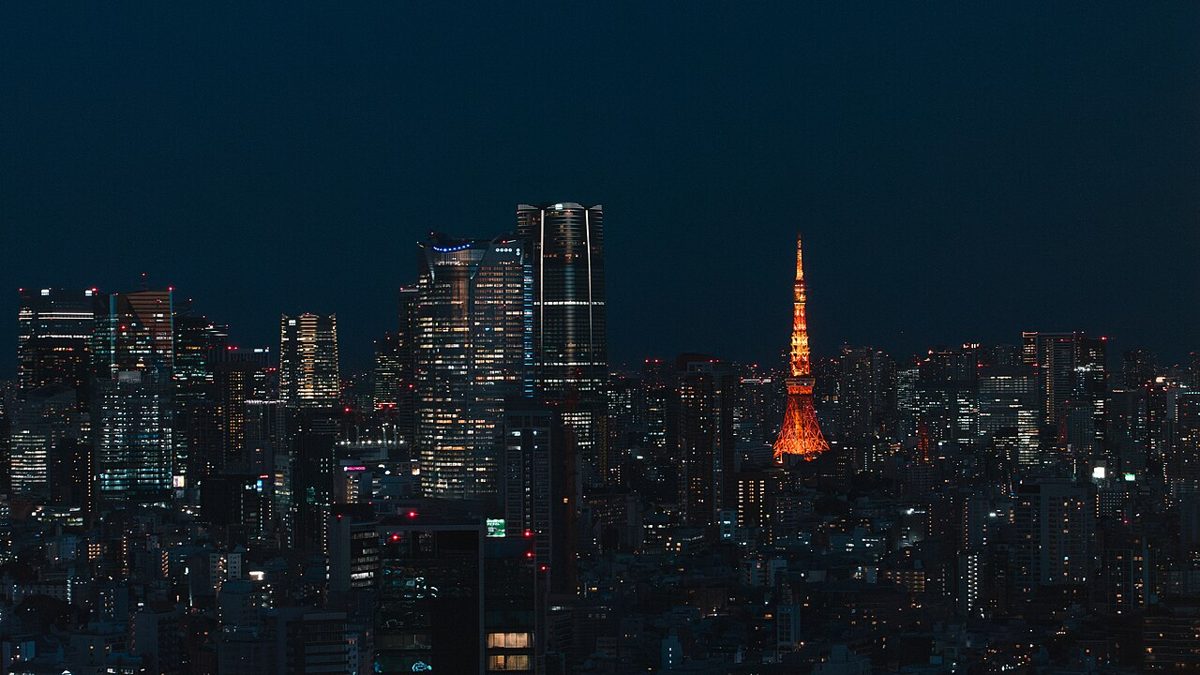
- Tokyo Tower glows on the clear, dry nights that define a Tokyo winter — Photo: Kyle Hasegawa / CC BY 2.0 via Wikimedia Commons
- Central Tokyo stays lively through winter — Shibuya on a cold December evening — Photo: David Kernan / CC BY 4.0 via Wikimedia Commons
- Winter’s dry air gives the clearest Mount Fuji views of the year — Photo: Captain F. Brinkley / Public domain via Wikimedia Commons