This Tokyo temples and shrines guide rounds up the city’s best sacred sites and shows you how to visit them. Start with the big four — Senso-ji, Meiji Jingu, Nezu Shrine and Zojoji — then add the lucky-cat temple of Gotokuji, the hidden torii tunnel of Hie Shrine, and a couple of local favourites. Most are free, many are open from dawn, and together they’re the easiest window into Japanese spiritual life you’ll find anywhere in the country.
Tokyo has thousands of temples and shrines, from giant complexes that swallow tour buses to tiny neighbourhood altars wedged between office towers. You don’t need to see them all. This guide picks the ones genuinely worth your time, tells you what makes each one different, and covers the practical stuff competitors skip — exact stations, real prices, how to actually pray at each, and how to collect the beautiful goshuin stamps along the way. For the two heavyweights, we link you to full standalone guides rather than repeat them here.
Temple or shrine? The actual difference
People use the words interchangeably, but they belong to two different religions, and once you know the tells you’ll never confuse them again.
| Shinto shrine (jinja) | Buddhist temple (tera) | |
|---|---|---|
| Religion | Shinto — Japan’s indigenous faith | Buddhism — arrived from the mainland |
| What it honours | Kami (gods/spirits of nature and ancestors) | The Buddha and bodhisattvas |
| Entrance gate | A torii gate (often vermilion) | A sanmon gate, usually with guardian statues |
| Telltale signs | Sacred rope (shimenawa), no statues of deities, often guardian lion-dogs | Incense burner, Buddhist statues, a pagoda, sometimes a graveyard |
| How you pray | Bow twice, clap twice, bow once | Quiet bow, hands together — no clapping |
The quickest test in the field: if you walk under a torii, it’s a shrine; if you pass a big gate with fierce guardian statues and smell incense, it’s a temple. A graveyard on site almost always means a Buddhist temple. Plenty of Japanese people visit both without belonging to either — Shinto for births and New Year, Buddhism for funerals — so as a visitor you’re welcome at all of them.
Why does one country run on two religions at once? For most of Japanese history, Shinto and Buddhism were so intertwined that many sites were both temple and shrine on the same grounds — the two were only formally separated by government order in 1868. That long marriage is why the architecture, the festivals and even the etiquette overlap, and why no one finds it strange to marry in Shinto robes, celebrate a Buddhist funeral, and visit a shrine at New Year. As a traveller you can relax: there’s no membership, no entry test, and no wrong religion to be the “wrong” one for. Curiosity and good manners are all that’s asked.
One more practical tell: shrines are usually approached along a gravel path called a sando, with the torii marking where the sacred begins, while temples often front straight onto the street behind their gate. Once you’ve clocked a torii versus a guardian-statue gate a few times, you’ll read every site at a glance.
How to pray — shrine versus temple
At a Shinto shrine
Bow once before passing under the torii. At the temizuya water basin, rinse your left hand, then right, then rinse your mouth from a cupped hand. At the offering hall, drop in a coin, ring the bell if there is one, then bow twice, clap twice, hold a moment of prayer, and bow once more.
At a Buddhist temple
Temples are gentler on ritual. If there’s an incense burner, buy a bundle, light it, wave out the flame (don’t blow), stand it in the burner and waft the smoke over yourself — it’s said to be purifying. At the hall, offer a coin, bow with your hands pressed together in silent prayer, and bow again. Do not clap at a temple. You may also need to remove your shoes to enter a hall, so wear decent socks.
If you want the full step-by-step on bowing, coins and purification, our Japanese etiquette guide covers shrine and temple manners in depth, and you can read more about the beliefs behind them in our overview of Tokyo culture and traditions.
The best temples and shrines in Tokyo
Here are the sites worth building a day around, each with the nearest station, the cost, and what actually makes it special.
Senso-ji — Tokyo’s oldest temple (Asakusa)
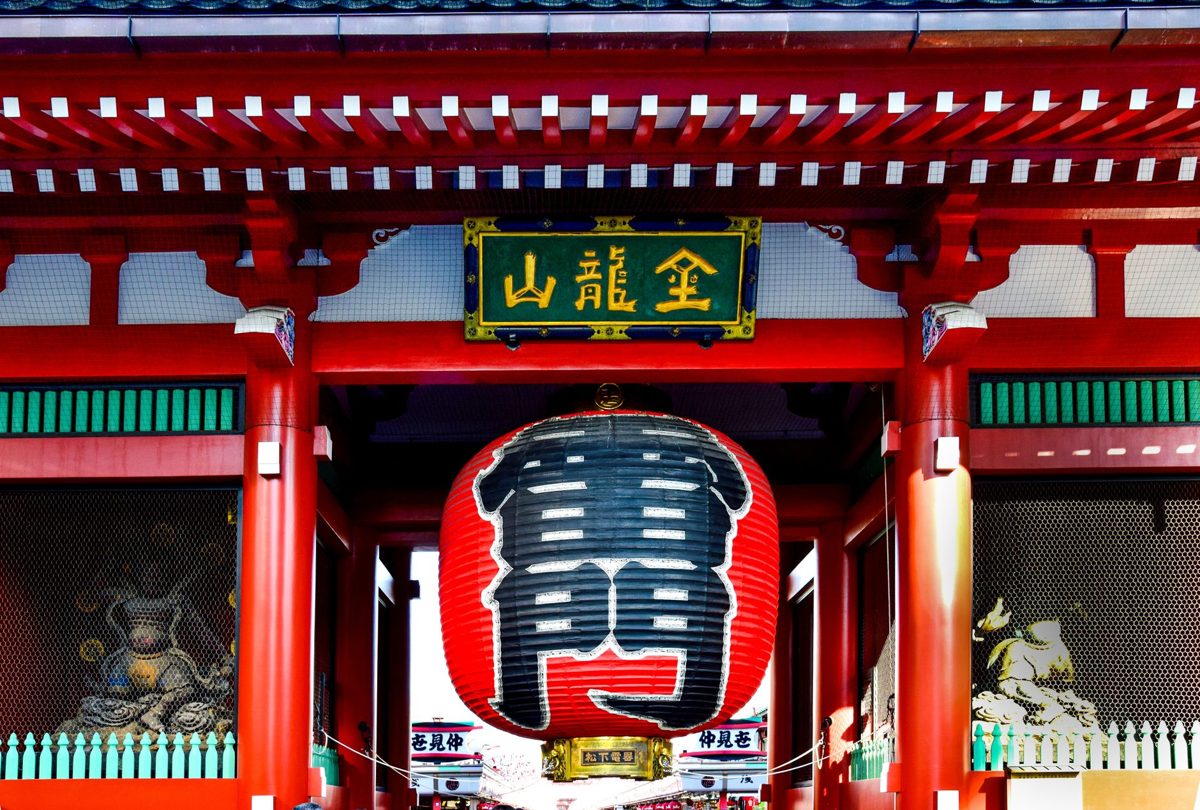
Founded in 645, Senso-ji is the city’s oldest and most visited temple, and the obvious place to start. You enter through the Kaminarimon “Thunder Gate” and its giant red lantern, walk the 250-metre Nakamise shopping street lined with snack and souvenir stalls, and arrive at a grand main hall with a five-storey pagoda alongside. It’s free, the grounds are open 24 hours (main hall roughly 6:00–17:00), and it’s busiest by late morning, so come early or after dark when the buildings are lit.
Access: Asakusa Station (Ginza, Asakusa and Tobu lines), a few minutes’ walk. We cover the gate, the pagoda, the fortune slips and the best photo times in our full Senso-ji guide.
Senso-ji rewards a second look beyond the main hall. Tucked to the left is a five-storey pagoda lit beautifully at night, and behind the temple sits a small traditional garden and Asakusa Shrine, the Shinto half of the complex that most visitors walk straight past. Draw an omikuji fortune here by shaking a metal tin for a numbered stick — and if you pull a bad one (kyo), simply tie it to the nearby rack to leave the bad luck behind, exactly as locals do.
Meiji Jingu — the great forest shrine (Harajuku)
A two-minute walk from Harajuku, Meiji Jingu is Tokyo’s grandest Shinto shrine, set inside a 170-acre forest planted by hand a century ago. Giant cypress torii gates, a wall of donated sake barrels, traditional weekend weddings and a ¥500 inner garden that fills with irises in June — it’s the perfect counterpoint to Senso-ji’s Buddhist bustle. The shrine grounds are free and open sunrise to sunset.
Access: Harajuku (JR Yamanote) or Meiji-jingumae (Chiyoda/Fukutoshin), right by the grand torii. The history, the prayer ritual and the iris garden are all in our full Meiji Shrine guide.
What surprises first-timers at Meiji Jingu is the silence. Within a minute of the torii the traffic noise is simply gone, replaced by gravel and birdsong, and the walk to the main hall becomes part of the experience rather than a means to it. Come at opening and you may share the forest path with almost no one — the single best upgrade you can give the visit.
Nezu Shrine — the torii tunnel and azaleas (Bunkyo)
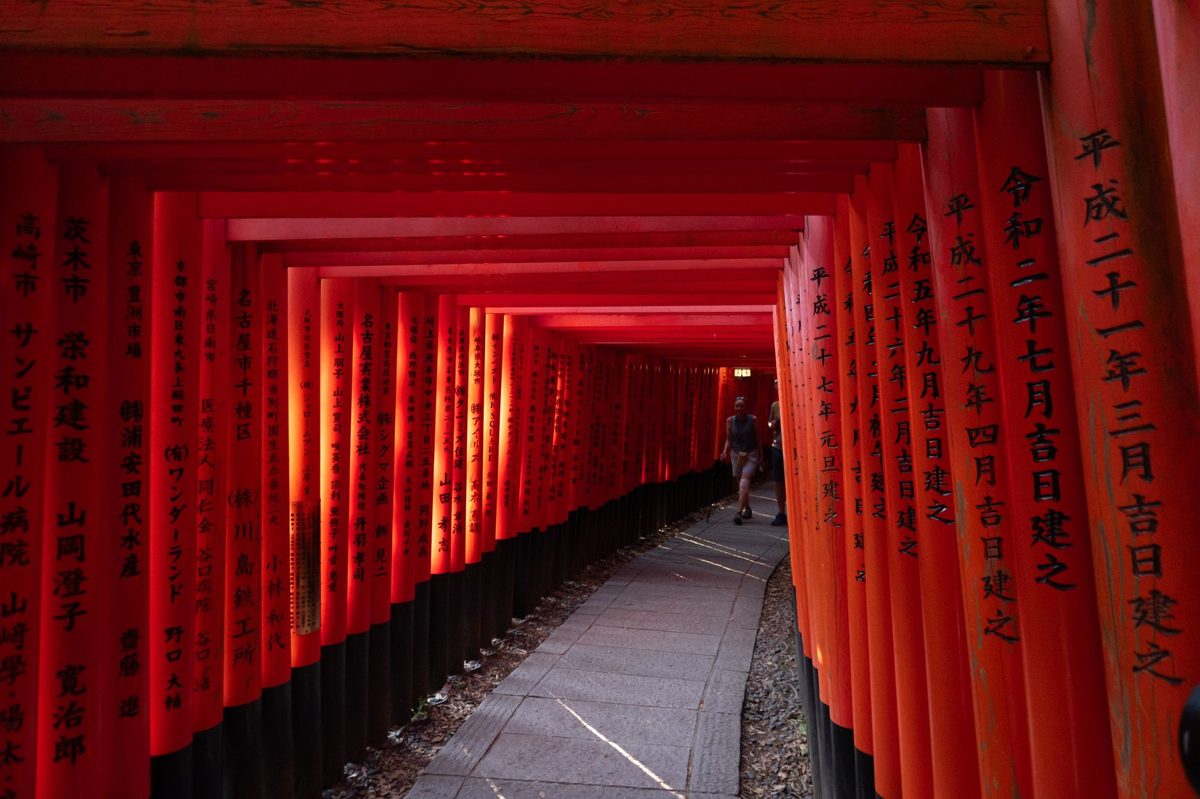
One of Tokyo’s oldest shrines, with current buildings dating to 1706, Nezu Shrine is the city’s answer to Kyoto’s Fushimi Inari — a tunnel of small vermilion torii gates winding up a hillside, but at a fraction of the scale and crowds. In late April its hillside garden of roughly 3,000 azaleas erupts into colour for the Bunkyo Azalea Festival (garden entry around ¥500, up to ¥1,000 at peak bloom). The shrine itself is free year-round.
Access: a 5-minute walk from Nezu or Sendagi stations on the Chiyoda Line. Pair it with a wander through the old Yanaka neighbourhood next door.
Zojoji — temple with Tokyo Tower behind (Shiba)

Zojoji gives you Tokyo’s best clash of old and new: a 1393-founded Buddhist temple whose Sangedatsumon main gate (built 1622) is the oldest wooden structure in the city, set directly in front of the orange Tokyo Tower. The shot of the temple roof with the tower rising behind is a Tokyo classic. The grounds are free; the Tokugawa mausoleum and museum cost ¥500–¥1,000. Don’t miss the rows of small Jizo statues with red caps and pinwheels, dedicated to lost children.
Access: Onarimon or Shibakoen stations (Mita Line), or Daimon (Asakusa/Oedo). Main hall worship roughly 6:00–17:30.
Gotokuji — the lucky cat temple (Setagaya)

Gotokuji is the birthplace of the maneki-neko, the beckoning “lucky cat” you see in shop windows worldwide. Legend says a feudal lord was waved inside by the temple’s cat moments before a lightning bolt struck where he’d been standing; in gratitude he made it his family temple. Today a corner of the grounds holds shelves stacked with thousands of white cat figurines left by visitors — a quietly surreal, very photogenic sight. Entry is free.
Access: open daily 6:00–17:00; for a figurine or a goshuin, come between 8:00 and 15:00 when the office is open. Gotokuji Station (Odakyu Line) or Miyanosaka on the Setagaya tram, about a 10-minute walk. It’s out west, so treat it as its own half-day.
Hie Shrine — the hidden torii staircase (Akasaka)
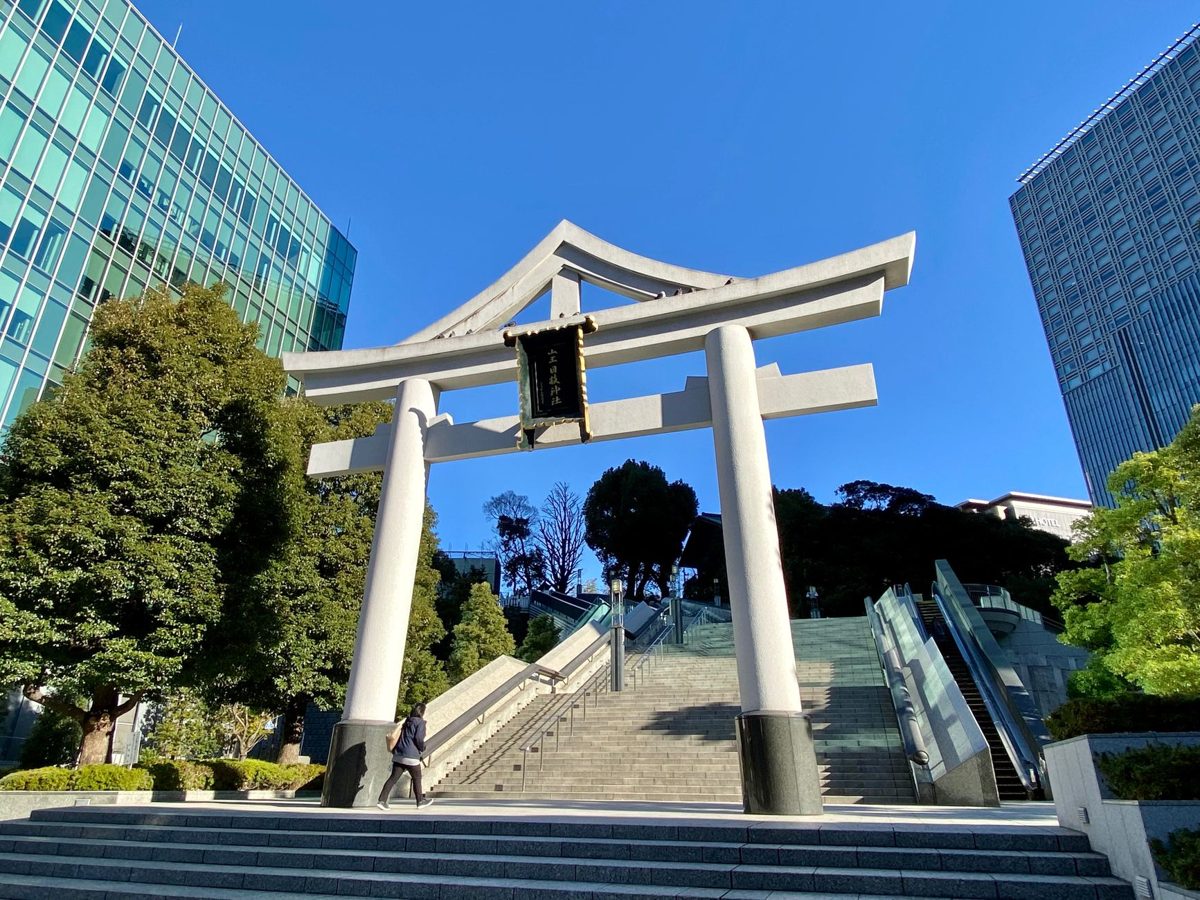
Tucked among the office towers of Akasaka, Hie Shrine hides a second Fushimi-Inari-style surprise: a staircase of around 90 vermilion torii gates climbing the hillside on its western approach. Its guardian animal is the monkey rather than the usual fox or lion-dog, and because monkeys are linked to happy marriages and safe childbirth, many couples come here to pray. It’s free, and beautifully empty if you arrive early.
Access: open roughly 5:00–18:00 (6:00–17:00 in winter). Akasaka Station (Chiyoda Line), Exit 2 for the torii staircase. Best photographed before 8:00, before the office crowds arrive.
Tomioka Hachimangu — sumo’s home shrine (Monzen-nakacho)
Tomioka Hachimangu is the largest Hachiman shrine in Tokyo and the birthplace of professional sumo — stone monuments here record the names of every grand champion (yokozuna). Its summer Fukagawa Hachiman Festival is one of the city’s three great festivals, when crowds hurl water over teams carrying portable shrines. Free to enter, and a window into a working, local Tokyo most tourists miss.
Access: Monzen-nakacho Station (Tozai/Oedo lines), a 3-minute walk. Pair it with the nearby Fukagawa Edo Museum.
Yushima Tenjin — the exam-luck shrine (Ueno)
Yushima Tenjin is dedicated to the deity of learning, so it’s mobbed by students before exam season, who hang thousands of ema plaques begging for a pass. Its real glory, though, is late winter: around 300 plum trees burst into bloom for the Ume Matsuri (plum festival), usually early February to early March — Tokyo’s best plum-blossom spot. Free to enter; goshuin around ¥500.
Access: 2 minutes from Yushima Station (Chiyoda Line, Exit 3) or 5 minutes from Ueno-Hirokoji. Easy to combine with Ueno Park and its museums.
A few more worth a detour
Once you’ve done the headliners, these smaller sites reward anyone who wants to go a little deeper without straying far from the usual routes.
- Kanda Myojin (near Akihabara) — a 1,300-year-old shrine that’s become the unofficial guardian of Tokyo’s tech and anime district, so its ema and charms come with a distinctly modern, electronics-blessing twist. Free; a few minutes from Ochanomizu Station.
- Asakusa Shrine — the Shinto shrine standing right beside Senso-ji, easy to miss but worth the two-minute detour; it hosts the riotous Sanja Matsuri each May.
- Atago Shrine (Toranomon) — reached by a famously steep stone staircase nicknamed the “success steps,” a quiet hilltop escape ringed by skyscrapers.
- Yanaka Tennoji — a serene old temple in the low-rise Yanaka district near Nezu, with its own bronze Buddha and a beautiful surrounding cemetery for a peaceful stroll.
None of these need more than half an hour, and each pairs naturally with a bigger site nearby — Kanda Myojin with Akihabara, Asakusa Shrine with Senso-ji, Yanaka Tennoji with Nezu.
Tokyo temples and shrines at a glance
Short on time? This table sums up the must-visits so you can match a site to your schedule, your neighbourhood and your budget.
| Site | Type | Nearest station | Cost | Best for |
|---|---|---|---|---|
| Senso-ji | Temple | Asakusa | Free | Tokyo’s oldest temple, lanterns, Nakamise street |
| Meiji Jingu | Shrine | Harajuku / Meiji-jingumae | Free (garden ¥500) | Forest, giant torii, June irises |
| Nezu Shrine | Shrine | Nezu / Sendagi | Free (azaleas ¥500–1,000) | Torii tunnel, late-April azaleas |
| Zojoji | Temple | Onarimon / Shibakoen | Free (museum ¥500–1,000) | Tokyo Tower backdrop, Jizo statues |
| Gotokuji | Temple | Gotokuji (Odakyu) | Free | Thousands of lucky cats |
| Hie Shrine | Shrine | Akasaka | Free | Hidden torii staircase, early-morning photos |
| Tomioka Hachimangu | Shrine | Monzen-nakacho | Free | Sumo history, summer festival |
| Yushima Tenjin | Shrine | Yushima | Free | Exam luck, February plum blossom |
Collecting goshuin stamps
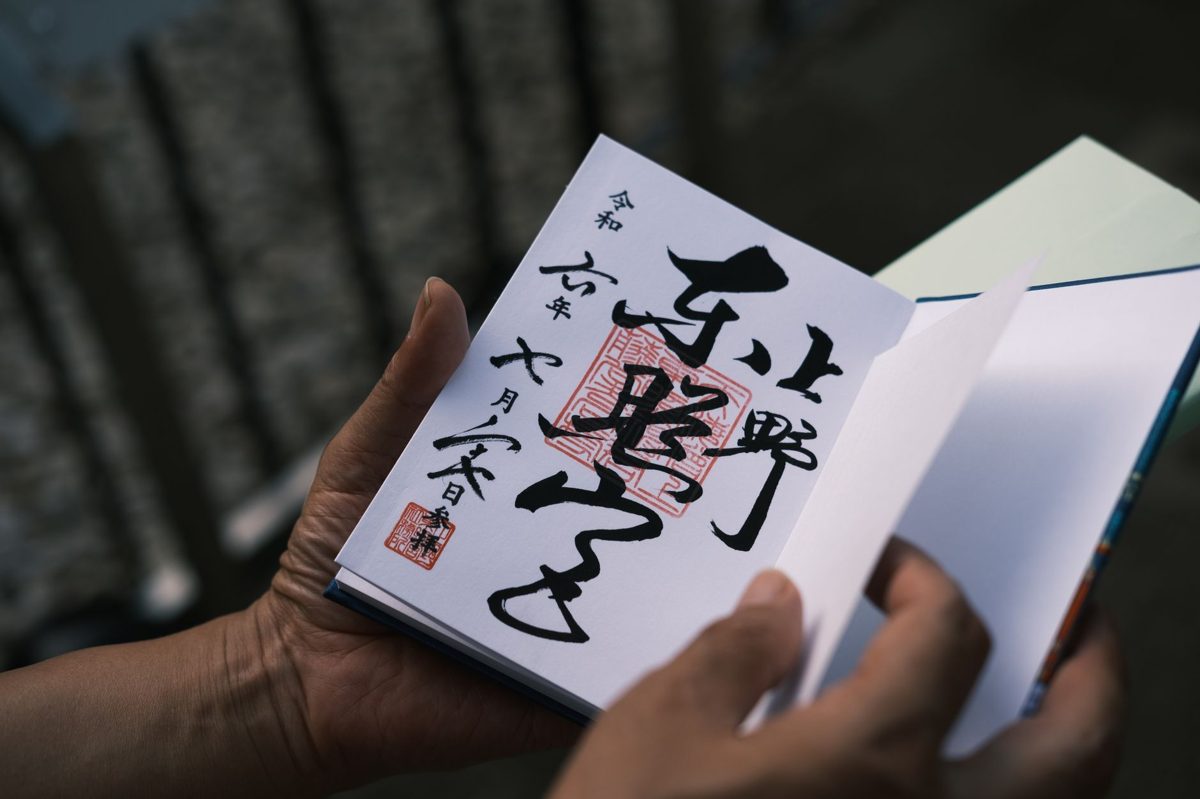
If you’re visiting more than one or two sites, buy a goshuincho — a concertina stamp book — at your first stop (around ¥1,500–2,000). At each shrine or temple, the office will brush a unique goshuin: bold black calligraphy over a red seal, dated to your visit, usually for ¥300–¥500. It’s done by hand while you wait, and no two are alike, which makes the finished book the single best souvenir you can bring home from Japan.
- Keep shrine and temple stamps in the same book — mixing them is fine for travellers, though some collectors keep two.
- Hand over your book open to the next blank page, and wait quietly while it’s brushed.
- Some popular sites issue a pre-written paper version on busy days; that’s normal, not a downgrade.
- It’s a memento of a visit, so the etiquette is to actually pray first, then collect the stamp.
A goshuincho also doubles as a quiet record of your trip: flipping back through the dated stamps months later, you can retrace exactly where you stood and when. If you forget your book, most major sites sell a paper goshuin you can slip inside later, and many now offer special seasonal designs — cherry-blossom pink in spring, autumn maples in November — so keen collectors sometimes return to the same shrine just for the limited edition.
Festivals worth planning around
Shrines and temples are at their most alive during a matsuri (festival), when streets fill with portable shrines (mikoshi), drums, food stalls and crowds in happi coats. If your dates line up with one, reshuffle your itinerary to catch it — it’s a completely different experience from a quiet weekday visit.
- Sanno Matsuri (Hie Shrine, mid-June, in even-numbered years) — one of Tokyo’s three great festivals, with a grand procession through the city centre.
- Sanja Matsuri (Asakusa Shrine, beside Senso-ji, mid-May) — three days, roughly a hundred mikoshi, and around two million spectators. The loudest, most exuberant festival in the city.
- Fukagawa Hachiman Festival (Tomioka Hachimangu, mid-August) — the “water-throwing festival,” where the crowd douses the mikoshi-bearers to cool them down.
- Hatsumode (everywhere, January 1–3) — the year’s first shrine visit; Meiji Jingu alone draws around three million people.
Even outside the big names, smaller neighbourhood shrines hold local festivals all summer. If you hear taiko drums and see paper lanterns strung down a side street, follow them.
Best spots for cherry blossom and autumn colour
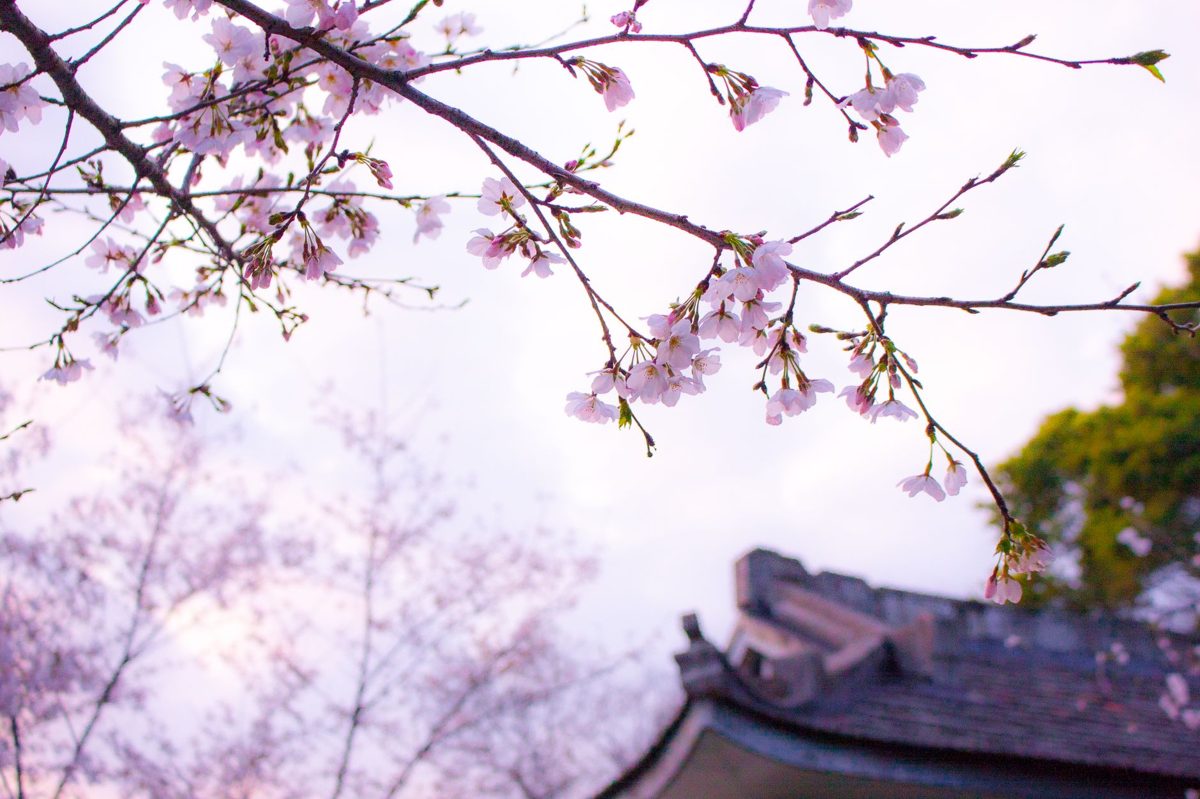
Sacred grounds and seasonal colour go hand in hand in Tokyo. For cherry blossom (late March to early April), the approach to Senso-ji, the temple-dotted slopes of Yanaka near Nezu, and the grounds around Zojoji with Tokyo Tower behind are all superb — though for sheer scale you may want a dedicated park. For plum blossom a few weeks earlier, Yushima Tenjin is unbeatable. Nezu Shrine owns late April with its azaleas.
In autumn (mid-to-late November), the ginkgo and maples around Meiji Jingu’s outer precinct and the gardens at Zojoji turn gold and red. Pretty much every site on this list looks better with a seasonal backdrop, so if your dates are flexible, aim for blossom or autumn-colour weeks.
Going further — the great temple towns near Tokyo
Two day-trip towns reward anyone who catches the temple bug, and both are easy returns from the city.
Which to choose? If you have one free day and want temples by the sea with an easy, frequent train, pick Kamakura. If you’d rather trade travel time for something grander and more remote — gilded carvings, mountain air and waterfalls — pick Nikko. Both are doable in a day from central Tokyo, but neither pairs well with the other, so commit to one.
Kamakura — the seaside temple town
About an hour south by train (JR Shonan–Shinjuku Line from Shibuya, roughly ¥830), Kamakura is a former samurai capital packed with temples and crowned by the Great Buddha (Daibutsu) — a 13-metre bronze figure seated outdoors since 1498 — plus the flower-filled Hasedera and the city’s main shrine, Tsurugaoka Hachimangu. Easily a full day.
Nikko — mountain shrines and waterfalls
Around two hours north, Nikko is a UNESCO World Heritage site where the lavishly carved Toshogu shrine — mausoleum of the shogun who founded Edo-era Tokyo — sits among cedar forests, waterfalls and lakes. It’s a different world from the city and the most rewarding single temple day-trip from Tokyo.
For routes, timings and tickets to both, see our full rundown of day trips from Tokyo. And if you’re slotting temple-hopping into a wider itinerary, our guide to the best things to do in Tokyo shows how it fits alongside the city’s food, neighbourhoods and nightlife.
Planning your visits — timing, cost and what to wear
A little planning turns temple-hopping from a tiring slog into one of the best days of a Tokyo trip. A few things worth knowing before you set out.
When to go each day
Aim for the first hour after opening. Senso-ji, Meiji Jingu and Hie Shrine are all transformed by an early start — soft light, cool air and a fraction of the crowds. Many shrines open their grounds at or before dawn; temple halls and stamp offices usually run roughly 9:00 to 16:00 or 17:00, so do your praying early and time stamp-collecting for office hours.
How much it costs
Almost nothing. The grounds of nearly every site here are free; you’ll only pay for special gardens or mausoleums (typically ¥500–¥1,000) and for the things you choose to take home — a goshuin stamp (¥300–500), an omamori charm (¥800–1,000) or a fortune slip (¥100–300). Carry a handful of ¥5 and ¥100 coins for offerings and stamps; small change is genuinely useful here.
Getting between them
Most of these sites sit on the Tokyo Metro or JR Yamanote loop, so a rechargeable Suica or PASMO card is all you need — there’s no temple pass to buy. Cluster your day by area: Asakusa (Senso-ji) with Ueno (Yushima Tenjin); Harajuku (Meiji Jingu) with Akasaka (Hie Shrine); and save the western outliers like Gotokuji for their own trip.
What to wear
There’s no strict dress code, but these are places of worship, so smart-casual beats beachwear. You may need to slip your shoes off to enter a temple hall, so wear socks you’re happy to be seen in and shoes that come off easily. Comfortable footwear matters anyway — you’ll cover a lot of gravel and a fair few staircases.
Quick picks: the best shrine or temple for…
If you only have time for one or two and want them to match your interests, use this shortlist.
- First-timers: Senso-ji — the most iconic, easiest to reach and busiest with good reason.
- Peace and nature: Meiji Jingu — a real forest a step from Harajuku.
- Photographers: Hie Shrine’s torii staircase at dawn, or Zojoji with Tokyo Tower at dusk.
- Something quirky: Gotokuji and its thousands of lucky cats.
- Flowers: Yushima Tenjin for February plums, Nezu Shrine for late-April azaleas, Meiji Jingu for June irises.
- Avoiding crowds: Tomioka Hachimangu or the small Yanaka temples, where you may have the place to yourself.
A note on accessibility
Step-free access varies a lot. Meiji Jingu’s main approach is flat gravel and broadly wheelchair- and stroller-friendly, and Senso-ji’s main precinct is largely level with ramps near the main hall. The torii-tunnel sites, by contrast, are built around staircases — Hie Shrine and Nezu’s tunnel both involve steps, though Hie has a lift on its eastern side. If steps are a concern, lead with Senso-ji and Meiji Jingu and check each site’s official page for the latest barrier-free routes.
A suggested temple-and-shrine day
Want a ready-made route? This loop links three contrasting sites with minimal backtracking and shows off both religions in a single day.
- Morning: Meiji Jingu at opening, while the forest is cool and quiet, then walk out into Harajuku.
- Midday: hop to Akasaka for the near-empty torii staircase at Hie Shrine and an early lunch.
- Afternoon: finish at Senso-ji in Asakusa, browsing Nakamise street and staying for the lanterns at dusk.
That’s one Buddhist temple, two Shinto shrines, a forest, a torii tunnel and a giant lantern — a complete introduction to sacred Tokyo, with a goshuin book slowly filling up as you go.
Etiquette: the quick dos and don’ts
You don’t need to memorise a rulebook, but a handful of small courtesies show respect and help you blend in.
- Do bow once before passing under a torii or through a temple gate.
- Do walk to the side of the path rather than straight down the centre, which is reserved for the deity.
- Do purify your hands and mouth at the water basin before approaching to pray.
- Don’t clap at a Buddhist temple — clapping is for Shinto shrines only.
- Don’t photograph inside inner sanctuaries, and never photograph a wedding party up close or with flash.
- Don’t drink the purification water as if from a fountain — rinse and spit beside the basin, not back into it.
- Do keep your voice low; these are working places of worship, not theme parks.
Get these right and you’ll be treated exactly like any local visitor. Nobody expects perfection from travellers, and shrine and temple staff are used to helping newcomers — when in doubt, watch the person ahead of you and follow their lead.
Taken together, Tokyo’s temples and shrines tell the story of the city better than any museum: an ancient temple founded in 645, a forest shrine built in living memory, sumo monuments, lucky cats and exam-luck plaques, all threaded through a hyper-modern metropolis. Pick two or three that match your interests, go early, mind the simple etiquette, and let the goshuin book fill up as you wander — it’s one of the most rewarding ways to spend your time in Tokyo.
Frequently Asked Questions
What is the difference between a temple and a shrine in Japan?
A shrine (jinja) is Shinto and honours kami — spirits of nature and ancestors — and you enter under a torii gate. A temple (tera) is Buddhist, honours the Buddha, and you pass a sanmon gate, often with guardian statues, an incense burner and sometimes a graveyard. At a shrine you clap when you pray; at a temple you don’t.
Which temples and shrines should you not miss in Tokyo?
Start with Senso-ji in Asakusa and Meiji Jingu in Harajuku — the city’s two giants. Then add Nezu Shrine for its torii tunnel, Zojoji for Tokyo Tower behind it, Gotokuji for the lucky cats, and Hie Shrine for its hidden vermilion staircase.
Are Tokyo’s temples and shrines free to visit?
Almost all of them are free to enter, including Senso-ji, Meiji Jingu, Zojoji, Gotokuji and Hie Shrine. Small fees apply only to special areas — the Meiji Jingu inner garden (¥500), Nezu’s azalea garden in spring (¥500–¥1,000), or Zojoji’s Tokugawa mausoleum (¥500–¥1,000).
What is a goshuin and how do you collect one?
A goshuin is a hand-brushed stamp — calligraphy over a red seal, dated to your visit — given at a shrine or temple office for about ¥300–¥500. Buy a goshuincho stamp book (around ¥1,500–2,000) at your first stop and collect one at each site. Pray first, then present your book open to the next blank page.
How do you pray at a Japanese shrine?
Bow once before the torii, purify your hands and mouth at the water basin, then at the offering hall drop in a coin, bow twice, clap twice, pray quietly, and bow once more. At a Buddhist temple it’s similar but you do not clap — just press your hands together in silent prayer.