The single hardest part of visiting the Ghibli Museum is getting a ticket. This Ghibli Museum Tokyo guide focuses on exactly that: how the monthly ticket release works, when and where to buy, and what to do if you live overseas. Tickets are date-and-time-stamped, sell only in advance, and routinely sell out within minutes of release, so the booking is the whole game.
The Ghibli Museum sits in Mitaka, on the western edge of Tokyo, tucked into the green of Inokashira Park. It is Hayao Miyazaki’s personal vision of what a museum should feel like – a labyrinth of spiral staircases, stained glass, a giant robot on the roof and a tiny cinema showing short films you cannot see anywhere else on Earth. There is no fixed route, no audio guide, and famously no photography indoors. It is small, strange and wonderful, and you cannot simply turn up at the door. Get the ticket sorted and the rest is easy.

What the Ghibli Museum actually is
Opened in 2001 and designed by Miyazaki himself, the museum is run by Studio Ghibli to celebrate animation as a craft rather than to push merchandise. The official motto is “Let’s lose our way, together,” and the building is built to encourage exactly that – you wander, double back, climb a spiral staircase to nowhere in particular, and stumble on things. Highlights inside include the “Where a Film is Born” rooms, recreated as a cluttered animator’s studio stuffed with sketches and reference books; the “Beginning of Movement” room with a hypnotic three-dimensional zoetrope of Totoro characters that seem to spring to life; the big fluffy Catbus that younger kids can climb into; and the rooftop garden crowned by the five-metre robot soldier from Castle in the Sky.
Set your expectations correctly: this is a half-day experience, not a theme park. There are no rides. It rewards people who love the films and the art of animation, and it can underwhelm anyone expecting a big interactive attraction. Plan on roughly two to three hours inside.

A building designed to be explored
The architecture itself is the first exhibit. Inspired in part by European townscapes and the buildings in Miyazaki’s films, the museum is a deliberately disorienting maze of half-levels, hidden corridors, narrow spiral staircases and little balconies that look down into the central hall. Stained-glass windows scatter coloured light across the walls, ironwork railings are shaped like vines and characters, and the ceiling of the entrance hall is painted with a blue sky and smiling sun. Children dart up the iron staircases while adults linger over the details, and because there is no prescribed route you genuinely do find different things depending on which way you turn. Give yourself permission to backtrack – the whole point is to wander.
Downstairs, the permanent “Where a Film is Born” exhibition is the heart of the place for anyone who loves how animation is made. Across several cramped, lived-in rooms got up as a working animator’s studio, you see thousands of sketches, storyboards, watercolour backgrounds, reference books and stacked paper, all suggesting the sheer hand-drawn labour behind a Ghibli film. It is quietly moving to stand in a recreation of the kind of room where My Neighbor Totoro or Spirited Away took shape. Nearby, the “Beginning of Movement” room houses a three-dimensional zoetrope: a spinning sculpture of Totoro characters that, lit by a strobe, appears to leap, bounce and breathe. It is the single most jaw-dropping thing in the building and worth waiting for a clear view.
Throughout, small touches reward attention – soot sprites tucked in corners, a well in the courtyard, original character art on the doors. None of it is roped off and labelled to death; the museum trusts you to discover things, which is exactly why repeat visitors keep finding details they missed the first time.
Why tickets sell out – and exactly how to buy them
Every ticket to the Ghibli Museum is sold in advance for a specific date and entry time, through the convenience-store chain Lawson, which holds the exclusive booking rights. Demand massively outstrips the daily cap, so popular dates – weekends, holidays, and anything during cherry-blossom or autumn-colour season – can vanish within minutes. There is no on-the-day ticket window and no walk-up option. If you do not have a ticket, you do not get in. This is the part to organise before almost anything else in your Tokyo trip.
The monthly release: the date and time that matter
Tickets go on sale on the 10th of each month, at 10:00 Japan time, for visits during the following calendar month. So if you want to visit any day in July, you buy on 10 June; for an August visit, you buy on 10 July. The whole month opens at once, which means the moment of release is when the best dates and times are still available. Work out what 10:00 JST is in your own time zone, set an alarm, and be logged in and ready a few minutes early.
How overseas visitors buy
If you are coming from abroad, use the Lawson Ticket international site (the English-language booking portal). The process is straightforward but the system is built for speed, not browsing:
- Create a Lawson Ticket account in advance – do not leave registration until release day.
- Log in before 10:00 JST on the 10th and go straight to the Ghibli Museum booking page.
- Choose your date and one of the entry times, select ticket quantities, and pay by credit card immediately. Hesitate and the slot may be gone.
- You receive a confirmation email with a digital voucher. You exchange that voucher (plus the passport of the lead booker) for the actual paper ticket at the museum entrance on the day.
Two warnings. First, the site can crawl or briefly crash under the load right at release, so refresh patiently rather than abandoning. Second, the lead booker usually needs to show ID matching the booking, so book under the name of whoever in your group will carry their passport. Tickets are non-transferable for this reason.
Release-day strategy that actually works
A few habits separate people who get the date they want from people who miss out:
- Have a backup date and time ready. If your first-choice Saturday is gone the instant the page loads, do not waste seconds deciding – jump to a weekday or a 16:00 slot. Flexibility is your biggest advantage.
- Use a fast, wired connection if you can, and have your card details to hand or saved in the account so checkout is a few clicks rather than a panicked hunt.
- Weekday slots are far easier than weekends, and the first (10:00) and last (16:00) entries hold availability longest. If you only care about getting in, target those.
- If a month sells out, watch for returns. Cancelled or unclaimed tickets occasionally reappear in the system before the visit date, so it is worth checking back rather than giving up entirely.
The bottom line: treat the 10th of the month like booking a popular concert. Plan the date, prepare the account, set the alarm, and act fast. Everything else about the visit is relaxed – this is the one part that rewards being organised.
Ghibli Museum prices and entry times
Admission is genuinely cheap for what it is – the difficulty is availability, not cost. Fees (tax included) for 2026:
| Visitor | Admission |
|---|---|
| Adults & university students | ¥1,000 |
| High & junior high school students | ¥700 |
| Elementary school students | ¥400 |
| Children aged 4 and over | ¥100 |
| Children under 4 | Free |
The museum opens 10:00–18:00 and admits visitors at seven staggered entry times: 10:00, 11:00, 12:00, 13:00, 14:00, 15:00 and 16:00. Your ticket is for one of those slots, and you must enter within an hour of it – but once you are inside there is no time limit, so you can stay until closing. The earliest (10:00) and latest (16:00) slots tend to be quietest; midday slots are busiest. The museum is usually closed on Tuesdays and for occasional maintenance periods, so check the calendar before you pick a date.
Getting to the Ghibli Museum in Mitaka
The museum is in the western suburbs, about 20–30 minutes by train from Shinjuku on the JR Chuo Line. Your two anchor stations are Mitaka and Kichijoji, and you have three ways in.
The yellow Ghibli community bus (easiest)
From the south exit of Mitaka Station, a dedicated community bus – some of the vehicles are wrapped in Ghibli artwork – runs to the museum roughly every 15–20 minutes. The ride takes about 5 minutes and costs ¥230 for adults (¥120 for children) one way, with a round-trip option for a little less. It drops you right at the entrance and is the simplest choice if you are short on time or travelling with kids or anyone who would rather not walk.
Walking via Inokashira Park (the nicer option)
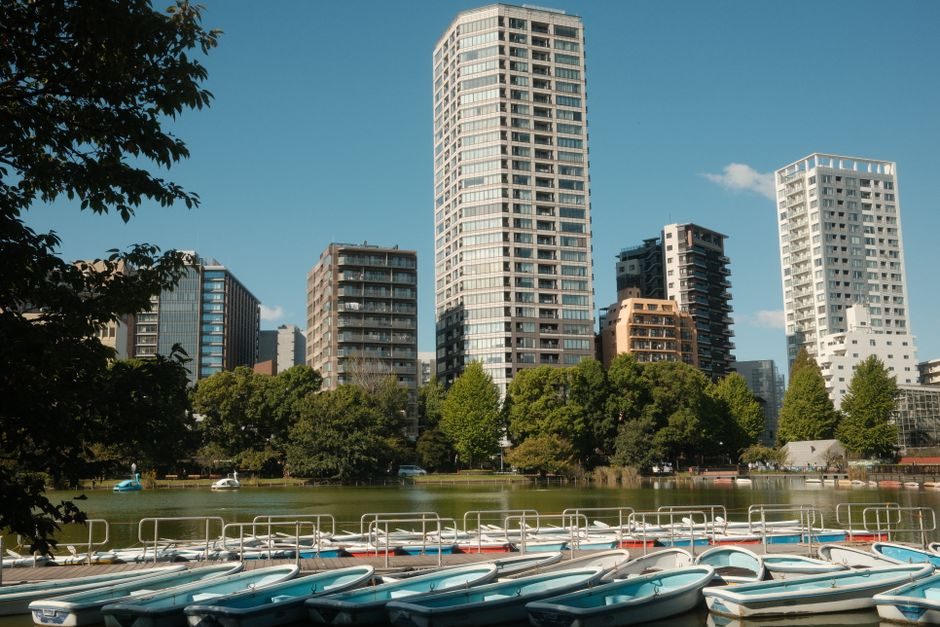
If the weather is good, walk. From Mitaka Station it is a pleasant 15-minute stroll, much of it along the Tamagawa Josui canal. Better still, approach from Kichijoji Station and walk about 15 minutes through Inokashira Park itself – past the big pond with its swan boats, under the trees, arriving at the museum from the green western side of the park. It is one of the loveliest short walks in Tokyo and turns the journey into part of the day.
What is inside (and the no-photography rule)
Photography is not permitted anywhere indoors. This is deliberate – Ghibli wants you looking with your own eyes rather than through a screen, and staff will gently stop you if you raise a camera inside. The one exception is the rooftop garden, where you can photograph the robot soldier and the views. Go in knowing this and it becomes part of the charm; fight it and you will be frustrated. Leave the camera in your bag and just wander.
Inside, expect the animator’s-studio rooms, the zoetrope, rotating special exhibitions (these change periodically and are worth checking before you go), the Catbus room for small children, stained-glass windows featuring Ghibli characters, and countless small details hidden in stairwells and corners. There is no set path and no rush.
The Saturn Theater short film
The highlight for many visitors is the Saturn Theater (Doseiza), a small cinema on the lower floor that screens original Studio Ghibli short films made exclusively for the museum. These shorts are not released on streaming, DVD or anywhere else in the world – the only way to see them is to be in that room. The film rotates periodically, so repeat visitors may catch a different one. Your admission ticket includes one screening, and the strip of 35mm film embedded in your paper ticket is a famous souvenir. Seats are limited per showing, so head to the theater earlyish in your visit rather than leaving it to the end.
The Straw Hat Cafe and the shops
The Straw Hat Cafe is the museum’s only sit-down restaurant, serving warm, home-style cooking – the kind of hearty, comforting food Miyazaki wanted, rather than novelty theme-park fare. Expect curries, hot sandwiches, cakes and seasonal specials, often beautifully presented. The catch is the queue: the cafe is small and lines can be long at lunchtime, so either eat early, eat late, or treat it as a snack stop rather than a guaranteed meal. There is also a small outdoor kiosk for drinks and lighter bites in warm weather.
For shopping, the Mamma Aiuto shop (named after the pirates in Porco Rosso) sells museum-exclusive goods – pins, books, models, stationery and toys you genuinely cannot buy elsewhere, including at the larger Ghibli stores around Japan. It gets crowded near closing, so browse it when you spot a lull.
How long to spend, and combining with Kichijoji
Most visitors spend two to three hours inside – enough for the exhibits, a short film and a wander, plus the cafe if the line cooperates. Because that is only half a day, the smart move is to pair the museum with the surrounding area.
- Inokashira Park – the museum is in its western corner, so a walk around the pond, a turn in a swan boat, and a coffee under the trees is the obvious add-on. In cherry-blossom season it is one of Tokyo’s best hanami spots.
- Kichijoji – a 15-minute walk away, this is one of Tokyo’s most liveable and likeable neighbourhoods, full of cafes, vintage shops, izakaya and the atmospheric Harmonica Yokocho alley of tiny bars and stalls. It is a great place for lunch or dinner around your visit.
A natural plan: enter the museum on a late-morning slot, spend a couple of hours, walk out through Inokashira Park, and finish with food and browsing in Kichijoji. If you are building a wider Tokyo itinerary, our pillar guide to the best things to do in Tokyo places this western corner in context, and the round-up of the best museums in Tokyo suggests where to go next if the Ghibli Museum gives you the museum bug.
Practical tips for the visit
A handful of small things make the day smoother once your ticket is secured:
- Bring the right passport. The lead booker should carry the ID their ticket was booked under, plus the confirmation voucher (printed or on your phone), to exchange for the paper ticket at the entrance.
- Arrive a little before your slot but not hours early – you can enter within an hour of your time, and there is no benefit to queuing way ahead since the entry is timed.
- See the Saturn Theater short film early in your visit. Seats per showing are limited, and you do not want to discover the last screening is full as you are leaving.
- Budget extra time for the cafe or skip it at peak lunch hours. The queue, not the food, is the limiting factor.
- Save the shop for a lull. Mamma Aiuto gets crowded near closing, so browse it whenever you notice the crowd thinning.
- Pick your season deliberately. Spring brings cherry blossoms to the surrounding Inokashira Park and autumn brings the colours, both gorgeous for the walk in – but those are also the hardest dates to book, so plan the ticket grab accordingly.
Accessibility
The museum is spread across several floors connected mainly by narrow spiral staircases, which are part of the design but not easy for everyone. There is an elevator for visitors who need step-free access between levels, and staff will help direct you. Strollers are generally not used inside because of the tight stairwells and crowding, so a baby carrier is the better option for infants, and there is space to park a stroller. If anyone in your group has mobility needs, contact the museum ahead of your visit to confirm the current arrangements, as some areas remain stairs-only.
Avoiding resale scams
Because tickets are so scarce, a grey market exists, and it is worth being careful. Stick to these rules:
- Buy only through Lawson (the international site for overseas visitors). That is the sole official channel.
- Be wary of resellers on auction or third-party sites charging large markups – tickets are name-linked and the lead booker may be asked for ID, so a resold ticket can be refused at the door.
- Legitimate package tours exist. Some official travel agencies (such as JTB) and a few licensed platforms bundle Ghibli Museum entry into tours; these are real but usually cost more than face value. If you genuinely cannot win a Lawson slot, a reputable tour package is the safer fallback than an anonymous reseller.
Ghibli Museum vs Ghibli Park near Nagoya
People often confuse the two Ghibli attractions, and they are very different. The Ghibli Museum in Mitaka is the original: small, art-focused, indoor, a half-day experience on the edge of Tokyo, with a strict no-photography rule and exclusive short films in the Saturn Theater. Ghibli Park, which opened in 2022 near Nagoya (a couple of hours from Tokyo by Shinkansen), is a sprawling, largely outdoor park built into an existing expo ground, made up of several themed areas you can photograph freely; it is a full-day outing and also uses advance, often-scarce tickets. They share DNA but not much else – the museum is an intimate, contemplative space, while the park is an expansive, walk-around world. If you only have time for one and you are based in Tokyo, the museum is the obvious choice; the park is a dedicated trip in its own right.
If you love this kind of immersive, design-led attraction, two others in Tokyo are worth booking the same way you book Ghibli – in advance, for a timed slot. The teamLab digital art museums offer a completely different but equally photogenic sensory experience, and families pairing the museum with younger children will find more ideas in our guide to Tokyo with kids. For an entirely different big-ticket family day, see our planning guide to the Tokyo Disney resort.
Frequently Asked Questions
How do I get Ghibli Museum tickets from overseas?
Use the official Lawson Ticket international site. Register an account in advance, then log in before 10:00 Japan time on the 10th of the month to buy tickets for the following month. Pay by credit card, save the confirmation voucher, and exchange it (with the lead booker’s passport) for the paper ticket at the museum entrance.
When do Ghibli Museum tickets go on sale?
Tickets are released on the 10th of every month at 10:00 Japan time for visits during the next calendar month. Popular dates can sell out within minutes, so work out the time in your zone, set an alarm, and be logged in and ready a few minutes early.
How much are Ghibli Museum tickets in 2026?
Admission is 1,000 yen for adults and university students, 700 yen for high and junior high students, 400 yen for elementary students, 100 yen for children aged 4 and over, and free under 4. The challenge is availability, not price.
Can you take photos inside the Ghibli Museum?
No. Photography is not allowed anywhere indoors, by design – the museum wants you to experience it directly rather than through a screen. The only place you can take pictures is the rooftop garden, home to the robot soldier from Castle in the Sky.
How do you get to the Ghibli Museum?
Take the JR Chuo Line to Mitaka Station, then either the dedicated community bus from the south exit (about 5 minutes, 230 yen) or walk 15 minutes. You can also walk roughly 15 minutes from Kichijoji Station through Inokashira Park, arriving at the museum from the park’s western side.