Your Tokyo packing list hinges on one thing above all: comfortable, broken-in walking shoes, because you will easily clock 15,000 to 25,000 steps a day. After that it is all about the season — humid summers and freezing winters demand very different bags — plus a handful of small essentials that make daily life in Tokyo smoother. Here is exactly what to pack, season by season.
I have packed for Tokyo in cherry-blossom April, sweat-through-your-shirt August, glowing-momiji November and dry, bright January, and the bag looks different every time. What does not change is a short list of items that punch far above their weight: a hand towel (many public toilets have no way to dry your hands), a small coin purse (you accumulate ¥1 to ¥500 coins fast), a portable charger, and a packable day bag. Equally important is what to leave home — toiletries are cheap and excellent at any Japanese drugstore, so do not haul a month of shampoo across the Pacific. This guide breaks down each season with rough temperatures, the year-round essentials, dress codes for temples and restaurants, the Japan plug situation, medication rules, and a luggage strategy built around forwarding and coin lockers. There is a season-by-season table and a printable checklist at the end.
The one rule that shapes everything: you will walk a LOT
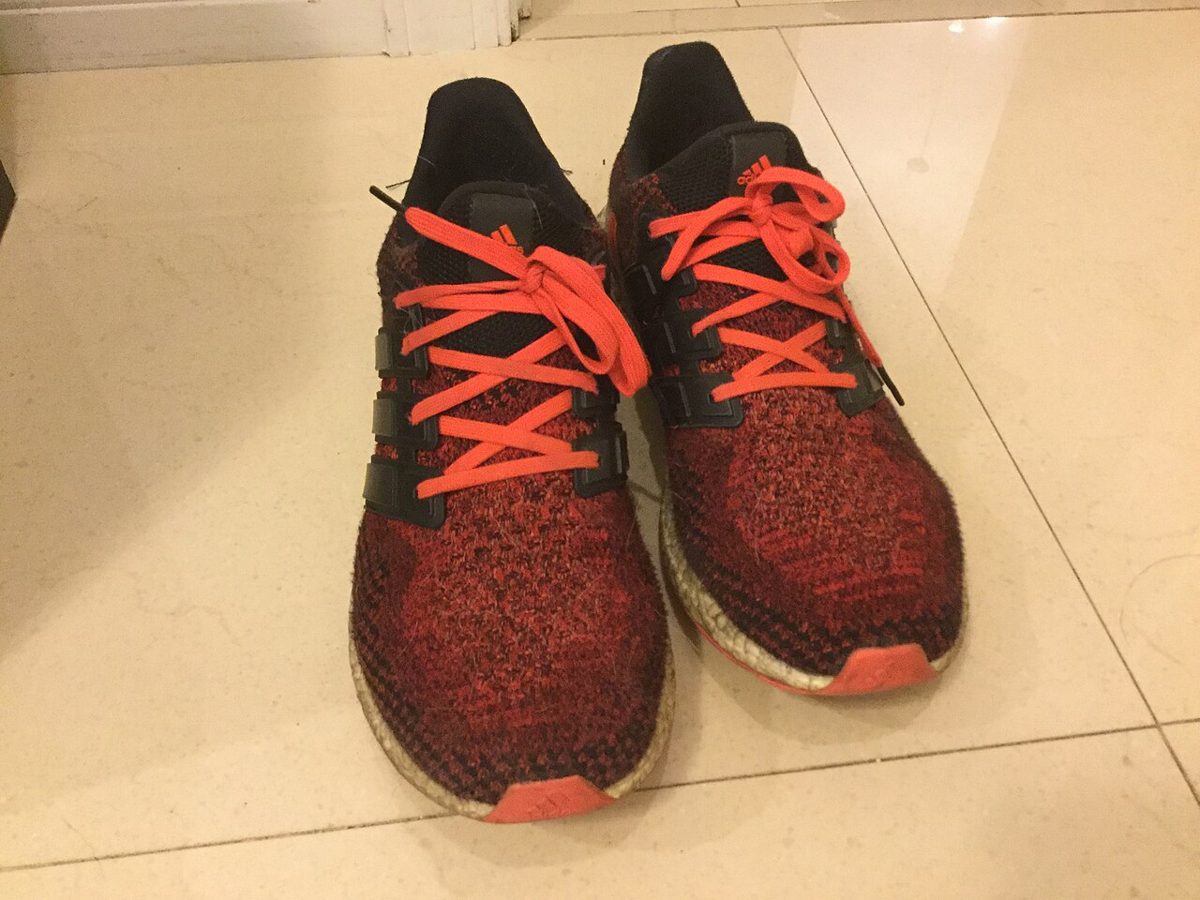
Before a single garment goes in the bag, internalize this: Tokyo is a walking city wearing a train system. You walk from your hotel to the station, through the station (Shinjuku alone is a small underground town), up and down stairs, around each neighborhood you explore, and back again. Fitness trackers routinely show 15,000–25,000 steps a day for first-time visitors. Shoes are not a detail here; they are the single most important thing you pack.
Bring shoes you have already worn for long days at home — never break in new sneakers on a Tokyo trip, that is how you end up limping through Asakusa with blisters by day two. Cushioned, supportive walking shoes or trainers are ideal. And because you will take your shoes off constantly — at temples, traditional restaurants, ryokan, some museums, and any home you visit — slip-on or easy-lace styles save you genuine hassle. Wrestling double-knotted boots off at a restaurant entrance with a queue behind you gets old fast.
When you actually go shapes the whole list, so it is worth pinning down your dates first — our guide to the best time to visit Tokyo breaks down each season’s weather, crowds and costs. Then come back here to pack for it.
What to pack for Tokyo by season
Tokyo has four genuinely distinct seasons, and the temperature swing across the year is wide — from near-freezing January nights to humid 35°C August afternoons. Pack for the season you are actually visiting, not for some generic idea of “Japan.” Here is the quick reference, then the detail for each.
| Season | Months | Rough temp range | What to pack |
|---|---|---|---|
| Spring | Mar–May | 5–22°C (41–72°F) | Layers, light jacket, compact umbrella, comfy shoes; a warmer coat in early March |
| Summer | Jun–Aug | 25–35°C (77–95°F), humid | Lightest breathable fabrics, sun hat, SPF 50+, umbrella for rainy June, hand fan |
| Autumn | Sep–Nov | 12–25°C (54–77°F) | Light layers plus one medium jacket; a warm coat by late November |
| Winter | Dec–Feb | 2–10°C (36–50°F), dry | Warm coat, sweaters, scarf, gloves, hat; thermals for the coldest days |
Spring (March–May): cherry blossoms and layers
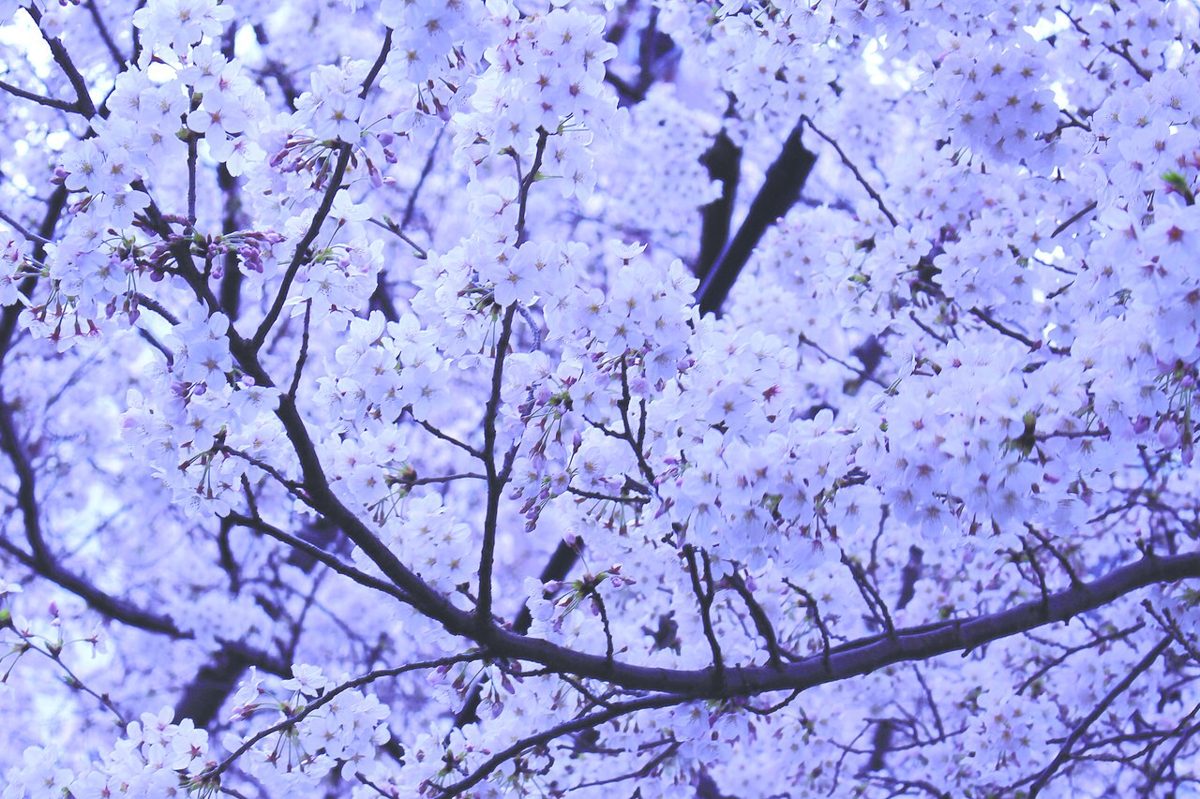
Spring is the postcard season and, for many, the best time to come — but the weather is a moving target. Early March is still genuinely cold, with lows around 5°C and highs near 15°C, so you will want a proper coat. By late April and May, afternoons can push past 20°C while mornings and evenings stay cool. The answer is layers: a t-shirt or light sweater, a cardigan or fleece, and a light jacket you can stuff in your day bag when the sun comes out. Add a compact umbrella — spring brings periodic rain.
If you are timing your trip for the blossoms, the bloom is gloriously unpredictable and usually peaks in Tokyo around late March to early April. Pack a layer you can shed for hours sitting on a tarp at a hanami picnic, and shoes you can stand in all day under the trees. Our Tokyo cherry blossom guide covers timing, the best viewing spots, and hanami etiquette so you can plan around the bloom rather than chase it.
- T-shirts and light long-sleeves for layering
- A cardigan, fleece or light sweater
- A light, packable jacket (windproof helps for breezy days)
- A warmer coat if you are visiting in early-to-mid March
- Compact umbrella
- Comfortable, broken-in walking shoes
- A scarf for cool mornings
Summer (June–August): hot, humid, and the rainy season
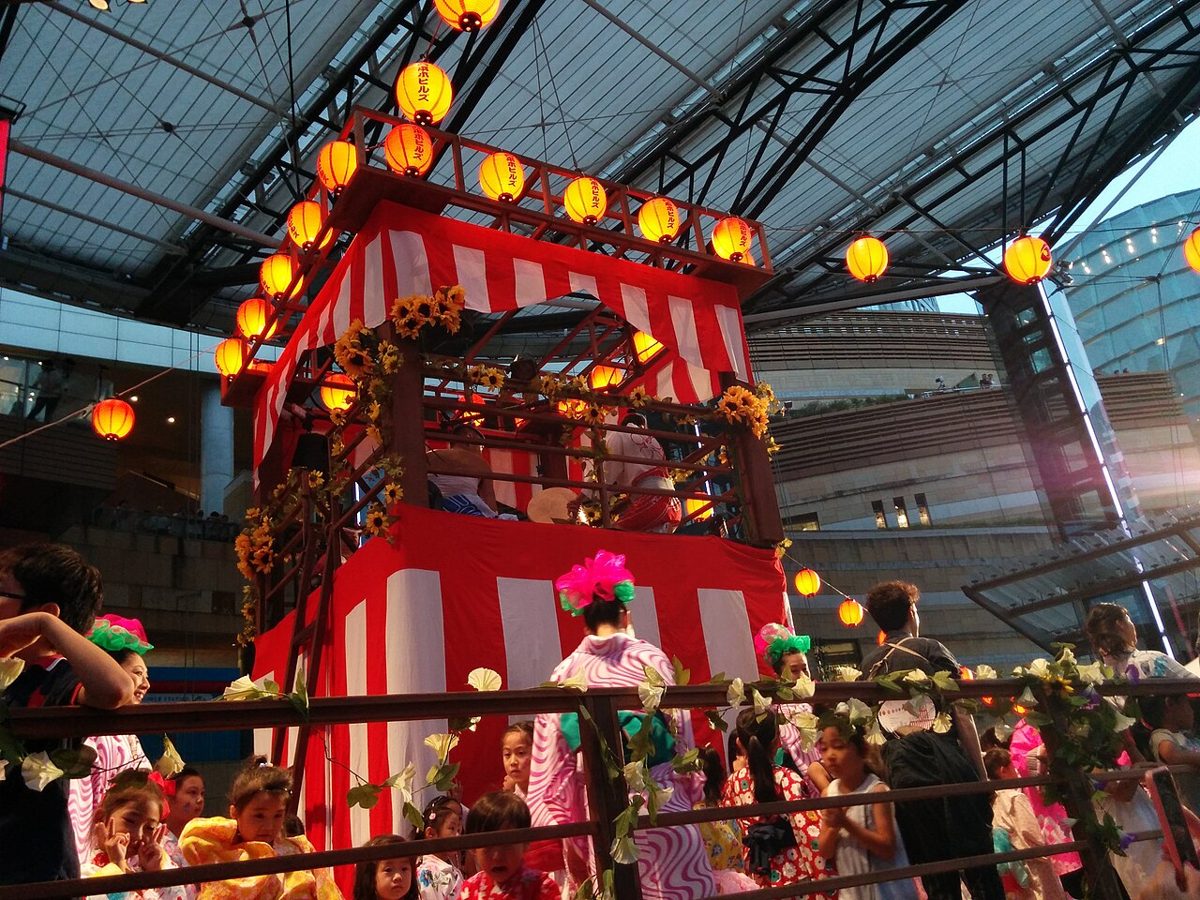
Tokyo summer is no joke. Expect 25–35°C with humidity that makes it feel hotter, and you will sweat through more than one shirt a day. The strategy is the lightest, most breathable fabrics you own — cotton and linen over synthetics, loose over tight. Pack enough tops that you can change midday, or plan to do laundry (most hotels and many neighborhoods have coin laundries). Quick-dry fabrics are your friend.
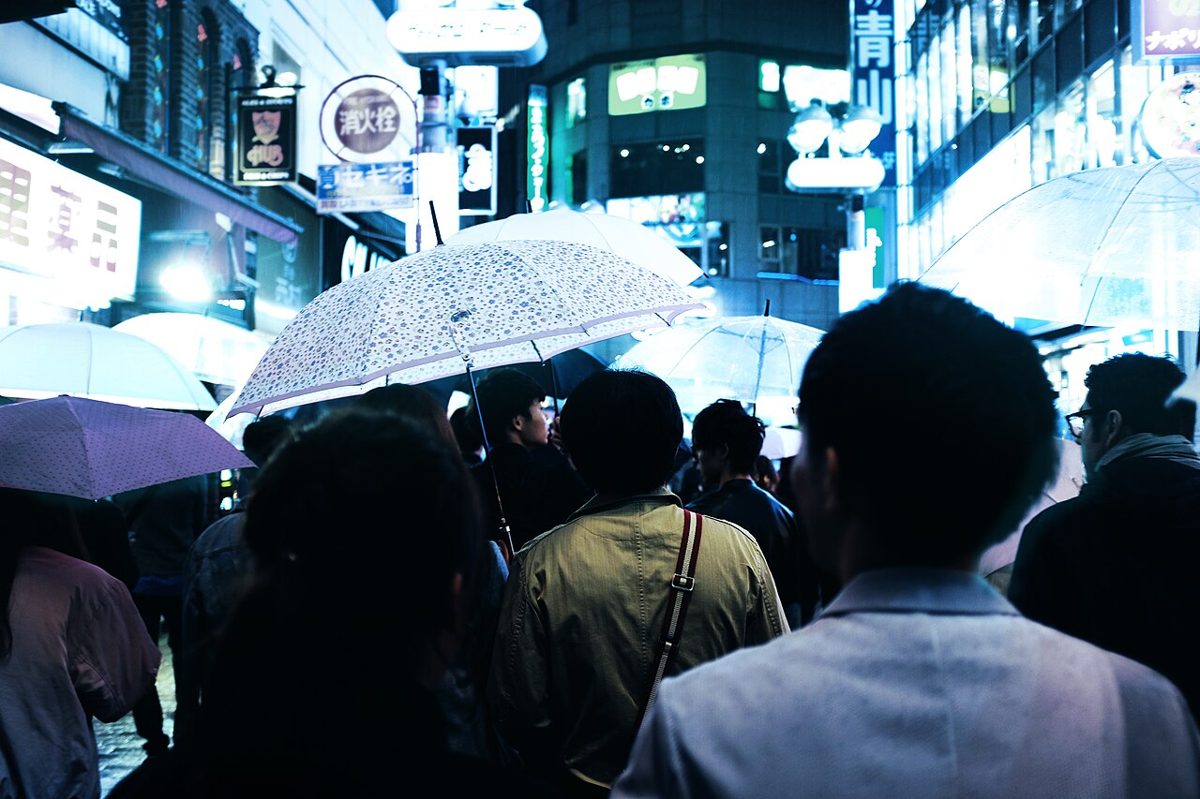
Two summer-specific things catch people out. First, tsuyu, the rainy season, runs roughly early June to mid-July: humid, drizzly, frequently wet. A compact umbrella is essential, and quick-dry clothing beats heavy cotton that stays damp. Convenience stores sell cheap clear umbrellas everywhere if you get caught out. Second, the sun is strong: a wide-brim or packable hat, sunglasses, and SPF 50+ sunscreen all earn their place. A small folding hand fan (sensu) is something locals actually carry, and you will understand why on a windless August afternoon.
- Lightweight, breathable tops — pack extras for midday changes
- Quick-dry fabrics over heavy cotton
- Shorts, light trousers or breathable skirts
- Compact umbrella (essential in June–July tsuyu)
- Wide-brim or packable sun hat and sunglasses
- SPF 50+ sunscreen (or buy it cheaply at any drugstore)
- A folding hand fan and a small towel to mop your brow
- Breathable, comfortable walking shoes — your feet will swell in the heat
Autumn (September–November): the easiest season to pack for

If you hate over-packing, autumn is your season. Temperatures sit in a comfortable 12–25°C band for much of it, the humidity drops, and the autumn foliage (momiji) rivals spring for beauty. Early autumn still carries summer’s warmth, so light clothing with a jacket for cooler evenings is plenty. As November progresses it gets noticeably crisper — by late November you may want a proper warm coat, especially after dark. One caveat worth flagging: September can still bring the tail end of typhoon season, so a waterproof layer and umbrella are smart.
- Light layers — t-shirts and long-sleeves you can combine
- One medium jacket for cool evenings (early autumn)
- A warmer coat if visiting in late November
- Compact umbrella (handy for September rain)
- Comfortable walking shoes
- A light scarf as the month cools
Winter (December–February): cold, dry, and bright

Tokyo winter is cold but very manageable, and it is gloriously dry and sunny compared with grey winters elsewhere. Daytime highs sit around 8–12°C and nights dip to around 2°C; it rarely snows in central Tokyo, though it happens. The key insight: interiors are heated to the point of being toasty — trains, shops, restaurants and museums are all warm — so dress in layers you can peel off rather than one enormous coat you sweat inside. A warm outer coat, a couple of sweaters, and thermal base layers for the coldest days cover almost everything.
Because the air is dry, your skin and lips will feel it — pack lip balm and a small moisturizer (or buy them, brilliantly cheap, at any drugstore). A scarf, gloves and a hat make a real difference outdoors in the morning and evening, and they pack down small. If you are tacking on a side trip to the mountains or the snow, scale up accordingly, but for the city itself you do not need expedition gear.
- A warm outer coat (a wind-resistant one is ideal)
- Sweaters and long-sleeve layers
- Thermal base layers for the coldest days
- Scarf, gloves and a warm hat
- Lip balm and moisturizer for the dry air
- Warm but comfortable walking shoes
- Hand-warmer packs (kairo) — sold everywhere, lovely in your coat pocket
The year-round Tokyo essentials (pack these whatever the season)
Some things belong in the bag no matter when you visit. These are the items I would not leave home without, and several are unique to how daily life works in Japan:
- Comfortable, broken-in walking shoes. Said it before, saying it again — it is the most important thing you pack.
- Slip-on or easy shoes for the many shoes-off venues (temples, traditional restaurants, ryokan).
- A small coin purse. Japan is still partly a cash society and you accumulate ¥1, ¥5, ¥10, ¥50, ¥100 and ¥500 coins constantly. A coin purse stops your pockets jingling and speeds you through tills.
- A hand towel or handkerchief. Many public restrooms have no paper towels or hand dryers — locals carry a small towel to dry their hands. You will use it daily.
- A portable charger (power bank). A full day of Google Maps, translation and photos drains a phone fast. Keep it topped up.
- A packable day bag. A lightweight backpack or tote for daily wandering, day trips, and hauling home the shopping you did not plan to do.
- A reusable water bottle. Tap water is safe and there are vending machines on every corner; a bottle saves money and plastic.
- Tissues. Useful as backup toilet paper and for spills; you will be handed free pocket-tissue packets on the street anyway.
- Hand sanitizer. Handy between konbini stops and before that street-food snack.
- Any medication you specifically rely on (with the rules below in mind).
- Your passport. You will need it for tax-free shopping, and it is sensible to carry a copy or photo of it day to day.
A lot of these small habits — carrying a towel, having coins ready, keeping your passport handy for tax-free counters — are exactly the kind of thing that makes a first trip smoother. Our first-time Tokyo tips go deeper on the etiquette and everyday customs that pair with this packing list.
What NOT to over-pack
Just as important as what to bring is what to leave at home. Tokyo is one of the easiest places on earth to buy anything you forgot, often better and cheaper than back home. Save the suitcase space (and your shoulders):
- Toiletries. Shampoo, conditioner, body wash, toothpaste, razors, cotton pads, sunscreen, skincare — Japanese drugstores (Matsumoto Kiyoshi, Welcia, Don Quijote) are a wonderland of cheap, high-quality options. Bring travel sizes for the first night and buy the rest there.
- An umbrella. Do not waste packing space — a clear plastic umbrella costs a few hundred yen at any convenience store the moment it rains.
- A whole pharmacy. Bring what you specifically need; basic painkillers, plasters and stomach remedies are all available locally (brand names differ).
- Too many ‘just in case’ outfits. You will likely shop, and you will be carrying everything up and down station stairs. A lighter bag is a better trip.
- Bulky towels. Hotels provide them; for ryokan and onsen, a small quick-dry towel is enough.
- Heavy guidebooks. Your phone covers maps and translation — one reason to sort your data before you go.
Leaving room in the bag is itself a strategy: between the drugstores, the stationery shops, the snacks and the tax-free electronics, most visitors go home heavier than they arrived.
Shoes and dress codes for temples and restaurants
Tokyo is generally relaxed about clothing — you can wander most of the city in jeans and a t-shirt without a second glance. But a few situations call for a little awareness:
- Shoes off, frequently. At temples’ inner halls, traditional tatami restaurants, ryokan, some museums and any private home, you remove your shoes at the entrance (the genkan). Wear socks without holes, and choose slip-on footwear to make this painless. You will often be given slippers — and separate toilet slippers, which stay in the bathroom.
- Temples and shrines have no strict dress code, but modest, tidy clothing is respectful. Nothing special required — just common sense.
- Upscale restaurants may expect smart-casual; a collared shirt or a neat top covers most. A handful of high-end or members’ venues enforce stricter codes, so check when you book.
- Onsen and public baths are bathed in fully nude (swimwear is not worn). Note that some onsen still refuse guests with visible tattoos — cover small ones with a patch, or seek out tattoo-friendly baths.
- Bring one slightly smarter outfit if you have a nice dinner, a rooftop bar, or a show planned — it weighs almost nothing and saves you feeling underdressed.
Electronics and the Japan plug
Japan uses the Type A plug — two flat parallel pins, the same physical shape as North America — and runs on 100 volts at 50Hz in eastern Japan (Tokyo) and 60Hz in the west. What that means for you depends on where you are coming from:
- From the US, Canada and other Type A countries: your plugs fit straight into Japanese outlets — no adapter needed. Most modern electronics (phone, laptop, camera chargers) handle 100V fine.
- From the UK, Europe, Australia and most elsewhere: you need a Type A plug adapter. Bring one or two; they are cheap and a multi-port USB adapter saves outlets.
- Check the voltage on anything that heats — hair dryers, straighteners, some shavers. A device rated only for 220–240V can be damaged or underperform on Japan’s 100V even with a plug adapter (an adapter changes the plug shape, not the voltage). Look for “100–240V” printed on the unit; if it says that, you are fine. If not, leave it or buy a cheap local one.
Practical extras: a small multi-port USB charger or a power strip means you charge phone, power bank and camera from one outlet (hotel rooms can be stingy with sockets). And do not forget charging cables — the one thing every drugstore sells, but at a tourist markup.
Medication: check the rules before you pack it
This is the one area where packing the wrong thing has real consequences, so treat it carefully. Japan’s rules on medication are stricter than many visitors expect, and some everyday over-the-counter drugs from home are restricted or outright banned here — including products containing certain stimulants and codeine, which rules out some common cold, allergy and pain medications, and some inhalers. Bringing a prohibited substance, even unknowingly, can mean it is confiscated or worse.
The general allowances, as a rough guide, are reasonably generous: travelers can usually bring up to a one-month supply of most prescription medication and up to a two-month supply of over-the-counter medicine for personal use without special paperwork. Larger amounts, or certain controlled medications, require an import certificate called a Yunyu Kakunin-sho (previously known as the Yakkan Shoumei), which you apply for in advance.
- Keep medication in its original, labelled packaging, and carry a copy of the prescription and a doctor’s note for anything important.
- Do not assume an over-the-counter drug from home is legal in Japan. Check before you fly, especially for cold, allergy, ADHD and strong painkiller medications.
- If you take a large supply or a controlled medicine, look into the Yunyu Kakunin-sho process well ahead of your trip.
- Always verify with official sources — the rules change and depend on the specific drug. Check your nearest Japanese embassy or consulate and Japan’s Ministry of Health, Labour and Welfare guidance before packing anything you are unsure about.
This guide cannot tell you whether your specific medication is permitted — only the official Japanese authorities can. When in doubt, ask them directly before you pack it. For routine needs, Japanese pharmacies are excellent; just know that brand names and active ingredients may differ, so a quick translation check helps.
Luggage strategy: forwarding, coin lockers and tax-free room
How you move your bags around Japan matters more than you would think, because stations are busy, storage on trains is limited, and you will be hauling everything up and down a lot of stairs. Two local systems make life far easier:
Luggage forwarding (takkyubin)
Japan’s door-to-door courier services — collectively known as takkyubin, with Yamato Transport’s “TA-Q-BIN” the best known — will send your suitcase from one hotel to the next (or from the airport to your hotel) on a next-day service, usually for a very reasonable fee per bag. Hotel front desks handle it routinely. This is transformative if you are changing cities: instead of wrestling a large case onto a crowded Shinkansen, you travel light with a small overnight bag and your luggage is waiting when you arrive. Allow roughly a day for delivery, so pack an overnight kit for the gap.
Coin lockers
Coin lockers sit in virtually every train station and many tourist sites, sized from small (a daypack) to large (a carry-on). They are perfect for stashing bags for a few hours — say, on arrival day before hotel check-in, or while you explore a neighborhood. The catch: popular-station lockers fill up early, especially on weekends and holidays, and the largest sizes are scarce, so they are not a reliable home for a big suitcase. Many now take IC cards (Suica/PASMO) as well as coins. For a big case and an early arrival, forwarding or your hotel’s bag-hold desk is the safer bet.
Leave room for tax-free shopping
Foreign visitors can shop tax-free (no consumption tax) at thousands of shops on purchases over a set minimum when you show your passport — on everything from electronics at Yodobashi to cosmetics, snacks and clothing. Practically, that means you will almost certainly come home with more than you left with. Pack a little light, or bring a foldable extra bag, so you have room (and spare weight allowance) for what you buy. Consumables bought tax-free are meant to leave Japan with you, so keep them sealed as instructed at the till.
All of this — what to pack, how to move it, what to buy here versus bring — sits inside the broader job of planning the trip. Our Tokyo travel planning guide ties the packing, timing, transport and budgeting together so nothing falls through the cracks.
The printable Tokyo packing checklist
Here is the whole thing as a quick checklist. Pack the year-round essentials, then add your season’s layer, and you are set.
Always pack
- Comfortable, broken-in walking shoes
- Slip-on / easy shoes for shoes-off venues
- Socks without holes (you’ll show them often)
- Small coin purse
- Hand towel / handkerchief
- Portable charger (power bank) and cables
- Packable day bag
- Reusable water bottle
- Tissues and hand sanitizer
- Passport (plus a copy/photo) for tax-free shopping
- Any essential medication (rules checked)
- Plug adapter if you’re not from a Type A country
- A foldable spare bag for shopping
Add for your season
- Spring: layers, light jacket, compact umbrella, scarf (warm coat in early March)
- Summer: lightest breathable tops (extras), sun hat, sunglasses, SPF 50+, umbrella for tsuyu, hand fan
- Autumn: light layers, one medium jacket, umbrella (warm coat by late November)
- Winter: warm coat, sweaters, thermals, scarf, gloves, hat, lip balm, moisturizer, hand-warmer packs
Buy there instead of packing
- Shampoo, conditioner, body wash, toothpaste, skincare
- Sunscreen and basic cosmetics
- Umbrella (clear convenience-store one)
- Basic painkillers, plasters, stomach remedies
- Charging cables you forgot
- Hand-warmers (kairo) in winter
Frequently Asked Questions
What shoes should I pack for Tokyo?
Comfortable, broken-in walking shoes or trainers — you will walk 15,000–25,000 steps a day, so cushioning and support matter more than style. Choose slip-on or easy-lace styles because you will remove your shoes constantly at temples, traditional restaurants and ryokan. Never break in brand-new shoes on the trip; you will regret it by day two.
Do I need a power adapter for Japan?
Japan uses Type A plugs (two flat pins) at 100 volts. If you come from the US, Canada or another Type A country, your plugs fit and most electronics work without an adapter. From the UK, Europe or Australia, you need a Type A plug adapter. Check that heat-generating devices like hair dryers are rated 100–240V, because a plug adapter changes the shape, not the voltage.
Can I bring my medication into Japan?
Usually yes for personal amounts — roughly a one-month supply of prescription medicine and a two-month supply of over-the-counter medicine — but some common drugs containing stimulants or codeine are restricted or banned, including certain cold, allergy and pain medications. Keep medicine in original packaging with a copy of your prescription, and always check official Japanese embassy and Ministry of Health guidance before you fly, as larger amounts need a Yunyu Kakunin-sho import certificate.
What should I NOT pack for Tokyo?
Skip the bulky toiletries — shampoo, body wash, sunscreen, skincare and razors are all cheap and excellent at Japanese drugstores. Don’t pack an umbrella (buy a clear one at any convenience store), a whole pharmacy of basic remedies, or too many spare outfits. You will almost certainly shop, so leaving room in the bag is smarter than filling it.
How should I handle luggage when changing cities in Japan?
Use takkyubin luggage forwarding (such as Yamato’s TA-Q-BIN). For a modest per-bag fee your hotel will send your suitcase to your next hotel on a next-day service, so you travel light with just an overnight bag instead of dragging a big case onto a crowded train. Coin lockers at stations work for a few hours, but they fill up fast and rarely fit large suitcases.
Photo Credits
- Spring in Tokyo: layers and a light jacket for cool mornings and warm afternoons — Photo: Yuki Yoshida yuki0725 / CC0 via Wikimedia Commons
- Rainy-season Tokyo (tsuyu) — a compact umbrella and quick-dry clothes earn their place — Photo: Alex Knight agkdesign / CC0 via Wikimedia Commons
- Winter is cold and dry — a warm coat and layers, but interiors are well heated — Photo: Jun Seita / CC BY 2.0 via Wikimedia Commons
- Autumn is the easiest season to pack for: light layers and one medium jacket — Photo: 雷太 / CC BY 2.0 via Wikimedia Commons
- Hot, humid summer calls for the lightest fabrics you own — Photo: Misaochan / CC BY-SA 3.0 via Wikimedia Commons
- Your most important packing decision: broken-in, comfortable walking shoes — Photo: Wet Af / CC BY-SA 4.0 via Wikimedia Commons