The izakaya is the beating heart of a Tokyo night out — not a restaurant, not quite a bar, but the warm, loud, lantern-lit room where the city actually unwinds after work. Finding the best izakaya in Tokyo isn’t about chasing a single famous address; it’s about learning how the format works so you can walk into any of the city’s tens of thousands of them and order like you belong. This guide covers exactly that: how a visit flows, the quirks that catch first-timers out (the otoshi charge, the all-you-can-drink deals), the best neighbourhoods and specific shops, and how to do it solo or vegetarian.
Get this right and an izakaya night becomes the highlight of a Tokyo trip — cheap, unpretentious, endlessly sociable. Salarymen pile in straight from the office; couples turn up after the cinema; friends meet here by default rather than at home. It’s the most honest window into everyday Tokyo there is. This sits inside our wider Tokyo food guide, which maps every cuisine and meal worth chasing in the city.
What exactly is an izakaya?
The word itself explains it. Izakaya (居酒屋) combines the characters for “to stay” (居), “alcohol” (酒) and “shop” (屋) — literally, a “stay-drinking shop.” The closest Western comparison is a British pub crossed with a Spanish tapas bar: you sit at a counter or a low table, you order beer or sake or shochu, and you graze through a stream of small plates across two to four hours. The point isn’t to eat a meal and leave; it’s to settle in, drink, talk, and keep the little dishes coming.
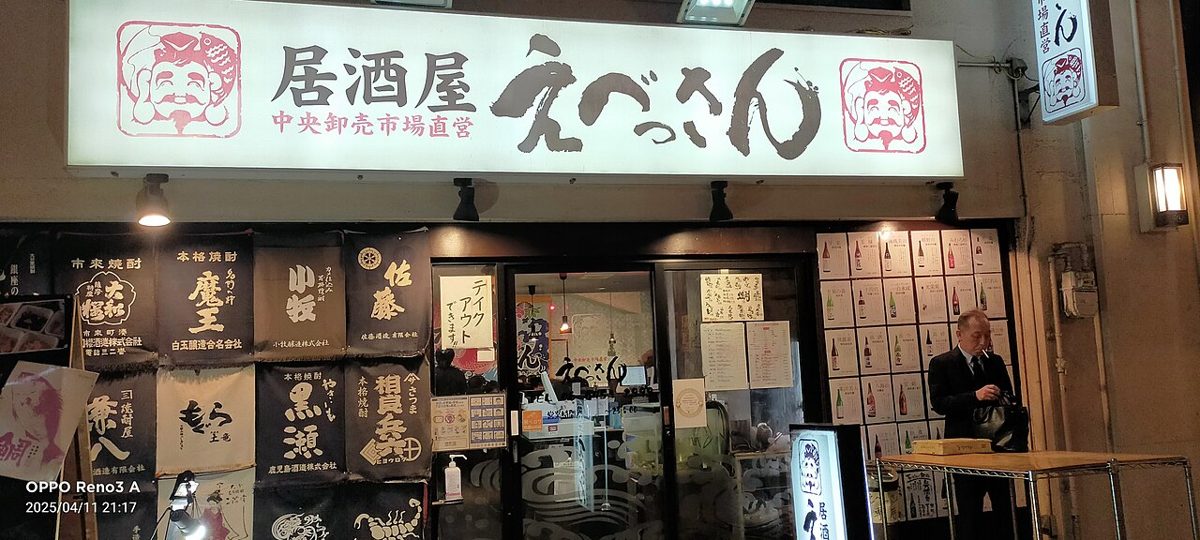
Izakaya come in every shape. There are the big chains — Torikizoku, Watami, Shoya — that dot every station and run on cheap, reliable menus with picture-and-button ordering. There are tiny hole-in-the-wall family shops with eight seats and a chalkboard. There are specialists: a motsuyaki (grilled offal) joint, a sake-nerd standing bar, a seafood counter sourcing from the morning market. The exterior usually drops hints — a red paper lantern (akachochin) means a traditional drinking spot; plumes of charcoal smoke mean skewers; a sake barrel by the door means a serious nihonshu list; a painted fish means good sashimi.
One useful distinction: an izakaya is not the same as a dedicated yakitori shop or a ramen counter, though they overlap. Yakitori temples grill chicken and little else; izakaya serve skewers alongside sashimi, fried things, tofu, salads and a dozen other small plates. Think of the izakaya as the generalist of Tokyo’s drinking-and-eating world — and the natural place to start.
How an izakaya visit flows, step by step
There’s a rhythm to it, and once you know it the whole night runs smoothly. Here’s the sequence from door to bill.
- Entering. Don’t just walk in and grab a seat. Catch a staff member’s eye, say “sumimasen” (excuse me), and hold up fingers for your party size. Wait to be shown to a counter, table or tatami spot.
- The first drink. Order a drink before you think about food — it’s the ticket that starts everything. “Toriaezu, nama kudasai” (“a draught beer to start, please”) is the classic move. Everyone usually orders the same first round so the kanpai (cheers) can happen together.
- The otoshi appears. A small dish you didn’t order arrives — pickles, marinated tofu, a little simmered something. That’s the otoshi (more on it below); just eat it.
- Order in rounds. Don’t fire off the whole menu at once. Order three or four small plates, see what you fancy next, order again. The kitchen is fast and the plates are small; eating is paced over hours.
- Kanpai and share. Raise your glass when drinks land and say “kanpai.” Everything is for the table — don’t hog a plate.
- The bill. When you’re done, ask for the check (“o-kaikei onegaishimasu”). You’ll often pay at the counter or a register by the door rather than at the table. No tipping, ever.
If you sit at the counter, the bartender pours your beer right in front of you; at a table or tatami room, a server brings it. Either way, a small “kanpai” and a slight lift of the glass when it arrives is the done thing. At smaller traditional shops the staff may only speak Japanese — Google Translate, pointing at a neighbour’s plate, or “omakase shimasu” (I’ll leave it to you) all work fine.
The otoshi: that “charge” you didn’t order
This is the single thing that confuses — and occasionally annoys — first-time visitors, so let’s be clear about it. Sit down at almost any izakaya and a small dish will arrive without you ordering it, followed by a line on your bill for a few hundred yen. That’s the otoshi (お通し), sometimes called tsukidashi. It’s a compulsory seating charge served as food, usually ¥300–¥700 per person. It is not a scam and it is not a tip; it’s how a small room covers its overheads in a country where tipping doesn’t exist.
Treat the otoshi as your table charge and eat it — it’s often a tasty little seasonal bite that tells you something about the kitchen. A handful of foreigner-facing chains have started waiving it, and a few places will let you decline, but at a traditional izakaya it’s simply part of the deal. If you’re keeping a tight budget, factor roughly ¥500 a head onto every izakaya bill before you’ve ordered a thing. The flip side: there’s no service charge or tip on top, so the all-in cost is still low.
Nomihodai: all-you-can-drink, decoded
Nomihodai (飲み放題) means “all-you-can-drink” — a fixed-price, time-limited drinks deal that’s the default for groups out to have a proper night. You’ll usually get 90 or 120 minutes (last orders about 10–15 minutes before time), and prices typically land around ¥1,500–¥2,500 per person depending on whether the list is “standard” (beer, highballs, basic sake and shochu, soft drinks) or “premium” (adding better sake and cocktails). If you plan to have three drinks or more, it’s almost always cheaper than ordering individually.
A few things to know. Nomihodai is often sold as part of a course — a set food menu plus the drink package for a flat per-head price (say ¥4,000–¥5,000), which many izakaya require the whole table to take together. Its siblings are tabehodai (all-you-can-eat) and tabenomihodai (both at once). Order each drink one at a time, finish what you have before ordering the next (rules usually forbid stockpiling), and don’t expect top-shelf pours — this is volume, not connoisseurship. For a couple having two drinks, skip it; for four friends settling in, it’s the move.

How to order — and what to order
The golden rule: drink first, food in rounds. Start with a cold draught beer (“nama biiru”) while you scan the menu, then move to sake or shochu highballs as the night deepens. Order three or four plates, eat, then order more — the kitchen sends dishes out as they’re ready, not all together, so a steady trickle keeps the table happy. On a budget? Set a ceiling with the staff: name your number and add “made ni onegaishimasu” (e.g. “sanzen-en made ni onegaishimasu” caps it at ¥3,000).
The drinks vocabulary is short and useful: nama (draught beer), nihonshu or sake (rice wine, served hot/atsukan or cold/reishu), shochu (a stronger distilled spirit, taken on the rocks or in a highball/chu-hai), highball (whisky and soda, ubiquitous and cheap), and umeshu (sweet plum liqueur, an easy starter). Ask for the chalkboard specials — that’s where the in-season cooking is.
Reliable small plates to build a night around:
- Edamame — boiled, salted soy beans; the default opener.
- Karaage — Japanese fried chicken, juicy and addictive.
- Yakitori / kushiyaki — grilled chicken (or pork) skewers; order the chef’s assortment.
- Sashimi moriawase — an assorted platter of the day’s raw fish.
- Hiyayakko — chilled tofu with ginger, bonito flakes and spring onion (summer).
- Agedashi-dofu — lightly fried tofu in warm dashi broth.
- Eihire — grilled stingray fin with mayonnaise; a classic sake snack.
- Tamagoyaki — sweet-savoury rolled omelette.
- Motsunabe / oden — warming hotpots in the colder months.
Best areas and specific izakaya
You can find a good izakaya near almost any Tokyo station, but a few districts concentrate the magic — and a few specific shops are worth seeking out. The single most atmospheric experiences are the yokocho: covered alleys of tiny shops where you don’t book, you just walk the lane and step into whichever stool is open. For the wider after-dark picture, pair this with our Tokyo nightlife guide.
Shinjuku: Omoide Yokocho and Golden Gai
Omoide Yokocho (“Memory Lane,” nicknamed “Piss Alley”) runs behind Shinjuku Station’s west exit — a 100-metre lane of post-war wooden yakitori counters, motsuyaki shops and standing bars, six to fifteen seats each, grills facing the alley so the smoke perfumes your jacket on the way out. Get there by 19:30 on a weekday for a decent shot at a stool; bring cash. A few minutes east, Golden Gai is six narrow alleys of 200-plus micro-bars, each themed around its owner’s obsession — jazz, punk, old films, manga. Some seat just four people; cover charges of ¥500–¥1,000 are normal. Not all are strictly izakaya, but it’s the closest thing to wandering into a stranger’s living room. Respect the door signs: some welcome tourists, some don’t. Our Golden Gai guide breaks down which bars take newcomers.
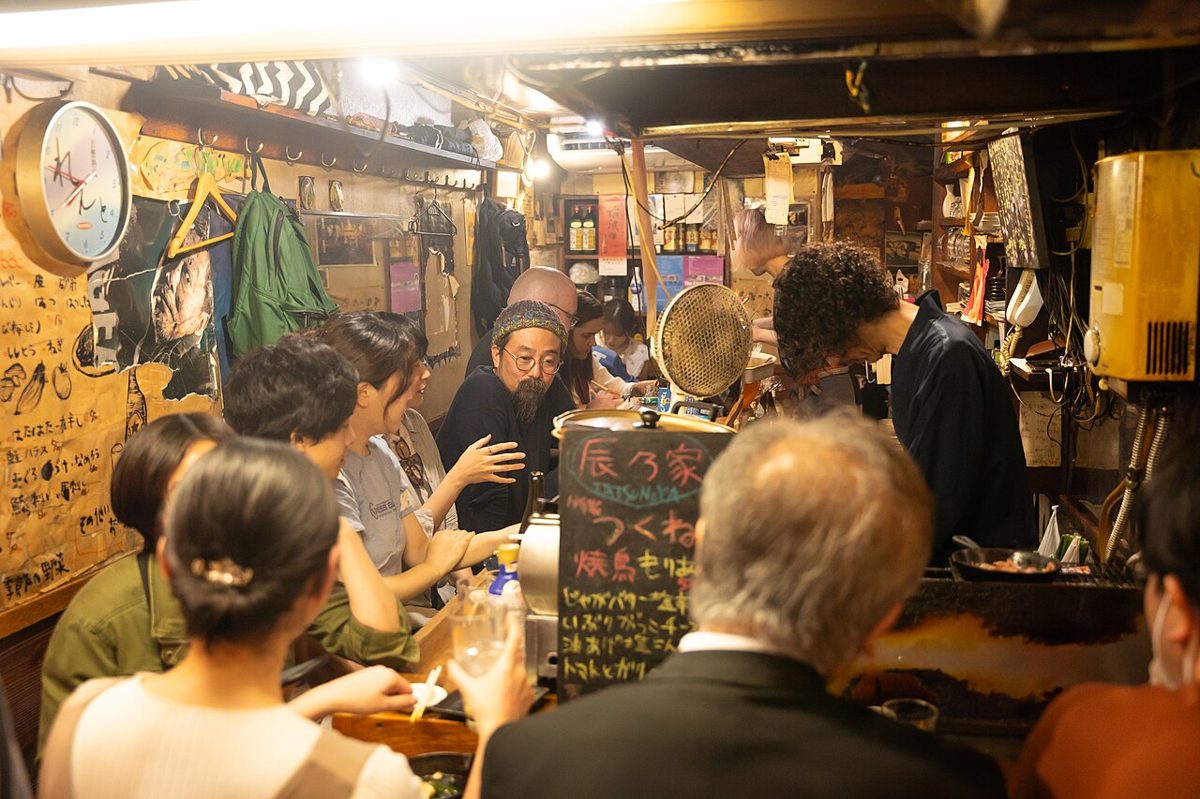
For a sit-down rather than an alley, Donzoko (どん底) has been open in a Shinjuku-Sanchome side street since 1951 — a six-floor warren where each floor is a different room (counter, tatami, low tables), supposedly a haunt of post-war literary giants. Order the otoshi, oden in winter, chilled tofu in summer, and whatever’s on the chalkboard. Shinjuku-Sanchome Station, two minutes; open late, cash preferred.
Yurakucho and Shimbashi: under the tracks
The railway arches around Yurakucho and Shimbashi hide some of the city’s most atmospheric drinking, the rumble of trains overhead included. Andy’s Shin Hinomoto, directly under the JR Yamanote tracks at Yurakucho (one minute from the station), is the one I send first-timers to: a British owner, Andy Lunt, runs the floor in English while the kitchen stays Japanese, the fish arrives daily, and the room is still 95% local regulars. Default to the sashimi platter and a cold Asahi before switching to sake. Reservations are essential for weekend nights; bring cash even though they take cards. Nearby Shimbashi is salaryman ground zero — a knot of cheap, lively akachochin izakaya where Tokyo’s office workers decompress after 18:00.
Ebisu: Yokocho and standing bars
Ebisu Yokocho is a covered indoor alley two minutes from Ebisu Station with 15–20 small shops — yakitori, motsunabe, sashimi counters, oden carts. It opened in 2008 in a converted shopping arcade, so it has the alley-bar buzz with the friendliest welcome of the major yokocho; menus are often translated and staff are used to visitors. A short walk away, Buri (ぶり) is a standing-only sake bar fitting 10–12 people, famous for a wall of vintage “one-cup” sake served frozen as a “sake slushie.” Point at the cup you want, hand over coins, drink standing. Best around 19:00–20:30 on a weekday when the after-work crowd warms up. Cash strongly preferred.
Sangenjaya and the Sankaku-chitai
Three stops from Shibuya on the Den-en-toshi line, Sangenjaya (“Sancha” to locals) hides the Sankaku-chitai — the “triangle zone,” a dense wedge of narrow lanes packed with tiny izakaya, standing bars and snack joints that feels a generation removed from polished central Tokyo. There’s no single address to aim for; the move is to arrive after 19:00, wander the lanes, and duck into whatever’s busy with locals and smells of charcoal. It’s where Tokyoites go to drink away from the tourist trail, and it rewards the explorer.

Chains worth knowing vs backstreet finds
Don’t be a snob about chains — they’re genuinely useful, especially early in a trip. Torikizoku is the famous one: a yakitori chain where almost everything (skewers, plates, many drinks) is one flat low price, with English-friendly tablet ordering and branches by nearly every station. Watami, Shoya and Isomaru Suisan (seafood-leaning, grill-your-own at the table) are reliable, cheap and forgiving of non-Japanese speakers. A smart play: do an early chain dinner around 18:00 for cheap calories, then move to a smaller traditional spot or a yokocho for a slower second round.
The backstreet finds are the small, owner-run shops — and the secret to finding them is low-tech. Look for the akachochin lantern, a short hand-written menu, and a counter full of locals rather than tourists. A specialist sign is a good omen: Motsuyaki Ucchan, a small chain of charcoal offal-skewer shops (Shibuya and Shinjuku-Sanchome are the easy branches), does skewers at ¥150–¥250 each — order six to eight plus a beer and a shochu highball and you’ll rarely clear ¥3,500 a head. It’s loud, smoky and exactly right. The lesson: cheap doesn’t mean lazy, and the best izakaya in Tokyo are as often a ¥3,000 counter as a famous name.
Going solo, and eating vegetarian
Solo izakaya-going is completely normal in Tokyo and one of the great pleasures of the city. Sit at the counter rather than a table — it’s where solo drinkers belong, it’s easier on the staff, and you’ll often end up in halting, friendly conversation with the regular next to you. Standing bars (tachinomi) like Buri are tailor-made for it: low commitment, fast turnover, no awkwardness about a table for one. Order a drink, a couple of skewers, watch the room. Nobody will blink.
Vegetarians and vegans need a little strategy, because dashi (bonito-and-kelp stock) and tiny bits of pork or fish hide in many “vegetable” dishes. Safe, satisfying orders: edamame, hiyayakko (cold tofu — ask for it without bonito flakes), agedashi-dofu (confirm the broth), grilled or salted vegetables (yakiyasai), pickles (tsukemono), potato salad, French fries, and goma-ae (sesame-dressed greens — check the dressing). Learn “watashi wa bejitarian desu” (I’m vegetarian) and “niku to sakana nashi de” (without meat and fish). Chains with picture menus are easiest; the smallest counters are hardest. It’s very doable — just order deliberately and ask.
Prices and etiquette at a glance
What an izakaya night actually costs, and the unspoken rules that keep it smooth:
| Item / rule | What to expect |
|---|---|
| Otoshi (seating charge) | ¥300–¥700 per person, compulsory, served as a small dish |
| Draught beer | ¥500–¥700 a glass |
| Sake / shochu / highball | ¥450–¥800 each |
| Small plates | ¥300–¥800 each; skewers ¥150–¥300 |
| Nomihodai (all-you-can-drink) | ¥1,500–¥2,500 for 90–120 min |
| Typical spend per person | ¥3,000–¥4,500 with a few drinks |
| Tipping | None — never tip in Japan |
| Entering | Say “sumimasen,” show party size, wait to be seated |
| Ordering | Drink first, then food in rounds; share everything |
| Paying | Often at the register by the door; cash is fastest |
| Smoking | Most central izakaya now non-smoking by law; yokocho alleys are the smoky exception |
Mistakes to avoid
- Sitting yourself. Always wait to be shown to a seat — walking in and grabbing a table is a faux pas.
- Being surprised by the otoshi. It’s a real, normal charge. Budget ~¥500 a head and eat the dish.
- Ordering food before a drink. The first drink is the ritual that starts the meal. Beer first, menu second.
- Ordering everything at once. Go in rounds — three or four plates, then reassess.
- Assuming you can split by card. Many small izakaya prefer cash and one bill for the table; bring yen.
- Tipping. It’s not done and can cause confusion. A sincere “gochisousama” is the thanks.
- Skipping the yokocho because it looks intimidating. Ebisu Yokocho and Omoide Yokocho are first-timer-friendly. Walk the lane, pick a busy stool, dive in.
The best izakaya for each kind of night
“Best” depends entirely on the night you’re after. An izakaya that’s perfect for a rowdy group of six would be all wrong for a quiet solo nightcap. Here’s how to match the room to the occasion.
- First night in Tokyo, nervous about the language? Andy’s Shin Hinomoto in Yurakucho — English-speaking owner, translated menu, but still full of locals. The gentle on-ramp.
- A big group out to get loud? A chain like Torikizoku, or any nomihodai course. Cheap, fast, forgiving, and built for volume.
- Most atmospheric, “I’m really in Tokyo” feeling? Omoide Yokocho in Shinjuku or Ebisu Yokocho — walk the alley, pick a stool, sit shoulder-to-shoulder with strangers.
- A solo drink and some quiet people-watching? A standing bar (tachinomi) like Buri in Ebisu. Low commitment, no awkward table-for-one.
- A date or a slower, more characterful evening? An older sit-down institution like Donzoko in Shinjuku, or a small owner-run shop with a good sake list.
- Cheap and adventurous? A motsuyaki (offal-skewer) specialist like Motsuyaki Ucchan — under ¥3,500 a head and genuinely delicious.
- Off the tourist trail entirely? The Sankaku-chitai in Sangenjaya. No address, just wander the lanes after 19:00.
The smartest izakaya nights often chain two or three of these together — a chain dinner to start, a yokocho for the middle, a tiny bar to finish. That’s the real Tokyo move, and it flows naturally into the bars and live houses covered in our Tokyo nightlife guide.
A short, useful guide to izakaya drinks
You don’t need to be an expert, but knowing the lay of the land helps you order with confidence and discover what you actually like. The izakaya drink list usually runs in this order:
- Beer (biiru). Draught (nama) is the universal opener — Asahi, Kirin, Sapporo, Suntory. Cold, crisp, ¥500–¥700. Order it first while you read the menu.
- Sake / nihonshu. Brewed rice wine, served cold (reishu) or warm (atsukan). Drier styles are “karakuchi,” sweeter ones “amakuchi.” A good izakaya lists several by the glass (gurasu) or 180ml carafe (ichi-go). Ask the staff for a dry one to go with sashimi.
- Shochu. A distilled spirit (from barley/mugi, sweet potato/imo, or rice/kome), stronger than sake. Drink it on the rocks (rokku), cut with hot or cold water (oyuwari / mizuwari), or as a chu-hai/highball. Imo shochu is earthier; mugi is smoother for beginners.
- Highball (haibo-ru). Whisky and soda over ice — cheap, light, endlessly drinkable, and the unofficial national long-drink. The easy default after your first beer.
- Chu-hai & sours. Shochu with soda and fruit (lemon, grapefruit, ume). Refreshing and low-effort.
- Umeshu. Sweet plum liqueur, lovely on the rocks; a gentle option if you don’t want something strong.
If you don’t drink alcohol, izakaya have you covered: oolong tea (ūroncha), ginger ale, melon soda, and increasingly good non-alcoholic beer and “no-alcohol” sours. Ordering a soft drink is completely normal and nobody will push booze on you. One nicety: it’s customary to pour for others rather than yourself when sharing a bottle of sake — fill your companion’s cup, and they’ll fill yours.
When to go: timing, seasons and reservations
Timing shapes the experience more than you’d think. The classic izakaya hour is 18:00–22:00, peaking around 19:00–20:30 when the after-work crowd is in full swing — that’s when the atmosphere is best and also when popular spots fill up. Arrive at a yokocho by 19:30 on a weekday for the best shot at a seat; weekends are busier and rowdier. Many izakaya run until midnight or later, and Tokyo’s trains stop around midnight, so plan your last train (or budget for a taxi) if you’re settling in for a long one.
Most casual izakaya and chains don’t take reservations and don’t need them — you just turn up. But the popular sit-down institutions and any place you’ve got your heart set on for a weekend night are worth booking ahead (Andy’s Shin Hinomoto, for instance, strongly recommends it). Larger groups should always call ahead or book online, since fitting six or eight people into a small room on the fly is hard. The tiny yokocho stalls are walk-in only by nature — that’s the whole point.
Seasons change the menu, too. Winter brings oden and motsunabe hotpots, grilled fish and warm sake; summer leans on chilled tofu, edamame, cold beer and refreshing sours. The chalkboard specials follow whatever’s freshest, so glancing up at the day’s board (and asking the staff what’s good) is always the move. Friday nights are the liveliest of the week — and the hardest to get a seat — as the whole city decompresses at once.
However you time it, an izakaya night is the easiest, friendliest way into how Tokyo actually eats and drinks. Pair it with a dedicated yakitori crawl for the skewer obsessives, and slot the whole evening into the bigger picture in our complete Tokyo food guide.
Useful izakaya phrases (a quick cheat sheet)
You can get through any izakaya with pointing and goodwill, but a handful of phrases make the night smoother and earn warm smiles from the staff. None of them require real Japanese — just say them with a nod.
| Japanese | Meaning | When to use |
|---|---|---|
| Sumimasen | Excuse me | Entering, or getting staff attention |
| Toriaezu, nama kudasai | A draught beer to start, please | Your first order |
| Kanpai! | Cheers! | When the first drinks arrive |
| Osusume wa nan desu ka? | What do you recommend? | To find the chalkboard specials |
| Kore o kudasai | This one, please | While pointing at the menu or a neighbour’s plate |
| Omakase shimasu | I’ll leave it to you | Let the chef choose |
| Sanzen-en made ni onegaishimasu | Keep it under ¥3,000, please | Setting a budget ceiling |
| O-kaikei onegaishimasu | The bill, please | When you’re ready to leave |
| Gochisousama deshita | Thank you for the meal | On the way out |
That’s genuinely all you need. Lead with “sumimasen,” start with a beer, say “kanpai,” order in rounds, and finish with “gochisousama deshita.” Do that and you’ll have done an izakaya night exactly the way Tokyo does it — which is the whole point of seeking out the best izakaya in Tokyo in the first place.
Frequently Asked Questions
What is an izakaya, exactly?
An izakaya is a Japanese gastropub — a casual spot where you drink beer, sake or shochu and order a stream of small shared plates over a few hours. The word combines the characters for ‘stay,’ ‘alcohol’ and ‘shop.’ It’s the default place Tokyoites meet to relax after work, somewhere between a pub and a tapas bar.
What is the otoshi charge at a Tokyo izakaya?
The otoshi is a compulsory seating charge of roughly ¥300–¥700 per person, served as a small appetiser you didn’t order. It isn’t a scam or a tip — it’s how small izakaya cover their costs in a country with no tipping. Just eat it and factor about ¥500 a head into your bill.
How much does an izakaya night in Tokyo cost?
Budget around ¥3,000–¥4,500 per person for a relaxed evening with a few drinks and several small plates, including the otoshi. Skewer specialists can come in under ¥3,500; an all-you-can-drink (nomihodai) package runs ¥1,500–¥2,500 for 90–120 minutes and pays off if you’ll have three or more drinks.
Which areas have the best izakaya in Tokyo?
Shinjuku’s Omoide Yokocho and Golden Gai for atmospheric alleys, Yurakucho and Shimbashi for under-the-tracks salaryman spots, Ebisu (Ebisu Yokocho and standing bars like Buri) for a friendlier welcome, and Sangenjaya’s Sankaku-chitai for a local, off-the-trail wander. The yokocho alleys are the most memorable — just walk in, no reservation.
Can I go to an izakaya alone or as a vegetarian?
Yes to both. Solo drinking at the counter is completely normal — standing bars (tachinomi) are ideal for it. Vegetarians should order deliberately (edamame, tofu dishes, grilled vegetables, pickles, sesame greens) and watch for hidden dashi or bits of fish/pork; learn a couple of phrases and chains with picture menus make it easy.
Photo Credits
- Hero image — Photo: Mr.ちゅらさん / CC BY-SA 4.0 via Wikimedia Commons
- Interior image — Photo: Wide Awake! / CC BY 4.0 via Wikimedia Commons
- Sake image — Photo: Thomas Housieaux / CC BY 4.0 via Wikimedia Commons
- Omoide image — Photo: Dick Thomas Johnson from Tokyo, Japan / CC BY 2.0 via Wikimedia Commons
- Food image — Photo: Koichi Oda / CC BY-SA 2.0 via Wikimedia Commons