The single most confusing thing about Tokyo’s famous fish market is that there are now two of them. This Tsukiji Toyosu market guide clears it up fast: in 2018 the wholesale market and its legendary tuna auction moved from Tsukiji to a modern facility called Toyosu, but the part most visitors actually came for — the Tsukiji Outer Market, with its hundreds of food stalls and restaurants — never closed. It’s still there, still busy, and still one of the best food experiences in the city. Here’s exactly what each market is in 2026, and how to visit both well.
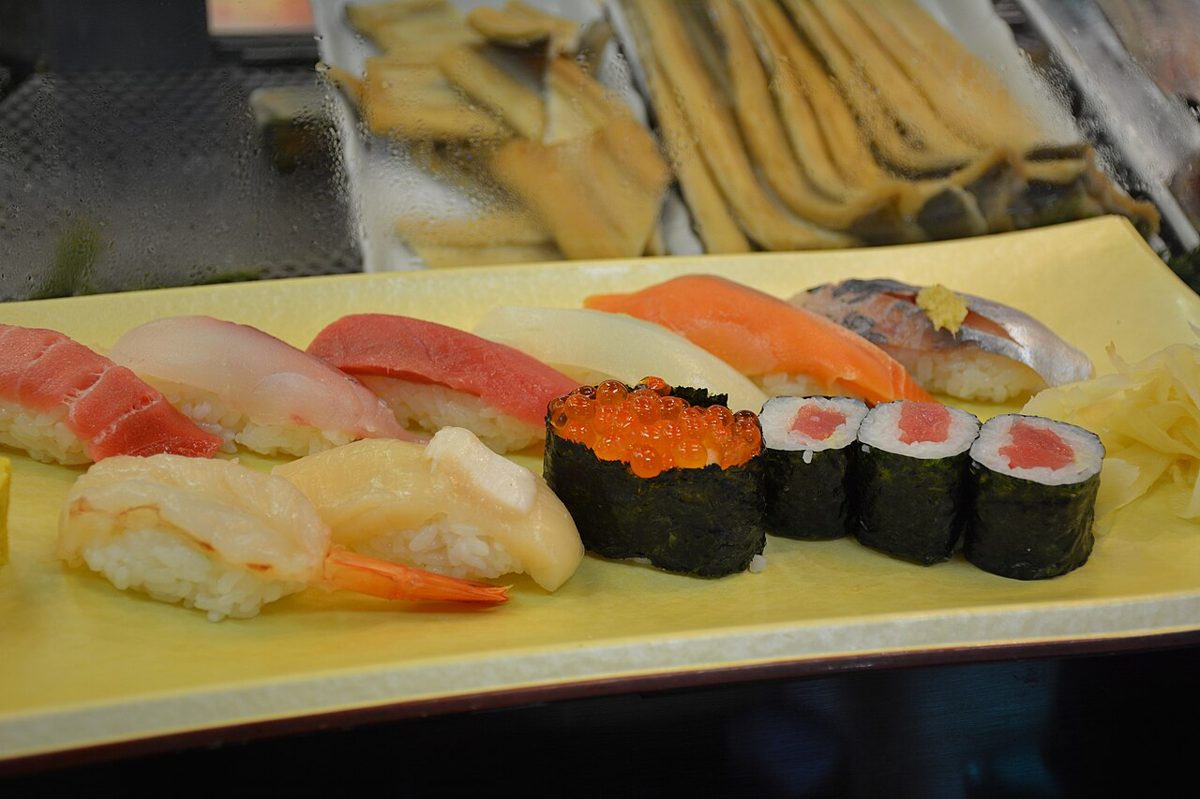
So if a friend or an old guidebook tells you “Tsukiji is closed,” they’re repeating a half-truth. The wholesale auction floor is gone from Tsukiji. The soul of the place — the lanes you can walk, the tamagoyaki you can eat, the knives you can buy — is very much alive. Toyosu, meanwhile, is where you go for the spectacle of the auction. Most visitors only need one of the two; this guide helps you choose, and shows how to do both in a single morning if you’re ambitious.
Tsukiji vs Toyosu: what each market is in 2026
The cleanest way to understand the split is to remember that Tsukiji always had two parts: an inner wholesale market (professionals only, where the auctions happened) and an outer retail market (shops, stalls, and restaurants open to everyone). In October 2018, only the inner market relocated to Toyosu. The outer market stayed put.
- Tsukiji Outer Market (Tsukiji Jogai Shijo) — a dense grid of roughly 460 shops and food stalls in Chuo ward. This is the food destination: grazing, sushi breakfasts, knives, dried goods, tamagoyaki. No reservation, no auction, just turn up and eat.
- Toyosu Market (Toyosu Shijo) — the modern wholesale market on a man-made island in Tokyo Bay, opened in 2018. Double the size of old Tsukiji and reportedly the largest fish market in the world. This is where the tuna auction now happens, viewed from observation decks. There are also excellent (often pricey) sushi restaurants here.

The feel of the two could not be more different. Tsukiji is weathered, crowded, and sensory — grills smoking, vendors calling, narrow lanes packed with people eating as they walk. Toyosu is clean, modern, and a bit clinical: you watch the action from behind glass on elevated walkways, in clearly marked visitor zones, and you can’t touch the working floor at all. Both are worthwhile; they just deliver different things.
The Toyosu tuna auction: how and when to see it
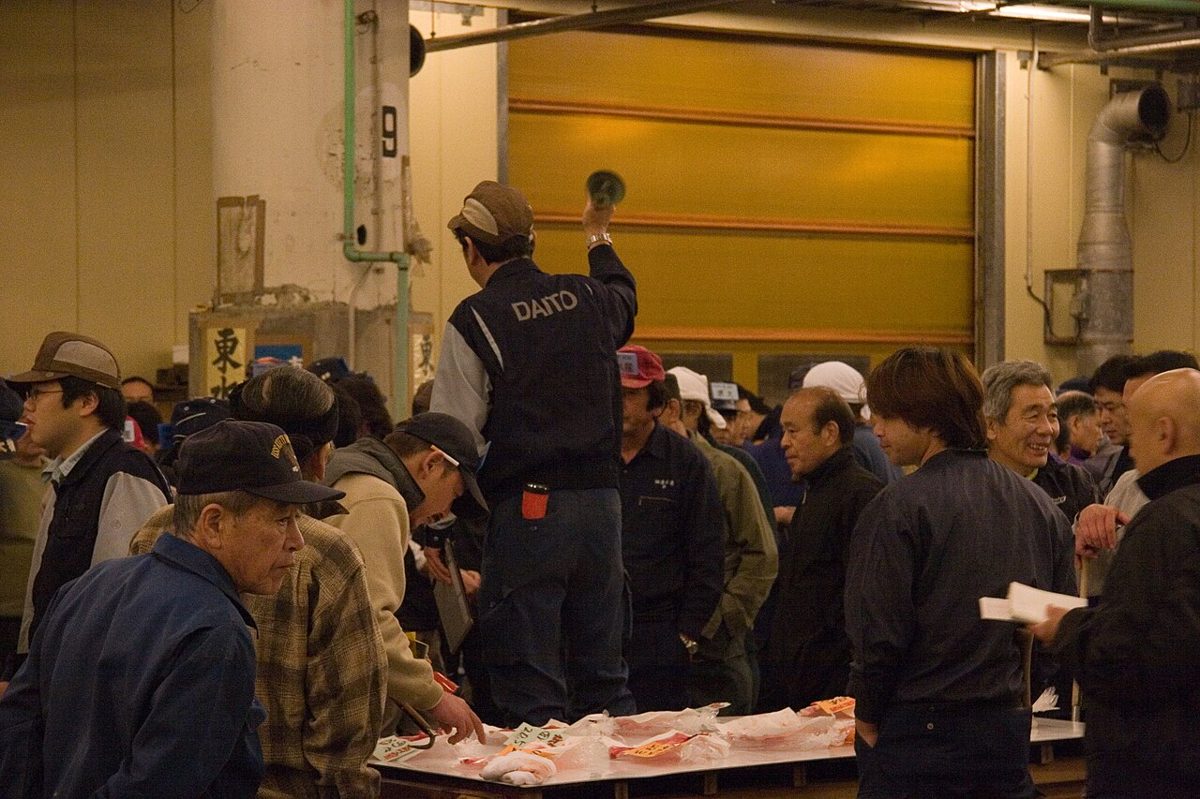
The dawn tuna auction is the headline act, and it’s genuinely electrifying — licensed buyers inspecting and bidding on enormous bluefin in rapid-fire bursts. To set expectations: the first auction of 2026 set a record when a 243 kg bluefin sold for ¥510 million (about $3.2 million), bought by the owner of the Sushi Zanmai chain. That’s a ceremonial New Year price; for the rest of the year a large tuna typically fetches something closer to $30,000. The auctions run roughly 5:30–6:30 a.m., Monday through Saturday (on market business days), and there are two ways to watch, both free.
- The upper observation gallery (no reservation). Open from 5:00 a.m., this walkway sits one floor above the auction and views it through fully sealed glass, with audio piped through speakers. Arrive early — ideally around 5:00 a.m. — to get a spot by the window. This is the easy option, and honestly fine for most visitors.
- The lower special observation deck (free, by lottery). On the same floor as the auction, this puts you closer to the action, and because the glass barrier doesn’t reach the ceiling, you actually hear the bidding. Only about 120 people are admitted per day, in small rotating groups between roughly 5:45 and 6:15 a.m.
How the lottery works: the market offers around 100 deck tickets per day. You apply online through the official Toyosu lottery site at least a month ahead — the application window is usually the first week of the month for the following month’s dates. You can list up to three preferred dates for a small group, winners are drawn at random (not first-come), and you’re notified the next week. If you win, arrive at the Promotional Corner on the 3rd floor of the Fisheries Wholesale Market Building (Block 7) by 5:30 a.m. The deck is exposed to the auction hall, which is kept near freezing, so dress in serious layers. Our honest take: the free upper gallery is easier and almost as good — only chase the lottery if standing closer really matters to you.
Getting there for the auction is the hard part: the trains don’t run early enough. Either take a taxi, or stay nearby. The Yurikamome line’s Shijo-mae Station drops you right at the market once trains start, but for the 5 a.m. arrival most people cab it or spend the night at a nearby hotel (or even the 24-hour Manyo Club onsen next door, a popular budget hack). After the auction, the market’s restaurants and the Edo-themed Toyosu Senkyaku Banrai food village make a natural breakfast stop, and TeamLab Planets is a short walk away.
What and where to eat at Tsukiji Outer Market

This is the reason to come. Skip your hotel breakfast and arrive hungry — the outer market is built for grazing, and the best strategy is to eat small things from several stalls rather than commit to one big meal. A few things you shouldn’t miss:
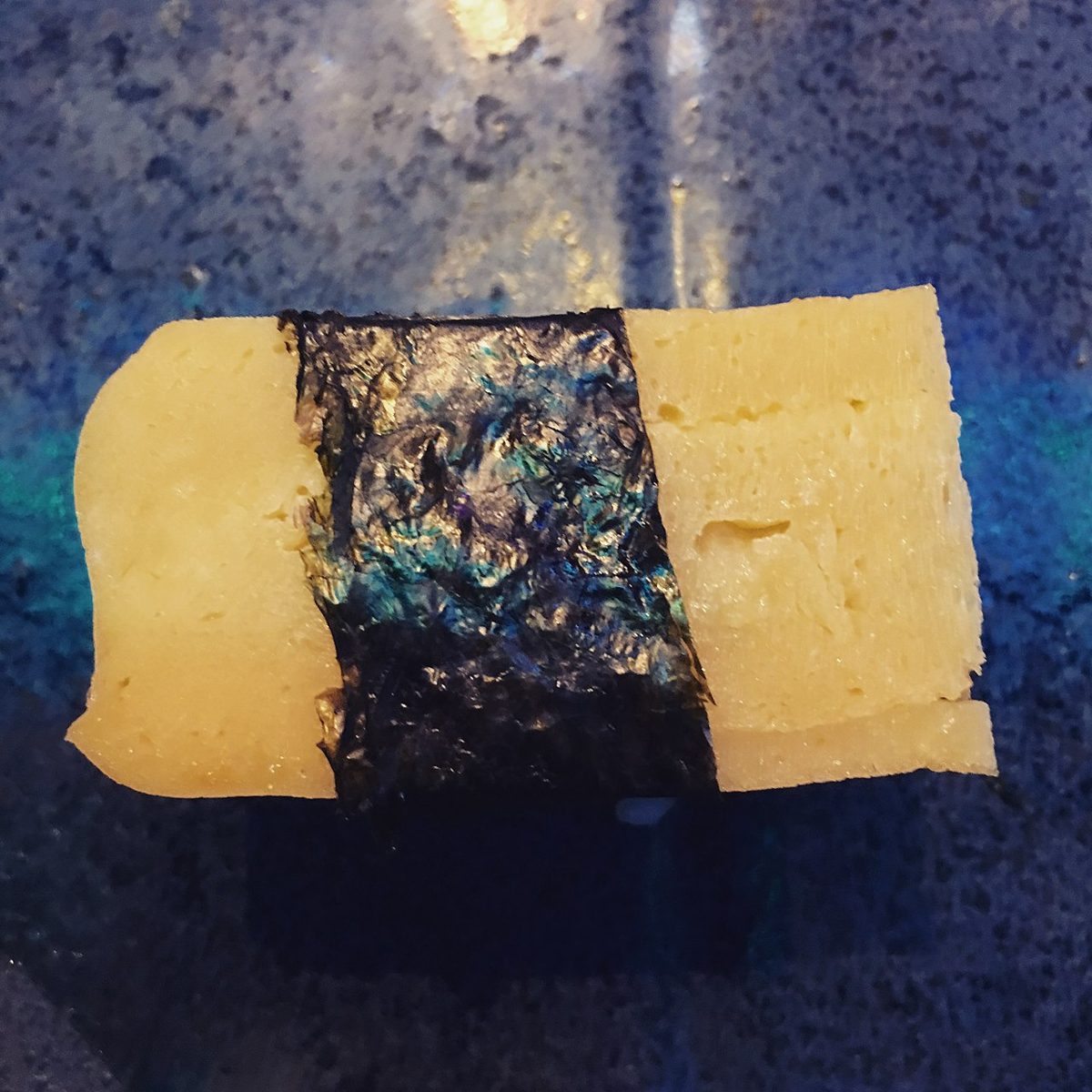
- Tamagoyaki. The market’s icon: a thick, layered sweet-savoury omelette, served hot on a stick for around ¥200. Two shops dominate — Yamachou (sweeter, almost dessert-like, with a caramelised edge) and Shouro (more savoury, with a strong dashi note). Watching the cook build it layer by layer is half the fun. Try the tamagoyaki sando (in fluffy white bread with Japanese mayo) if you see it.
- Standing sushi. Tsukiji’s tachigui-zushi counters serve fish straight from the wholesalers, eight to ten pieces for roughly ¥1,500–¥3,000, eaten elbow-to-elbow. Note: the famous sit-down names Sushi Dai and Daiwa Sushi moved to Toyosu in 2018, so any “Tsukiji Sushi Dai” listing is out of date. The standing counters that remain are just as fresh, with no multi-hour queue.
- Kaisendon. A bowl of warm sushi rice piled with raw seafood — maguro, salmon, yellowtail, ikura, sometimes uni. Expect ¥1,500–¥3,000. Insider tip: walk past the bowls at the market’s edges and eat at the shops set deeper inside; the fish is the same, the price is lower.
- Grilled seafood on a stick. Fat Hokkaido scallops grilled in the shell, skewers of squid, wagyu, unagi, and paper cups of fresh uni and ikura. Point and eat.
- Souvenirs that matter. The pickle shops (free samples, be brave), and the dried-goods stalls selling katsuobushi, kombu, and nori — lightweight, travel-friendly, and far better than any airport gift.
For more on eating your way through these lanes — and the wider world of grab-and-go Tokyo eating — see our Tokyo street food guide. And because a market breakfast is one of the great Tokyo morning rituals, it pairs naturally with the dishes in our Japanese breakfast guide. Sushi obsessives should also read the dedicated best sushi in Tokyo guide for where the market’s relocated heavyweights ended up.
Opening days and hours (verify before you go)
Both markets run on the Tokyo Central Wholesale Market calendar, which is why closures line up. The key thing to know: both are closed every Sunday, and on most national holidays and certain Wednesdays. Not every Wednesday is closed — only the ones flagged on the official calendar — so always check before planning a Wednesday visit. Both also close for the New Year period (roughly December 30 to January 4).
| Tsukiji Outer Market | Toyosu Market | |
|---|---|---|
| What it is | Retail shops, stalls, restaurants | Wholesale market + tuna auction + restaurants |
| Typical hours | ~5:00 a.m. – 2:00 p.m. (each shop varies) | Visitor areas ~5:00 a.m. – ~3:00 p.m.; auction ~5:30–6:30 a.m. |
| Best time to visit | 7:00–11:00 a.m. | 5:00 a.m. for the auction |
| Closed | Sundays; select Wednesdays; holidays; New Year | Sundays; select Wednesdays; holidays; New Year |
| Reservation needed? | No — walk in | No for galleries; lottery for the lower deck |
| Best for | Eating, browsing, atmosphere | The tuna auction; premium sushi |
At Tsukiji, the rhythm matters as much as the day. From 5:00–7:00 a.m. vendors are still setting up; 7:00–11:00 a.m. is the sweet spot when everything’s open and stocked but not yet mobbed; by 11 a.m.–1 p.m. the lunch crowds peak and stalls start packing up; after 2 p.m. it’s effectively done. If you only get one market morning in Tokyo, make it a Tuesday, Thursday, or Friday — Saturdays are open but heaving after 9 a.m. The official Tsukiji Outer Market site keeps a closure calendar; it’s worth a 30-second check before your trip.
Getting there
To Tsukiji Outer Market
The easiest route is the Tokyo Metro Hibiya Line to Tsukiji Station, Exit 1 — a flat two-to-three-minute walk straight to the market. Alternatively, the Toei Oedo Line stops at Tsukiji-shijo Station (Exit A1, about one minute on foot), slightly closer to the former inner-market site. From most central Tokyo hotels it’s a 15–25 minute subway ride. Staying in Ginza? You can simply walk — it’s about 15 flat minutes along Harumi-dori, past the Kabukiza Theatre.
To Toyosu Market
Take the driverless Yurikamome line to Shijo-mae Station, which connects directly to the market buildings by covered walkway — you barely step outside. From central Tokyo, transfer to the Yurikamome at Shimbashi or Toyosu Station (the latter on the Yurakucho subway line). For the pre-dawn auction, remember trains don’t run early enough, so plan a taxi or an overnight stay nearby. Combine the trip with TeamLab Planets, a short walk away, and the Toyosu Senkyaku Banrai food-and-onsen complex.
Etiquette and practical tips
- It’s a working market, not a theme park. At Toyosu especially, stay in visitor zones, keep quiet near the auction, and never use flash. At Tsukiji, don’t block the lanes for photos while vendors are trying to work.
- Eat where you buy, or move along. Many Tsukiji stalls expect you to eat your skewer or cup near the shop, not carry it through the crowd. Bins are scarce — hand rubbish back to the stall.
- Carry cash. Plenty of stalls are cash-only. Have yen, and ideally small notes and coins.
- Go early, go hungry, go on a weekday. The three rules that fix 90% of disappointing visits.
- Don’t touch the merchandise. Fresh fish and produce are for buyers; ask before handling anything.
- Mind closure days. Showing up on a Sunday or a closed Wednesday is the classic mistake — check the calendar first.
A market morning slots beautifully into a wider day out — pair it with nearby Ginza, Hamarikyu Gardens, or the rest of the city’s highlights in our best things to do in Tokyo roundup, and fold the whole experience into the bigger picture in our Tokyo food guide.
What happened in 2018, and why it still confuses people
Tsukiji opened in 1935, built after the Great Kanto Earthquake destroyed the older fish market at Nihonbashi. For more than 80 years it was the largest wholesale fish market on earth — a vast, chaotic hall where thousands of tons of seafood changed hands before dawn, and where licensed wholesalers raced around on the little motorised carts known as turret trucks. By the 2000s the buildings were decades past their design life: sanitation was hard to maintain, the lanes were too narrow for modern refrigerated logistics, and a move became inevitable. After years of political delay, the inner wholesale market relocated to the purpose-built Toyosu facility in October 2018.
Here is the detail the headlines flattened: the inner market and the outer market were always separate. The inner market was the wholesale floor — professionals, auctions, limited tourist access. The outer market was the retail warren of shops and restaurants that grew up around it over decades, serving locals, chefs, and visitors. When the wholesale floor left for Toyosu, the outer market had no reason to follow its customers were never the wholesale buyers. So “Tsukiji moved” is only half-true: the auctions and the wholesale trade moved; the food streets stayed exactly where they were, and arguably leaned even harder into being a food destination once the trucks stopped rumbling through.
Eating and exploring at Toyosu
Toyosu is not only the auction. Once you have watched the bidding (or instead of it), the market has some of the freshest sushi in Tokyo — you just have to know where to look. The buildings are connected by covered walkways, and the restaurants cluster on the upper floors.
- Sushi Dai and Daiwa Sushi. The two legends that moved here from old Tsukiji. The omakase sets — you let the chef choose the morning’s best — are superb, but the queues at Sushi Dai in particular can run for hours. If you have the patience, go; if you don’t, the fish at the quieter counters nearby is just as fresh.
- Sushi-Bun. Another old-Tsukiji name, just as good and usually a shorter line than Dai or Daiwa.
- Kaisendon and grilled-fish shops. For a photogenic seafood bowl or a non-raw option (grilled unagi, tempura over rice, a runny oyakodon), the restaurant floors of the Fisheries Intermediate Wholesale Market Building have the biggest selection.
- Uogashi Yokocho. The market’s shopping arcade, selling knives, fresh wasabi, dried goods, and snacks — the place to buy something to take home.
- Toyosu Senkyaku Banrai. An Edo-themed “food village” that opened in 2024 next to the market, with 60-plus restaurants and shops, a rooftop foot-bath, and the 24-hour Manyo Club onsen attached. Crucially, it stays open even on days the market itself is closed (shops open around 10 a.m.), so it’s a useful fallback.
One more reason to make the trip: TeamLab Planets is a short walk from the market, and tickets often sell out weeks ahead. Pairing the dawn market with the digital-art museum makes for a full, memorable day in this corner of the bay. Either market also folds neatly into the wider city — see what else is nearby in our best things to do in Tokyo guide.
Beyond food: knives, ceramics, and kitchen gear
Tsukiji Outer Market isn’t only about eating. Tucked among the food stalls are shops that have supplied professional chefs for generations — and they make some of the best souvenirs in Tokyo. Japanese kitchen knives are the headline buy: shops here sell hand-forged blades, will often engrave your name in the steel for free, and can advise on the right knife for your cooking (a gyuto for general use, a santoku for home cooks, a petty for small work). Prices run from a few thousand yen for a solid starter to well into five figures for a craftsman’s piece.
You’ll also find ceramics and lacquerware, bamboo steamers, copper tamagoyaki pans, and the building blocks of a Japanese pantry: katsuobushi (bonito flakes) shaved to order, heavy sheets of kombu, good nori, and matcha. If you want a deeper kitchen-gear haul, the nearby Kappabashi “Kitchen Town” (a short hop away) is Tokyo’s wholesale restaurant-supply street and pairs well with a Tsukiji morning. For where these ingredients turn into actual meals, our Tokyo food guide covers the wider scene.
Doing both in one morning: a sample plan
If you’re determined to see the auction and eat at Tsukiji, it’s doable in a single (early, exhausting) morning. Here’s a realistic timeline for a market business day:
- 4:30–5:00 a.m. Arrive at Toyosu by taxi (trains aren’t running yet) or roll out of a nearby hotel. Head to the Fisheries Wholesale Market Building.
- 5:00–5:30 a.m. Get a window spot on the free upper observation gallery and watch buyers inspect the tuna with flashlights and hooks.
- 5:30–6:30 a.m. The auction itself — fast, loud, over before you expect. (If you won the lottery, you’ll be on the lower deck instead.)
- 6:30–7:30 a.m. Breakfast at a Toyosu sushi counter, or save your appetite and browse Uogashi Yokocho.
- 7:30–8:00 a.m. Yurikamome to Toyosu, transfer toward Tsukiji (or grab a taxi for ~15 minutes).
- 8:00–10:30 a.m. Tsukiji Outer Market at its best: tamagoyaki, a few skewers, a standing-sushi set, knife shopping, free pickle samples.
- By 11 a.m. You’re fading, the crowds are building, and you’ve done both markets properly. Go find a coffee.
Honestly, most people are happier splitting this across two mornings, or simply skipping the auction and enjoying a relaxed Tsukiji breakfast around 8 a.m. A market morning is one of the great Tokyo rituals either way, and it sits perfectly alongside the dishes in our Japanese breakfast guide and the grab-and-go eats in our Tokyo street food guide. For where to eat the city’s very best raw fish beyond the markets, the best sushi in Tokyo guide picks up the thread.
Frequently Asked Questions
Is Tsukiji Market still open in 2026?
Yes. Only the inner wholesale market moved to Toyosu in 2018. The Tsukiji Outer Market — roughly 460 shops, food stalls, and restaurants — remains open and thriving, and it’s the part most visitors actually want. Go on a weekday morning for the best experience.
What is the difference between Tsukiji and Toyosu?
Tsukiji Outer Market is a retail food destination — stalls, sushi counters, and shops you can walk through and eat at, no reservation needed. Toyosu is the modern wholesale market on Tokyo Bay where the tuna auction now happens, viewed from observation decks. Tsukiji is about eating and atmosphere; Toyosu is about the auction spectacle.
How do I see the tuna auction at Toyosu?
Two ways, both free. The upper observation gallery opens at 5:00 a.m. and needs no reservation — just arrive early. The lower deck, closer to the action, requires winning a monthly online lottery (apply about a month ahead via the official Toyosu site). The auction runs roughly 5:30–6:30 a.m., Monday to Saturday on business days.
What days are the markets closed?
Both Tsukiji Outer Market and Toyosu follow the Tokyo Central Wholesale Market calendar: closed every Sunday, on most national holidays, and on certain Wednesdays (not all). They also close for the New Year period, roughly December 30 to January 4. Always check the official calendar before a Wednesday visit.
Should I visit Tsukiji or Toyosu?
For most visitors, Tsukiji. The food variety is greater, the atmosphere is richer, and no planning is needed. Choose Toyosu if you specifically want to see the tuna auction. If you have the energy, do both in one morning: Toyosu at dawn for the auction, then Tsukiji by 8 a.m. for breakfast.
Photo Credits
- Hero image — Photo: Cheng-en Cheng / CC BY-SA 2.0 via Wikimedia Commons
- Toyosu Market image — Photo: Arne Mueseler / CC BY-SA 3.0 de via Wikimedia Commons
- Tuna image — Photo: KimonBerlin / CC BY-SA 2.0 via Wikimedia Commons
- Tsukiji food image — Photo: sodai gomi / CC BY 2.0 via Wikimedia Commons
- Tamagoyaki image — Photo: Missvain / CC BY 4.0 via Wikimedia Commons